We use cookies to ensure our site functions properly and to store limited information about your usage. You may give or withdraw consent at any time. To find out more, read our privacy policy and cookie policy.
Manage Cookies
A cookie is information stored on your computer by a website you visit. Cookies often store your settings for a website, such as your preferred language or location. This allows the site to present you with information customized to fit your needs. As per the GDPR law, companies need to get your explicit approval to collect your data. Some of these cookies are ‘strictly necessary’ to provide the basic functions of the website and can not be turned off, while others if present, have the option of being turned off. Learn more about our Privacy and Cookie policies. These can be managed also from our cookie policy page.
Strictly necessary cookies(always on):
Necessary for enabling core functionality. The website cannot function properly without these cookies. This cannot be turned off. e.g. Sign in, Language
Analytics cookies:
Analytical cookies help us to analyse user behaviour, mainly to see if the users are able to find and act on things that they are looking for. They allow us to recognise and count the number of visitors and to see how visitors move around our website when they are using it. Tools used: Google Analytics
Boundaries are important to separate public and private spaces in residential areas. Boundary treatments create an interface between the pavement and the entrance, and can contribute to a feeling of security where residents can take ownership of their private domain.
11.10.1
The boundary treatment of gardens must:
retain and refurbish existing original railings, gates and gateposts where possible.
follow the language of the surrounding area, architectural styles and typologies.
respond to the local character, and proportions and design of the host dwelling.
respond appropriately to prevailing edge treatments, such as low walls, railings or hedges to ensure coherence with the street character.
11.10.2
Green boundary treatments should be considered above formalised boundaries such as walls or fences. Hedges, trees and bushes serve as an effective boundary, while improving biodiversity, reducing surface water flooding and contributing positively to streetscene.
11.10.3
If an air source heat pump is being installed, the potential to integrate this into the a front boundary wall should be explored.
11.10.4
Boundary treatments that are permeable at ground level help to support wildlife such as hedgehogs. Further guidance can be found here from Hedgehog Street.
Hedges provide privacy and greening, helping to support local biodiversityTimber-clad bin and bike storage connects to the front gate to form the front garden boundary
11.11 Bin and cycle storage facilities
Bin and cycle storage facilities need to be carefully considered as the design of these structures can impact the appearance of the streetscape.
As with all external home alterations, residents are advised to discuss their ideas for bin and cycle storage facilities with neighbours before starting, to try to address any criticisms early on.
Outbuildings
11.11.1
For details of permitted development rights for outbuildings, refer to this page on the Planning Portal.
Planning permission
11.11.2
Planning permission is required for bin or cycle storage facilities where the proposal: • is located within a front or side garden adjoining a public road.
is located within the garden of a flat.
has a footprint of over 50% of the house’s amenity space.
is more than a single storey.
is located within the curtilage of a listed building. Listed building consent may also be required, see here for further information.
11.11.3
Planning permission is not required for a bin or cycle storage facility in the rear garden of a house, as long as the proposal fulfils the criteria for permitted development rights, meaning that the proposal:
is single storey. • has an overall height of 4m or less for pitched roofs, or 3m otherwise.
has an overall height of 2.5m or less, if it is within 2m of the site boundary.
does not cover more than 50% of land around the original house.
11.11.4
The same permitted development rights as above apply for a bin or cycle storage facility in the rear garden of a conservation area, if there is no Article 4 direction.
Building regulations
11.11.5
Building regulations permission may be needed for a bin or cycle storage facility that has a floor area of over 8sqm and/or is connected to mains building services.
Design and placement
11.11.6
Where there is no access to the front or the rear of the site, proposals for bin and cycle storage must: • keep waste materials at least 10m from buildings and 2m from the site boundary. If that’s not possible, lockable metal containers should be used.
have a lock barrier system or access control to ensure bins are used by the intended tenants.
avoid placing bins where they need to be taken through a building to be emptied, unless it’s an open covered space.
keep bins away from windows and ventilators, and beneath a shelter.
11.11.7
Wherever possible, cycle storage facilities should be placed in rear gardens. Where storage facilities are proposed within front gardens, proposals should:
minimise visual impact through form and location.
be positioned not only for ease of access but also to minimise intrusion on views for neighbours and the public.
not be located close to ground floor windows.
not impede any access to or from a dwelling.
consider how the structure will relate to any other outbuildings or storage requirements in the front garden.
11.11.8
Proposals should be only be the size necessary to store bins and/or cycles. Where planning permission is required, proposals for bin and cycle storage facilities are more likely to be supported where the size is kept within 2m wide x 1m deep x 1.5m high.
11.11.9
Even where planning permission is not required, proposals for storage facilities should ensure that 50% of the garden area is retained, as an increase in hard landscaping can increase the risk of surface water flooding.
11.11.10
Wherever possible, cycle storage facilities should be sited perpendicular to the highway or footway, (i.e.: along a side boundary). It is acknowledged that some houses in the borough do not have a front garden deep enough for this positioning. Storage facilities that are parallel to the highway (or front boundary) will only be supported where:
the storage facility would not fit when placed perpendicular to the highway.
the height of the proposal is minimised.
the storage facility doors do not open onto a pavement or highway.
11.11.11
Where storage facilities are proposed within front gardens, the design of the proposal should:
be constructed in materials which match the main building or boundary wall of which it forms a part, where possible.
use materials that respect the character of the property and area. Even where structures are made from wood, some varnish or coloured stains may result in an obtrusive appearance.
include screening from planting, a wall, or other discreet means.
consider the integration of a green roof for any flat roofs.
consider the integration of a mono-pitched roof rather than pitched, as they typically have a lower profile.
Acceptable example, mono pitched roof, perpendicular to highway, softened with planting
Acceptable example, cycle storage sited long the side boundary, with materials in keeping with existing boundary treatment
Unacceptable example, due to excessive height, and being situated along front boundary
11.10 Boundary treatments
Boundaries are important to separate public and private spaces in residential areas. Boundary treatments create an interface between the pavement and the entrance, and can contribute to a feeling of security where residents can take ownership of their private domain.
11.10.1
The boundary treatment of gardens must:
retain and refurbish existing original railings, gates and gateposts where possible.
follow the language of the surrounding area, architectural styles and typologies.
respond to the local character, and proportions and design of the host dwelling.
respond appropriately to prevailing edge treatments, such as low walls, railings or hedges to ensure coherence with the street character.
11.10.2
Green boundary treatments should be considered above formalised boundaries such as walls or fences. Hedges, trees and bushes serve as an effective boundary, while improving biodiversity, reducing surface water flooding and contributing positively to streetscene.
11.10.3
If an air source heat pump is being installed, the potential to integrate this into the a front boundary wall should be explored.
11.10.4
Boundary treatments that are permeable at ground level help to support wildlife such as hedgehogs. Further guidance can be found here from Hedgehog Street.
Hedges provide privacy and greening, helping to support local biodiversityTimber-clad bin and bike storage connects to the front gate to form the front garden boundary
11.11 Bin and cycle storage facilities
Bin and cycle storage facilities need to be carefully considered as the design of these structures can impact the appearance of the streetscape.
As with all external home alterations, residents are advised to discuss their ideas for bin and cycle storage facilities with neighbours before starting, to try to address any criticisms early on.
Outbuildings
11.11.1
For details of permitted development rights for outbuildings, refer to this page on the Planning Portal.
Planning permission
11.11.2
Planning permission is required for bin or cycle storage facilities where the proposal: • is located within a front or side garden adjoining a public road.
is located within the garden of a flat.
has a footprint of over 50% of the house’s amenity space.
is more than a single storey.
is located within the curtilage of a listed building. Listed building consent may also be required, see here for further information.
11.11.3
Planning permission is not required for a bin or cycle storage facility in the rear garden of a house, as long as the proposal fulfils the criteria for permitted development rights, meaning that the proposal:
is single storey. • has an overall height of 4m or less for pitched roofs, or 3m otherwise.
has an overall height of 2.5m or less, if it is within 2m of the site boundary.
does not cover more than 50% of land around the original house.
11.11.4
The same permitted development rights as above apply for a bin or cycle storage facility in the rear garden of a conservation area, if there is no Article 4 direction.
Building regulations
11.11.5
Building regulations permission may be needed for a bin or cycle storage facility that has a floor area of over 8sqm and/or is connected to mains building services.
Design and placement
11.11.6
Where there is no access to the front or the rear of the site, proposals for bin and cycle storage must: • keep waste materials at least 10m from buildings and 2m from the site boundary. If that’s not possible, lockable metal containers should be used.
have a lock barrier system or access control to ensure bins are used by the intended tenants.
avoid placing bins where they need to be taken through a building to be emptied, unless it’s an open covered space.
keep bins away from windows and ventilators, and beneath a shelter.
11.11.7
Wherever possible, cycle storage facilities should be placed in rear gardens. Where storage facilities are proposed within front gardens, proposals should:
minimise visual impact through form and location.
be positioned not only for ease of access but also to minimise intrusion on views for neighbours and the public.
not be located close to ground floor windows.
not impede any access to or from a dwelling.
consider how the structure will relate to any other outbuildings or storage requirements in the front garden.
11.11.8
Proposals should be only be the size necessary to store bins and/or cycles. Where planning permission is required, proposals for bin and cycle storage facilities are more likely to be supported where the size is kept within 2m wide x 1m deep x 1.5m high.
11.11.9
Even where planning permission is not required, proposals for storage facilities should ensure that 50% of the garden area is retained, as an increase in hard landscaping can increase the risk of surface water flooding.
11.11.10
Wherever possible, cycle storage facilities should be sited perpendicular to the highway or footway, (i.e.: along a side boundary). It is acknowledged that some houses in the borough do not have a front garden deep enough for this positioning. Storage facilities that are parallel to the highway (or front boundary) will only be supported where:
the storage facility would not fit when placed perpendicular to the highway.
the height of the proposal is minimised.
the storage facility doors do not open onto a pavement or highway.
11.11.11
Where storage facilities are proposed within front gardens, the design of the proposal should:
be constructed in materials which match the main building or boundary wall of which it forms a part, where possible.
use materials that respect the character of the property and area. Even where structures are made from wood, some varnish or coloured stains may result in an obtrusive appearance.
include screening from planting, a wall, or other discreet means.
consider the integration of a green roof for any flat roofs.
consider the integration of a mono-pitched roof rather than pitched, as they typically have a lower profile.
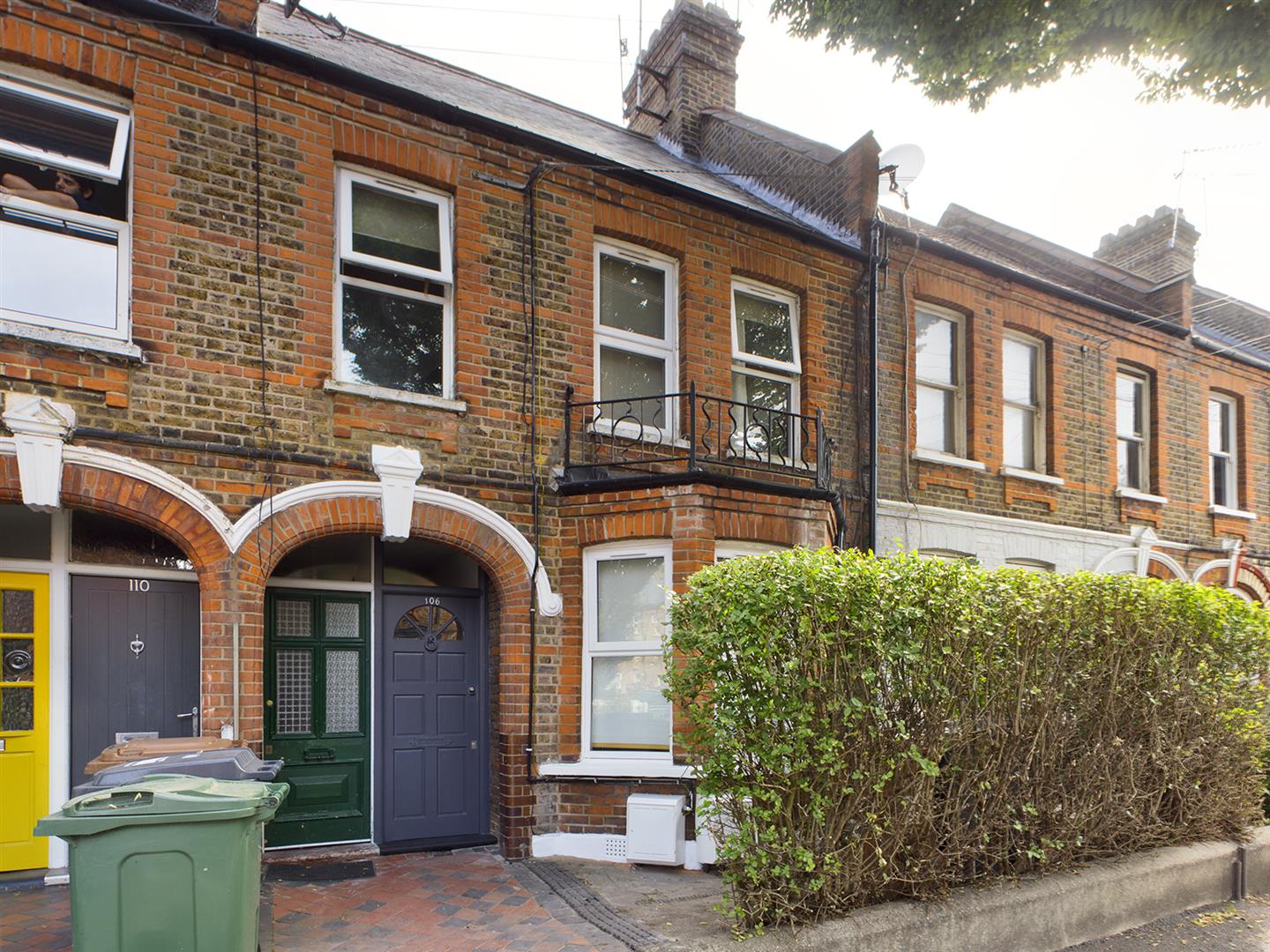 Hedges provide privacy and greening, helping to support local biodiversity
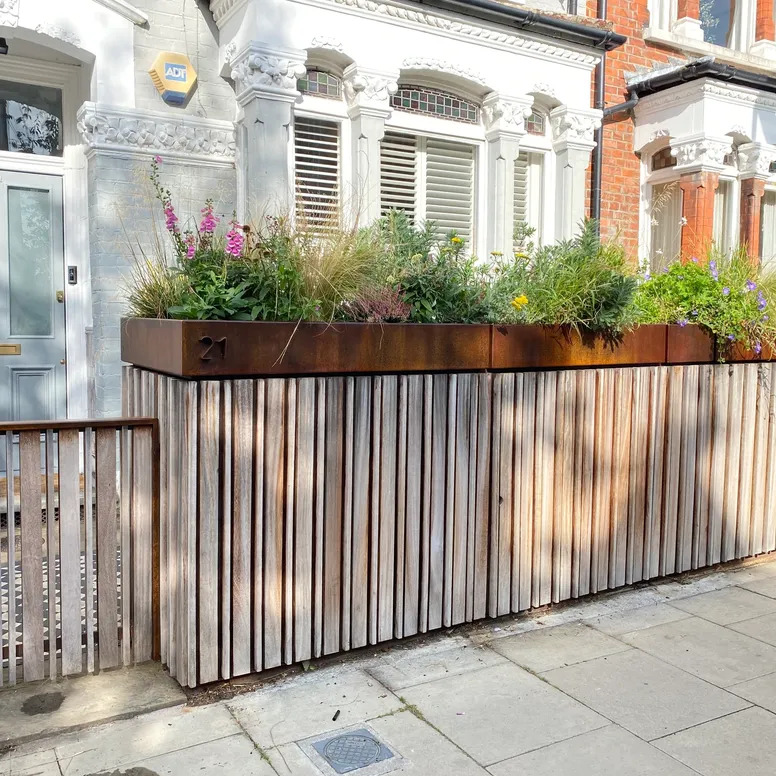 Timber-clad bin and bike storage connects to the front gate to form the front garden boundary
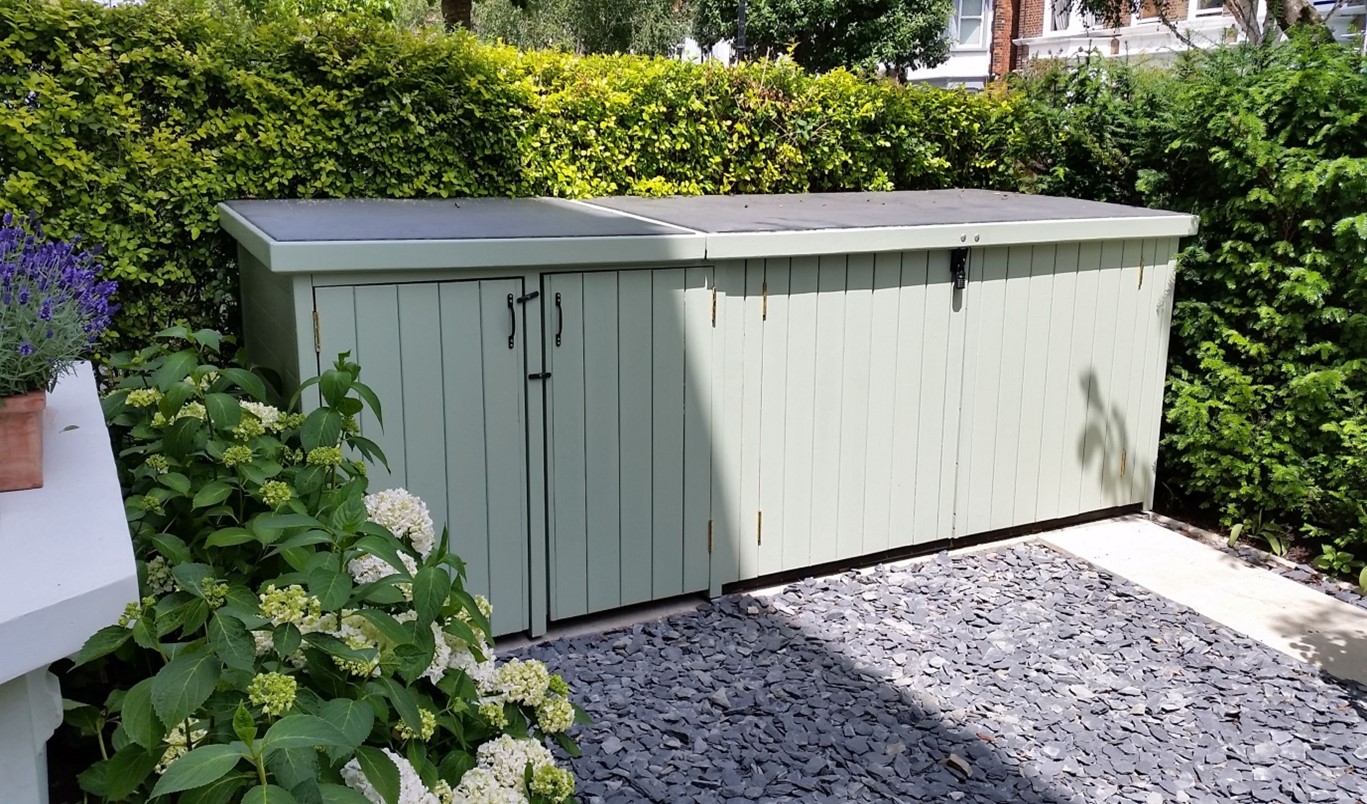 Acceptable example, mono pitched roof, perpendicular to highway, softened with planting
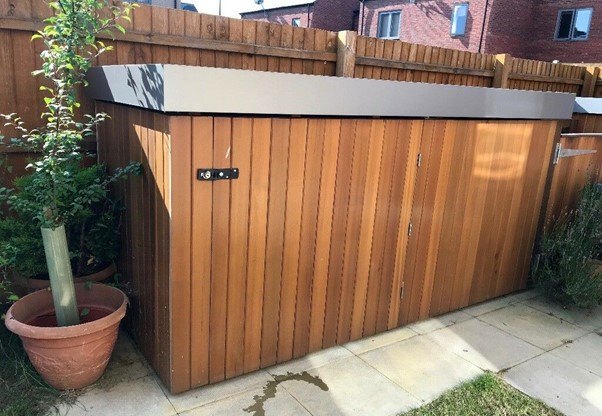 Acceptable example, cycle storage sited long the side boundary, with materials in keeping with existing boundary treatment
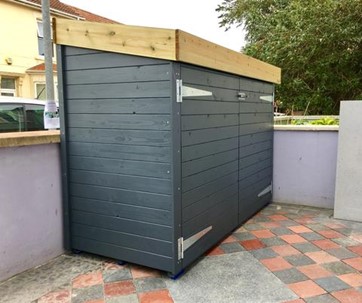 Unacceptable example, due to excessive height, and being situated along front boundary