Protecting Epping Forest
Epping Forest, one of the most significant natural landscapes in London, lies within the northern and eastern edges of our borough. It is a 2,400‑hectare ancient woodland, that is designated both a Site of Special Scientific Interest (SSSI) and a Special Area of Conservation (SAC). Epping Forest is a valued green space for residents, and home to some of Europe’s rarest species and habitats.
There are known threats to the integrity of Epping Forest, particularly from air pollution and recreational pressures, and we have a duty to ensure that planning decisions do not result in further adverse effects. Within our Local Plan, we have made a commitment to protect and enhance Epping Forest - you can read strategies related to this here on our website.
We play a key role in protecting Epping Forest's setting and ensuring that our policies support its long‑term health, and we are working closely with partners to ensure the forest remains healthy, resilient and accessible for generations to come.
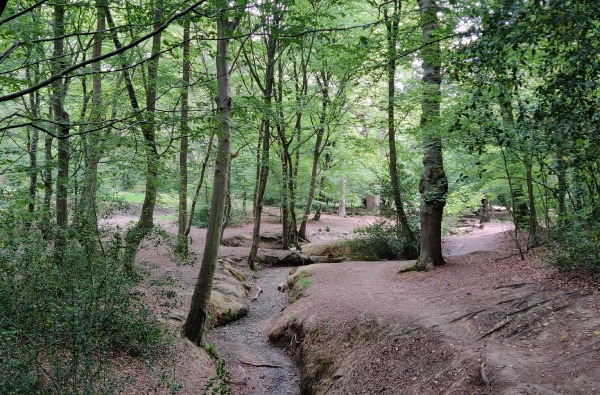 (Source: Epping Forest Heritage Trust)
Safeguarding ancient woodland and biodiversity
Epping Forest contains more than 50,000 ancient trees, one of the largest concentrations in the country, along with rare fungi, protected bat species and nationally important invertebrates. We support conservation efforts by:
- Collaborating with the City of London Corporation on habitat management, ecological monitoring, and long‑term planning,
- Protecting buffer zones around the forest through strong planning policies that limit harmful development.
These actions help maintain the forest’s ecological integrity, ensuring that habitats remain connected and species can thrive.
 Toads in Epping Forest (Source: City of London)
Protecting the forest through strong planning policies
The forest is highly sensitive to air pollution, particularly nitrogen emissions from road traffic. These pollutants can damage habitats, affect soil quality and harm the forest's ancient trees. To address this, we have adopted robust planning policies that:
- Assess new developments for their potential impact on the forest,
- Require mitigation measures where development could increase traffic or emissions,
- Support walking and cycling routes, sustainable transport and electric vehicle infrastructure in the borough.
We also work closely with neighbouring boroughs, Natural England, and the City of London Corporation to ensure a consistent approach across the wider area. This coordinated effort helps protect the forest from cumulative impacts that extend beyond the borough boundary.
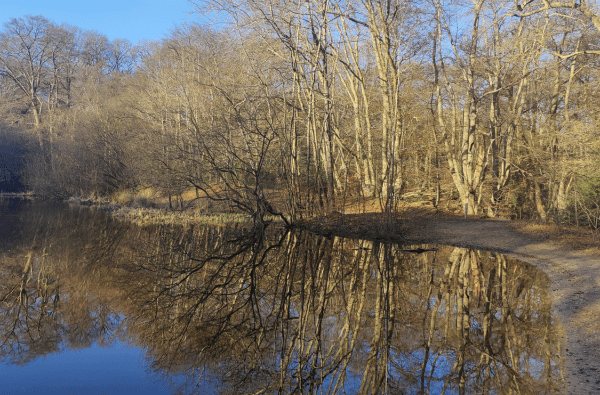 London clay covers much of the southern parts of the forest (Source: Epping Forest Heritage Trust)
 Promoting responsible access and community engagement
Millions of people visit Epping Forest each year, and while this brings economic benefits, it also creates challenges. Heavy footfall can lead to soil compaction, erosion, and disturbance to wildlife. We are working to protect the forest's sensitive habitats while supporting visitor access, by:
- Improving signage and maintaining key paths,
- Promoting public awareness campaigns about staying on paths, keeping dogs on leads and respecting wildlife,
- Working with community groups, schools, and volunteers to encourage stewardship of the forest.
By helping residents understand how to enjoy the forest responsibly, we contribute to long‑term conservation and protect sensitive habitats.
 Visitors to the forest (Source: Epping Forest Heritage Trust)
Suitable Alternative Natural Greenspaces
To protect Epping Forest from increasing recreational pressure, we are also working to ensure that new development in the borough is supported by high‑quality green spaces elsewhere. These spaces, known as Suitable Alternative Natural Greenspaces (SANGs), are designed to provide natural spaces to relieve strain on the forest's sensitive habitats.
This SANGs strategy involves:
- Identifying suitable sites within the borough that can be enhanced or redesigned to function as SANGs,
- Ensuring new developments contribute to the creation or improvement of these spaces,
- Working with partners and landowners to secure long‑term management and maintenance.
Through this work we are helping to protecting Epping Forest from overuse, while supporting the provision of high‑quality green spaces for residents across the borough.
Our shared commitment to the future
Epping Forest is a defining feature of our borough’s landscape and identity. Through careful planning, partnership working and community engagement, we are helping to protect this ancient woodland while ensuring it remains accessible for local residents. As environmental challenges continue to evolve, we are committed to ensuring that Epping Forest continues to flourish as a living, breathing part of our natural heritage.