We use cookies to ensure our site functions properly and to store limited information about your usage. You may give or withdraw consent at any time. To find out more, read our privacy policy and cookie policy.
Manage Cookies
A cookie is information stored on your computer by a website you visit. Cookies often store your settings for a website, such as your preferred language or location. This allows the site to present you with information customized to fit your needs. As per the GDPR law, companies need to get your explicit approval to collect your data. Some of these cookies are ‘strictly necessary’ to provide the basic functions of the website and can not be turned off, while others if present, have the option of being turned off. Learn more about our Privacy and Cookie policies. These can be managed also from our cookie policy page.
Strictly necessary cookies(always on):
Necessary for enabling core functionality. The website cannot function properly without these cookies. This cannot be turned off. e.g. Sign in, Language
Analytics cookies:
Analytical cookies help us to analyse user behaviour, mainly to see if the users are able to find and act on things that they are looking for. They allow us to recognise and count the number of visitors and to see how visitors move around our website when they are using it. Tools used: Google Analytics
External wall insulation (EWI) offers a way to improve the thermal efficiency of homes built with solid walls. There are many options for external wall insulation, which can improve the energy performance of your home. It can reduce fuel bills by up to 25% and prevent condensation from forming on walls, helping to protect against mould and structural damage.
With the appropriate selection of cladding material, external wall insulation has the potential to significantly improve the appearance of your home. However, it is not appropriate for every house, as set out below. It is therefore important to refer to all the guidance here before installation.
External wall insulation finished with a top coat of render at Greenleaf Road. An increased wall depth meant all rainwater pipes had to be removed and refit
Planning permission
9.2.1
Planning permission is typically required for external insulation if it impacts the external appearance of the building.
9.2.2
For properties outside of conservation areas, if materials are of a similar appearance to those used in the existing house, planning permission may not be required for external wall insulation.
9.2.3
Listed buildings will require listed building consent for any significant work. For properties in areas under an Article 4 direction planning permission will be required to fit external wall insulation.
9.2.4
Pre-application submission is encouraged for all planning applications for external wall insulation.
9.2.5
For further details of planning requirements and building regulations for fitting insulation, refer to these pages on the Planning Portal.
Likelihood of approval
9.2.8
Proposals for external wall insulation will be assessed by balancing the positive environmental impact against the potential negative impacts to the character and appearance of the host building and local area.
9.2.9
For properties outside of conservation areas, proposals for external wall insulation on elevations visible from the street will be supported, provided they are designed with regards to the character of the existing streetscape.
9.2.10
Proposals for external wall insulation in conservation areas may be supported in exceptional circumstances. Proposals are more likely to be supported on rear elevations than front elevations or other elevations visible from public vantage points.
9.2.11
External wall insulation is generally not acceptable for listed buildings.
9.2.12
For buildings already finished in render, proposals for external wall insulation finished in render are more likely to be supported. The external wall insulation and render should be detailed and finished to a high standard.
9.2.13
For further guidance on where external wall insulation is likely to be supported, residents should refer to the table on the following page.
Design considerations
9.2.14
Proposals for external wall insulation should:
be of a complementary tone and quality to the wider streetscape.
specify materials that are robust and are detailed in a way that ensures longevity.
specify materials that are sustainable.
specify materials that are of the highest quality available. Adhesive brick slips are not considered acceptable.
not be incongruous, in relation to materiality, scale and quality.
respect any decorative detailing which forms part of the character of the building.
9.2.15
The proposed facing materials for external wall insulation proposals should generally either:
match the quality and appearance of the existing facing material, or:
be complementary to and of a higher quality than the existing facing material.
Other considerations
9.2.16
A suitably qualified professional should be engaged to ensure external wall insulation is appropriately designed for the specific building and correctly installed.
9.2.17
Insulating plaster can also sprayed onto the inside of external walls. This gives an appearance that visually very similar to plastered walls, but with the benefit of additional insulating properties.
External wall insulation installed to the rear of a house in Brixton. Careful detailing around windows ensures the insulation does not have a detrimental impact on the host dwelling, or neighbouring properties
External wall insulation and heritage
Likelihood of approval
Details and requirements
Building that is not listed, outside conservation area
Generally supported, provided it has been designed with regards to the character of the existing streetscape.
Houses
Planning permission is required if permitted development criteria are not met.
Flats
Planning permission is always required.
Building that is not listed, in conservation area
Generally not supported, except from in some circumstances.
There may be scope for external wall insulation on front elevations where buildings currently make a neutral or negative contribution to the conservation area.
More likely to be supported on side or rear elevations, with due regard to historic character and appearance.
Planning permission is required, if permitted development criteria are not met.
The permitted development criteria are restrictive in respect of external wall insulation and therefore a planning application is likely to be required in most cases.
Listed building
Rarely supported.
Exceptions may include buildings whose exteriors have been severely compromised (for example, by the addition of inappropriate renders or unsympathetic general alterations) and some modernist buildings
Planning permission will almost always be required.
Listed building consent will always be required.
9.2 External wall insulation
External wall insulation (EWI) offers a way to improve the thermal efficiency of homes built with solid walls. There are many options for external wall insulation, which can improve the energy performance of your home. It can reduce fuel bills by up to 25% and prevent condensation from forming on walls, helping to protect against mould and structural damage.
With the appropriate selection of cladding material, external wall insulation has the potential to significantly improve the appearance of your home. However, it is not appropriate for every house, as set out below. It is therefore important to refer to all the guidance here before installation.
External wall insulation finished with a top coat of render at Greenleaf Road. An increased wall depth meant all rainwater pipes had to be removed and refit
Planning permission
9.2.1
Planning permission is typically required for external insulation if it impacts the external appearance of the building.
9.2.2
For properties outside of conservation areas, if materials are of a similar appearance to those used in the existing house, planning permission may not be required for external wall insulation.
9.2.3
Listed buildings will require listed building consent for any significant work. For properties in areas under an Article 4 direction planning permission will be required to fit external wall insulation.
9.2.4
Pre-application submission is encouraged for all planning applications for external wall insulation.
9.2.5
For further details of planning requirements and building regulations for fitting insulation, refer to these pages on the Planning Portal.
Likelihood of approval
9.2.8
Proposals for external wall insulation will be assessed by balancing the positive environmental impact against the potential negative impacts to the character and appearance of the host building and local area.
9.2.9
For properties outside of conservation areas, proposals for external wall insulation on elevations visible from the street will be supported, provided they are designed with regards to the character of the existing streetscape.
9.2.10
Proposals for external wall insulation in conservation areas may be supported in exceptional circumstances. Proposals are more likely to be supported on rear elevations than front elevations or other elevations visible from public vantage points.
9.2.11
External wall insulation is generally not acceptable for listed buildings.
9.2.12
For buildings already finished in render, proposals for external wall insulation finished in render are more likely to be supported. The external wall insulation and render should be detailed and finished to a high standard.
9.2.13
For further guidance on where external wall insulation is likely to be supported, residents should refer to the table on the following page.
Design considerations
9.2.14
Proposals for external wall insulation should:
be of a complementary tone and quality to the wider streetscape.
specify materials that are robust and are detailed in a way that ensures longevity.
specify materials that are sustainable.
specify materials that are of the highest quality available. Adhesive brick slips are not considered acceptable.
not be incongruous, in relation to materiality, scale and quality.
respect any decorative detailing which forms part of the character of the building.
9.2.15
The proposed facing materials for external wall insulation proposals should generally either:
match the quality and appearance of the existing facing material, or:
be complementary to and of a higher quality than the existing facing material.
Other considerations
9.2.16
A suitably qualified professional should be engaged to ensure external wall insulation is appropriately designed for the specific building and correctly installed.
9.2.17
Insulating plaster can also sprayed onto the inside of external walls. This gives an appearance that visually very similar to plastered walls, but with the benefit of additional insulating properties.
External wall insulation installed to the rear of a house in Brixton. Careful detailing around windows ensures the insulation does not have a detrimental impact on the host dwelling, or neighbouring properties
External wall insulation and heritage
Likelihood of approval
Details and requirements
Building that is not listed, outside conservation area
Generally supported, provided it has been designed with regards to the character of the existing streetscape.
Houses
Planning permission is required if permitted development criteria are not met.
Flats
Planning permission is always required.
Building that is not listed, in conservation area
Generally not supported, except from in some circumstances.
There may be scope for external wall insulation on front elevations where buildings currently make a neutral or negative contribution to the conservation area.
More likely to be supported on side or rear elevations, with due regard to historic character and appearance.
Planning permission is required, if permitted development criteria are not met.
The permitted development criteria are restrictive in respect of external wall insulation and therefore a planning application is likely to be required in most cases.
Listed building
Rarely supported.
Exceptions may include buildings whose exteriors have been severely compromised (for example, by the addition of inappropriate renders or unsympathetic general alterations) and some modernist buildings
Planning permission will almost always be required.
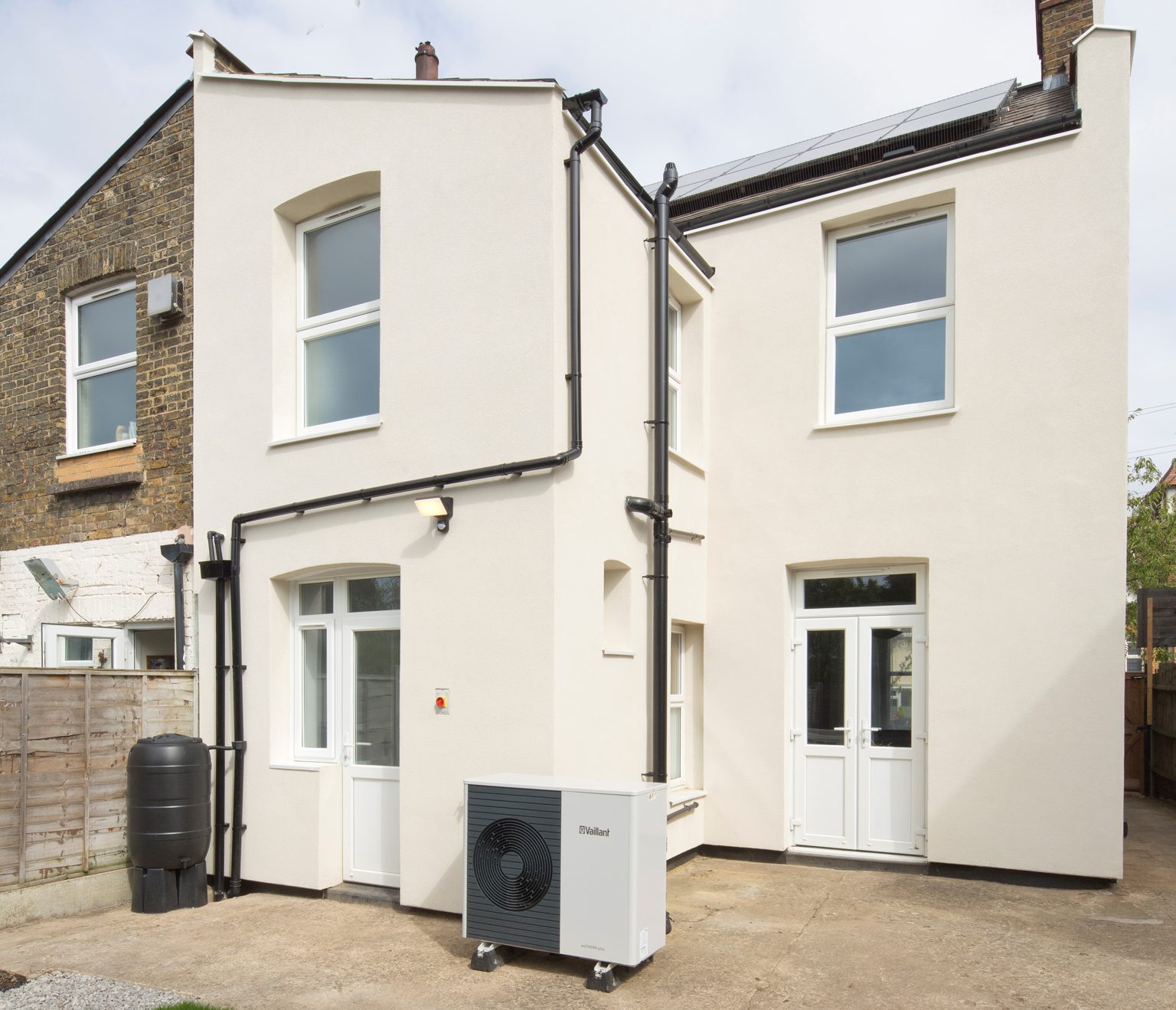 External wall insulation finished with a top coat of render at Greenleaf Road. An increased wall depth meant all rainwater pipes had to be removed and refit
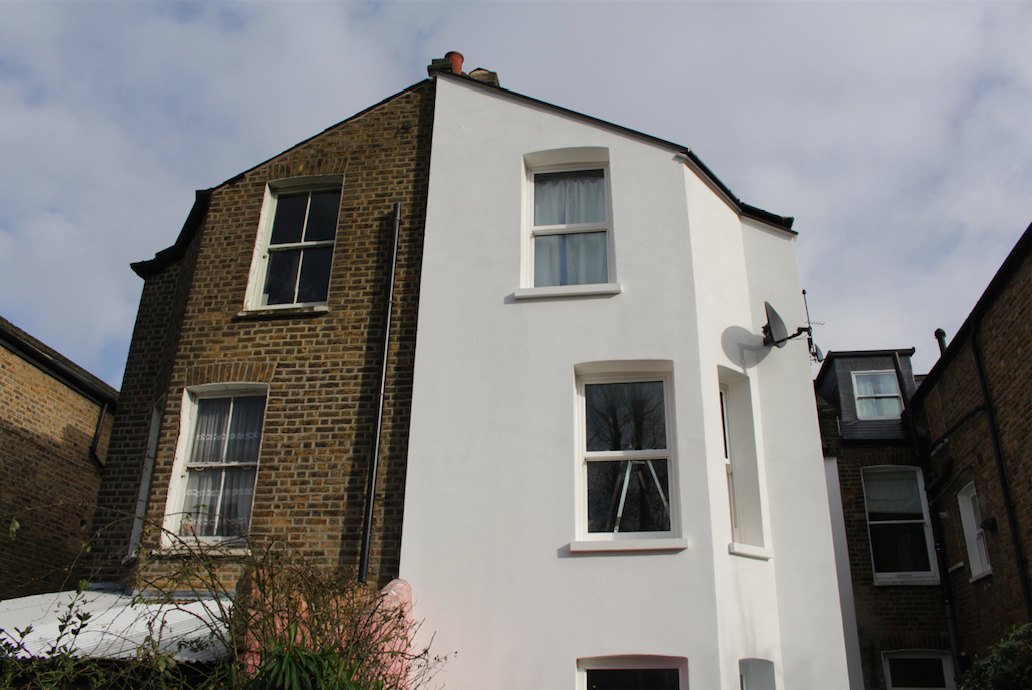 External wall insulation installed to the rear of a house in Brixton. Careful detailing around windows ensures the insulation does not have a detrimental impact on the host dwelling, or neighbouring properties