We use cookies to ensure our site functions properly and to store limited information about your usage. You may give or withdraw consent at any time. To find out more, read our privacy policy and cookie policy.
Manage Cookies
A cookie is information stored on your computer by a website you visit. Cookies often store your settings for a website, such as your preferred language or location. This allows the site to present you with information customized to fit your needs. As per the GDPR law, companies need to get your explicit approval to collect your data. Some of these cookies are ‘strictly necessary’ to provide the basic functions of the website and can not be turned off, while others if present, have the option of being turned off. Learn more about our Privacy and Cookie policies. These can be managed also from our cookie policy page.
Strictly necessary cookies(always on):
Necessary for enabling core functionality. The website cannot function properly without these cookies. This cannot be turned off. e.g. Sign in, Language
Analytics cookies:
Analytical cookies help us to analyse user behaviour, mainly to see if the users are able to find and act on things that they are looking for. They allow us to recognise and count the number of visitors and to see how visitors move around our website when they are using it. Tools used: Google Analytics
This document largely focuses on operational carbon, the carbon and greenhouse gases produced through the daily use of a building, and how we can reduce this in our homes.
Embodied carbon describes the greenhouse gas emissions linked to the full lifecycle of building materials and construction. These emissions are significant, and can account for up to 40% of a project’s carbon footprint.
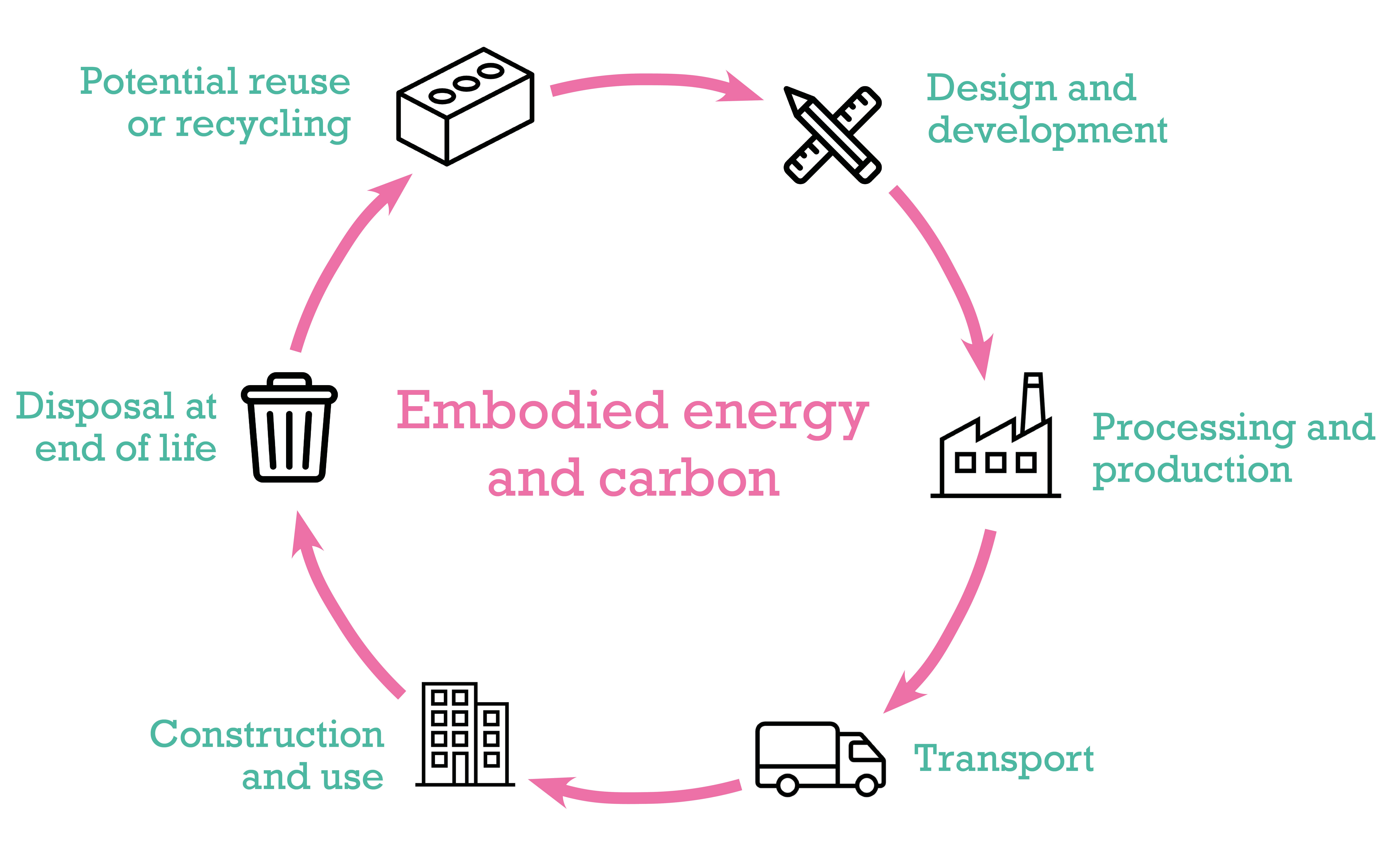
Embodied carbon covers emissions from:
extracting raw materials such as timber, iron for steel and stone for concrete.
the manufacturing process for products like bricks and insulation.
transporting materials to site.
the emissions produced during construction.
the impact of demolition or recycling at the end of a building’s life.
Elements contributing to the embodied energy and carbon of buildings
Why does embodied carbon matter?
In the current Climate Emergency, it is crucial to reduce both embodied carbon and operational carbon in tackling emissions and reaching net zero.
8.2.1
Even for small building projects, materials and their environmental impact should be considered from the beginning of the design process.
Operational carbon
The carbon and greenhouse gases released through the daily use of a building.
This can be reduced by integrating the retrofit measures explored in the following chapter. It can also be reduced by making some of these small changes to reduce energy use in your home.
Embodied carbon
The carbon and greenhouse gas emissions linked to the full lifecycle of building materials and construction.
This can be reduced through careful consideration of the materials and construction methods you use in your home extension or alteration project.
8.3 Things to consider when choosing materials
How has it been produced?
The production steel, glass, aluminium, plastics and concrete requires large amounts of energy and causes high carbon emissions.
Portland cement, the main ingredient in concrete, is produced using high heat and calcination, a chemical reaction that releases large amounts of CO2.
Materials such as timber and clay bricks require less processing, but still have an associated carbon impact. Bricks need to be fired at high temperatures for an extended period of time, and some timbers are thermally treated for added durability.
Is it a renewable or recycled material?
Materials may be natural, synthetic, or many are a combination of the two. Renewable natural building materials include wood, hemp, sheep's wool, straw, bamboo and cork.
Stone and clay are non-renewable natural materials, as these resources are finite. Steel and plastics are non-natural materials that are sometimes recycled into new materials.
Where has it come from?
The transportation of building materials contributes to 16% of a project’s total emissions. When materials are imported from abroad, this can significantly increase a project's embodied carbon.
It is encouraged that materials that are available in the UK, such as stone and brick, are sourced locally. It is usually more sustainable to use a higher quantity of one material than have multiple materials shipped from different locations.
Could it be found reclaimed?
Some materials that have been used before can be reused as construction materials.
Wooden beams or floorboards, timber cladding, bricks, stone blocks, glass panels and roof tiles are just some materials that can be reclaimed, usually for a lower price than new materials.
What is the material lifespan?
How long the material lasts plays a key part in how sustainable it is. For example, although fossil fuels are involved in the production of bricks, they are generally durable and long-lasting.
If bricks are produced and used within the UK, this can make them a relatively sustainable material choice for building projects.
Can it be reused or recycled?
Consider also whether the material can be reused or recycled at its end of life. Materials such as bricks and timber cladding can be easily reused.
It can be more difficult to recycle composite wood cladding, for example, which is made from a mixture of recycled wood fibres and recycled plastics.
Maintenance requirements
Consider the maintenance requirements of different materials and the associated cost.
Repointing is the process of removing deteriorated mortar from brickwork and replacing it with fresh mortar. This should be carried out approximately every 25 years.
Timber cladding requires regular cleaning re-application of protective finishes every 2–5 years to prevent moisture damage, mould, and UV degradation.
Low carbon is usually healthier!
Low carbon materials such timber, hempcrete and sheep's wool insulation typically do not contain toxic chemicals and are naturally breathable, making them healthier for occupants.
Lime render is more breathable than cement-based render, and has lower embodied carbon. It allows moisture to escape walls and prevents the build-up of damp and mould.
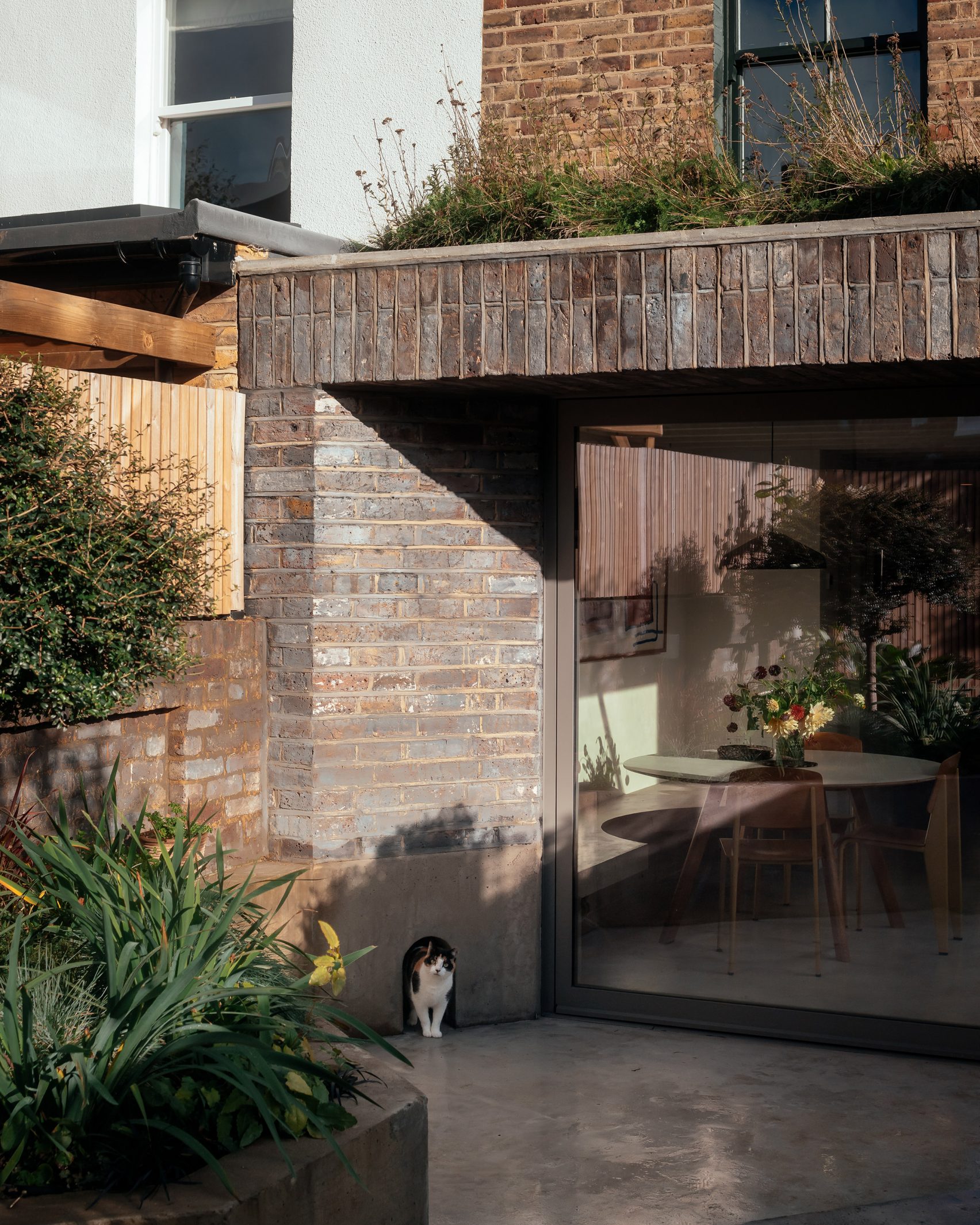
Reclaimed bricks used in this rear extension have a unique texture and colour variation (VATRAA Architects. Photography: Jim Stephenson)
8.2 What is embodied carbon?
This document largely focuses on operational carbon, the carbon and greenhouse gases produced through the daily use of a building, and how we can reduce this in our homes.
Embodied carbon describes the greenhouse gas emissions linked to the full lifecycle of building materials and construction. These emissions are significant, and can account for up to 40% of a project’s carbon footprint.
Embodied carbon covers emissions from:
extracting raw materials such as timber, iron for steel and stone for concrete.
the manufacturing process for products like bricks and insulation.
transporting materials to site.
the emissions produced during construction.
the impact of demolition or recycling at the end of a building’s life.
Elements contributing to the embodied energy and carbon of buildings
Why does embodied carbon matter?
In the current Climate Emergency, it is crucial to reduce both embodied carbon and operational carbon in tackling emissions and reaching net zero.
8.2.1
Even for small building projects, materials and their environmental impact should be considered from the beginning of the design process.
Operational carbon
The carbon and greenhouse gases released through the daily use of a building.
This can be reduced by integrating the retrofit measures explored in the following chapter. It can also be reduced by making some of these small changes to reduce energy use in your home.
Embodied carbon
The carbon and greenhouse gas emissions linked to the full lifecycle of building materials and construction.
This can be reduced through careful consideration of the materials and construction methods you use in your home extension or alteration project.
8.3 Things to consider when choosing materials
How has it been produced?
The production steel, glass, aluminium, plastics and concrete requires large amounts of energy and causes high carbon emissions.
Portland cement, the main ingredient in concrete, is produced using high heat and calcination, a chemical reaction that releases large amounts of CO2.
Materials such as timber and clay bricks require less processing, but still have an associated carbon impact. Bricks need to be fired at high temperatures for an extended period of time, and some timbers are thermally treated for added durability.
Is it a renewable or recycled material?
Materials may be natural, synthetic, or many are a combination of the two. Renewable natural building materials include wood, hemp, sheep's wool, straw, bamboo and cork.
Stone and clay are non-renewable natural materials, as these resources are finite. Steel and plastics are non-natural materials that are sometimes recycled into new materials.
Where has it come from?
The transportation of building materials contributes to 16% of a project’s total emissions. When materials are imported from abroad, this can significantly increase a project's embodied carbon.
It is encouraged that materials that are available in the UK, such as stone and brick, are sourced locally. It is usually more sustainable to use a higher quantity of one material than have multiple materials shipped from different locations.
Could it be found reclaimed?
Some materials that have been used before can be reused as construction materials.
Wooden beams or floorboards, timber cladding, bricks, stone blocks, glass panels and roof tiles are just some materials that can be reclaimed, usually for a lower price than new materials.
What is the material lifespan?
How long the material lasts plays a key part in how sustainable it is. For example, although fossil fuels are involved in the production of bricks, they are generally durable and long-lasting.
If bricks are produced and used within the UK, this can make them a relatively sustainable material choice for building projects.
Can it be reused or recycled?
Consider also whether the material can be reused or recycled at its end of life. Materials such as bricks and timber cladding can be easily reused.
It can be more difficult to recycle composite wood cladding, for example, which is made from a mixture of recycled wood fibres and recycled plastics.
Maintenance requirements
Consider the maintenance requirements of different materials and the associated cost.
Repointing is the process of removing deteriorated mortar from brickwork and replacing it with fresh mortar. This should be carried out approximately every 25 years.
Timber cladding requires regular cleaning re-application of protective finishes every 2–5 years to prevent moisture damage, mould, and UV degradation.
Low carbon is usually healthier!
Low carbon materials such timber, hempcrete and sheep's wool insulation typically do not contain toxic chemicals and are naturally breathable, making them healthier for occupants.
Lime render is more breathable than cement-based render, and has lower embodied carbon. It allows moisture to escape walls and prevents the build-up of damp and mould.
Reclaimed bricks used in this rear extension have a unique texture and colour variation (VATRAA Architects. Photography: Jim Stephenson)
 Elements contributing to the embodied energy and carbon of buildings







 Reclaimed bricks used in this rear extension have a unique texture and colour variation (VATRAA Architects. Photography: Jim Stephenson)