11.3 Planting
Planting is a rewarding activity, which can result in a vibrant and peaceful garden that supports a wide range of species.
| 11.3.1 | When planning or designing a garden, residents should consider the following: - garden aspect/orientation, daily patterns of sun and shade, seasonal variation and micro-climate.
- time of year for planting. For most plants, Spring and Autumn are the best times to plant.
- watering plants regularly, especially during dry periods.
- checking plants regularly for pests and diseases. Plants can be pruned and dead-headed to encourage healthy growth.
- opting for natural pest control methods over pesticides, as these can disrupt natural ecosystems.
- planting flowers that bloom at different times, to provide a continuous food source for pollinators.
- allowing a small part of the garden to grow wild to boost its biodiversity. Further information about supporting biodiversity in gardens can be found here.
- native plants can provide the best resources for pollinators. See here for more information from the Royal Horticultural Society.
|
|
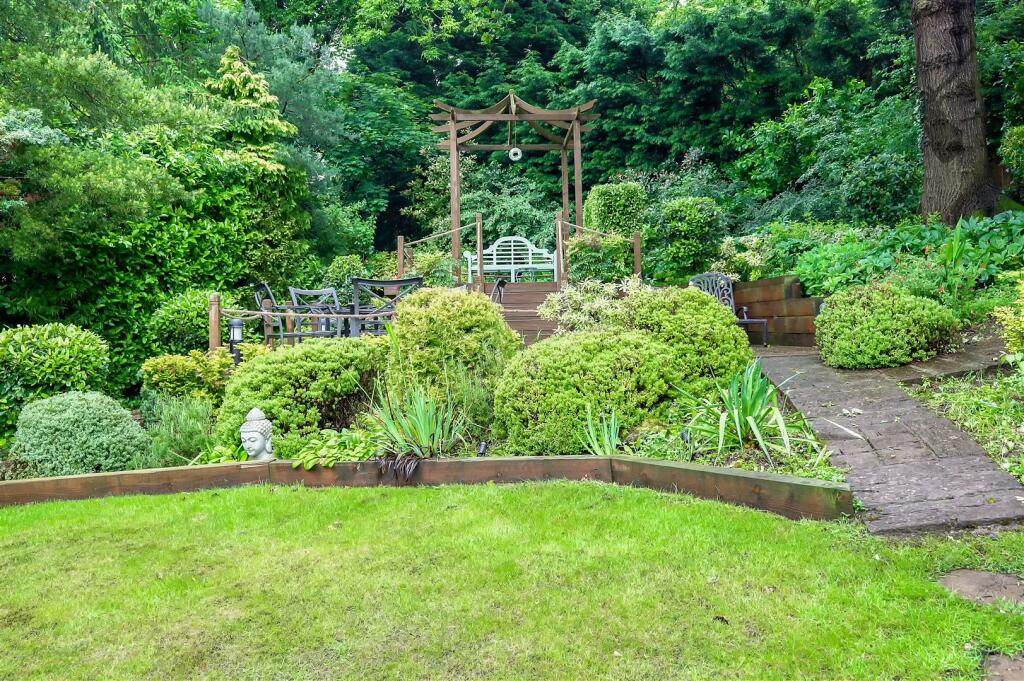 A variety of plants and trees in a rear garden in Chingford
Climate resilience
The Climate Emergency is affecting weather patterns, and extreme weather events are becoming more likely and frequent. Long periods of draught or heavy downpours can devastate gardens that have not been created with climate resilience in mind.
Some examples of climate-friendly planting include:
- Wildflower meadows are naturally climate resilient due to their extensive root system. See here for advice on creating your own wildflower meadow.
- Soleirolia is an alternative to grass that is attractive and maintenance-free. Soleirolia will tolerate sun or shade, and recovers quickly after dry spells. This page lists some more examples of resilient plants, including trees and grasses.
- This page lists some more examples of resilient plants, including trees and grasses.
| 11.3.2 | When selecting plants for climate resilience, residents should consider the following: - how much watering the plant requires and its tolerance to drought, in order to cope with increasingly hot and dry summers.
- though native plants can be suitable, trees such as beech, birch, rowan and Scot’s pine have recently failed in London’s dry summers.
- integrating a diverse range of trees and plants, for a better chance of survival, and also to support biodiversity.
|
|
| 11.3.3 | To counteract urban heat island effect and reduce surface water flooding in gardens, residents are encouraged to: - reduce areas of hard surfacing and replace hard standing with porous materials.
- add planting and soft landscaping.
- add soakaways beside hard standing, to allow surface water to drain away naturally
|
|
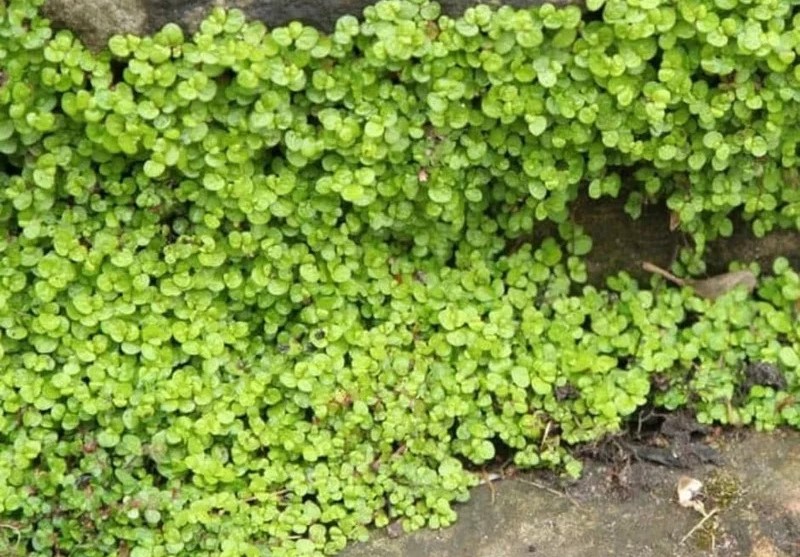 The tiny, rounded green leaves of Soleirolia grow to create a dense, tactile, moss-like carpet
Food growing
Whether you have a spacious garden or a small balcony, it is possible to grow your own fruits, vegetables and herbs. Food growing can provide fresh, nutritious food at low cost, while reducing the carbon footprint associated with the transportation of food.
| 11.3.7 | When considering food growing, consider: - planning the garden layout to maximise sunlight exposure and accommodate different plant sizes.
- adding compost to improve soil quality.
- the right time of year to plant seeds or seedlings. Some plants thrive in cooler weather while others need warmth.
- following the recommended spacing for each plant to ensure plants have enough room to grow.
- how frequently plants should be watered for proper maintenance.
- weeding regularly and using organic fertilisers to provide essential nutrients.
- picking produce regularly to encourage continued growth.
|
|
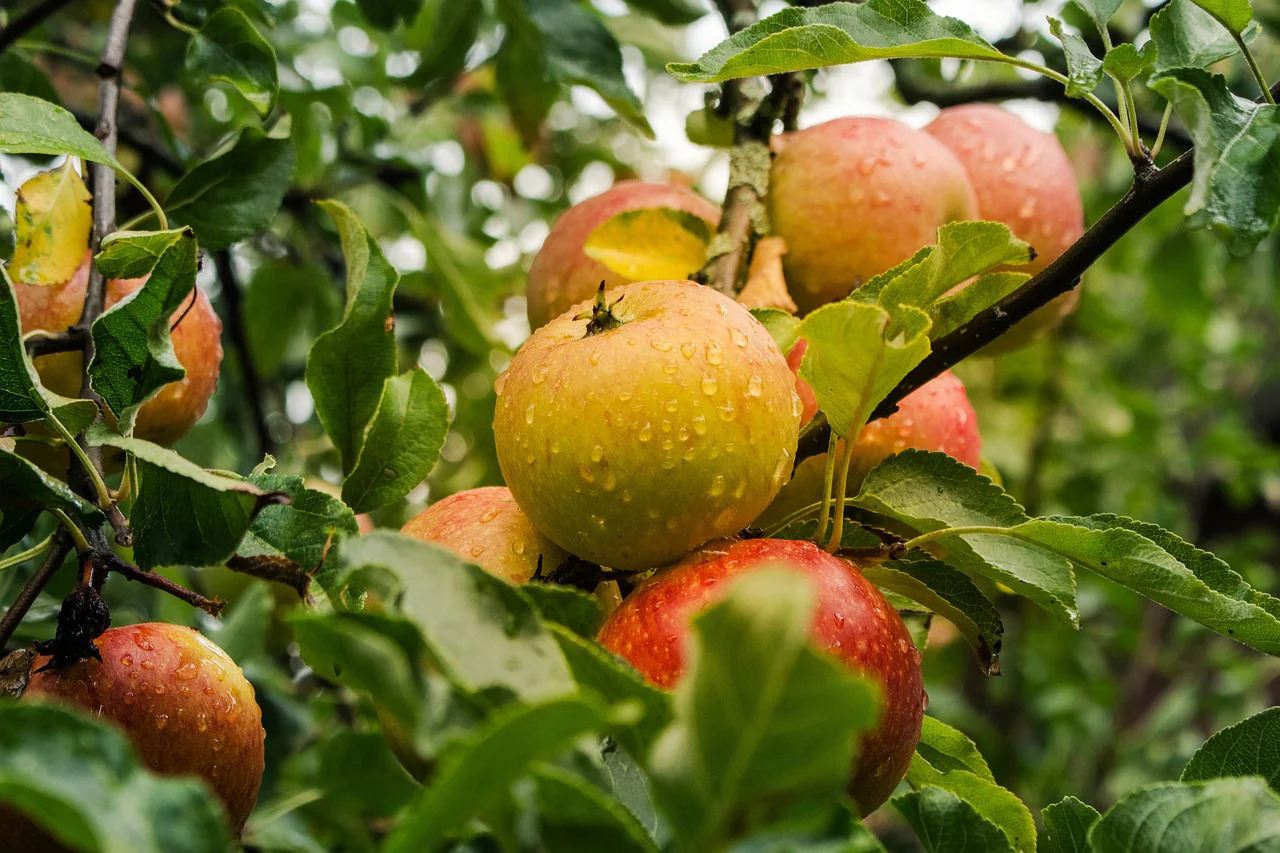 Apple trees can begin to bear fruit within 2-4 years of planting
Soil structure and health
Soil is the foundation of your garden. When food growing, it’s important to rotate crops each year to create healthy soil for growing productive flowers and vegetables. Healthy soil can also create a habitat for wildlife and help store carbon and water.
Tips for creating and maintaining healthy and productive soil in your garden:
- Compost, leaf mould, and well-rotted manure can improve soil structure and fertility. Any organic matter can be added, from lawn clippings to annual weeds, hedge-trimmings to faded flowers.
- Plant-based kitchen waste such as veg peelings can be added to compost, along with paper and cardboard. Compost can be made using a DIY or off-the-shelf composter.
- Mulching is the practice of covering the soil surface around plants with a layer of organic material. This can be organic, like straw, leaves, grass clippings, or compost, or inorganic, like gravel. Mulching helps retain moisture, suppress weeds, and add organic matter into the soil as materials decompose.
- Rotating plants prevents soil depletion and reduces pest and disease buildup.
- Soil testing can help to understand the nutrient needs and pH balance of soil.
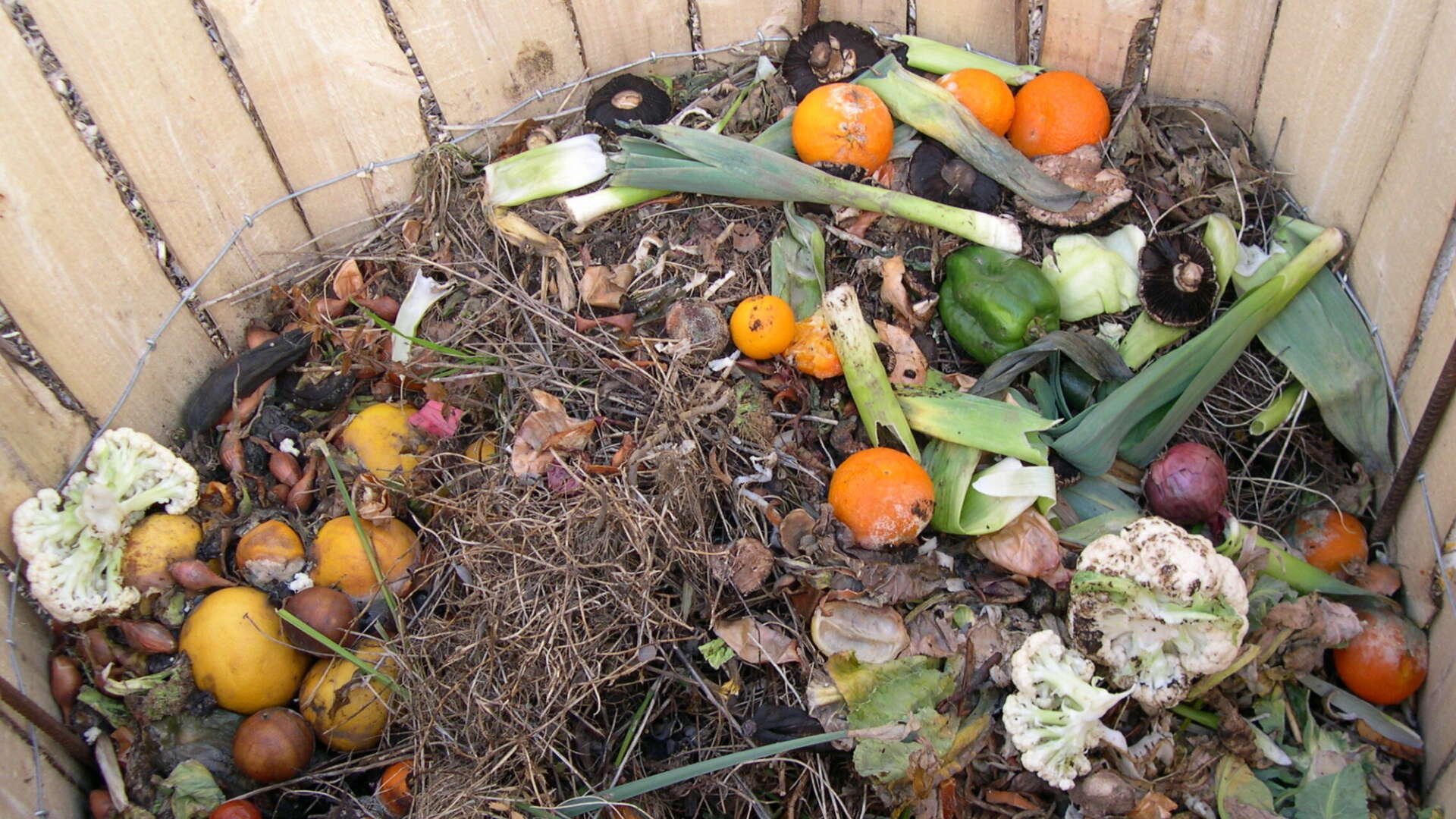 Composting your uncooked, organic food waste helps to reduce food waste
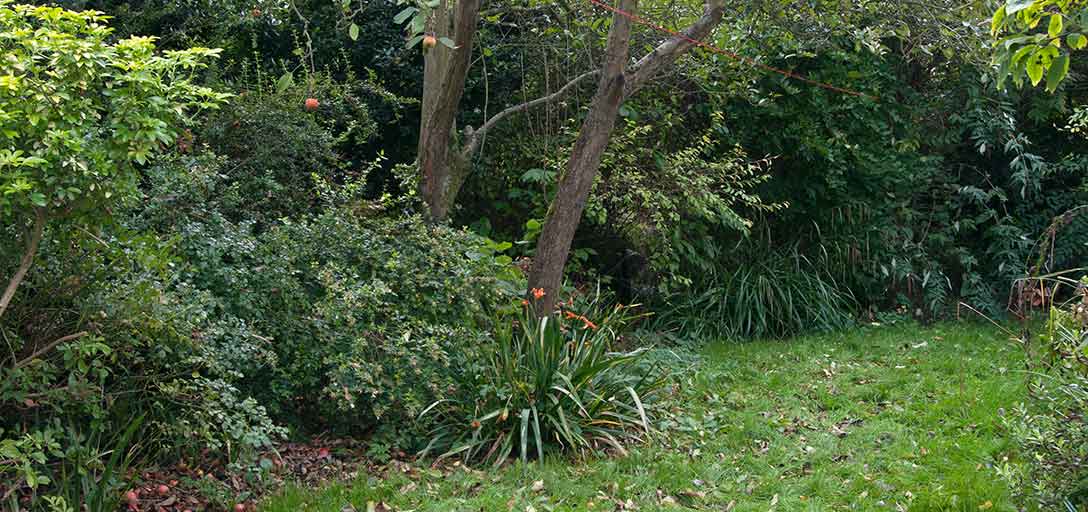 Mature trees in a rear garden provide shade, helping to cool your home in the summer months11.4 Trees
Trees and planting provide a landscaped setting for the home and help to mediate between public and private space. Trees can support your physical and mental health, provide shade and improve air quality in your garden.
In addition to the private and public amenity provided by trees, they help to reduce the risk of flooding, and tree roots help to prevent soil erosion. Trees also support biodiversity by providing habitats for birds, insects, and other wildlife.
Consider planting fruit trees in your garden, as they have greater ecological impact than a non-native flowering tree, in addition to bearing edible fruit at the end of the season.
| 11.4.1 | Trees are a material planning consideration, and their removal should be avoided when possible and an alternative replacement arranged.
|
|
|
|
|
| 11.4.5 | All existing trees must be included in drawings submitted as part of a planning application.
|
|
| 11.4.6 | Proposals must identify if trees have a Tree Preservation Order (TPO), or are within a conservation area, as these trees have special protections. This information can be requested here.
|
|
| 11.4.7 | Tree removal is only acceptable if fully justified. Where removal of a protected tree is justified and approval been granted by the Council, replacement trees will need to be planted to restore the lost amenity. The species, size, and position of the replacement trees must be agreed in writing by the Tree Preservation Team following appropriate notification to the Council of the tree’s removal.
|
|
| 11.4.8 | Where trees are not subject to protection, consideration must be given to the retention of suitable trees and to their appropriate management.
|
|
| 11.4.9 | For all developments where trees are located within or adjacent to the application site, a tree survey and Arboricultural Impact Assessment (AIA) must be submitted. If impacts on trees are identified, an Arboricultural Method Statement (AMS) is also required.
|
|
| 11.4.10 | Trees close to a proposed extension must be protected, including their root systems, during the construction process. The tree root protection area is calculated as an area equivalent to a circle with a radius 12 times the stem diameter, measured at 1.5m above ground level. The tree protection area must be calculated in accordance with the most recent version of British Standard BS5837.
|
|
|
|
|
| 11.4.11 | Where new trees are proposed, proposals must: - select native trees, where possible. These species are best for helping native insects and animals to thrive. More information about native trees can be found here.
- understand how large the tree will grow and how far the canopy will spread, so an appropriate tree can be chosen for the space.
- place a tree at least its mature height away from the nearest building and consider the ultimate crown height, spread and the root protection area.
- not place large trees too close to buildings or walls that they will be harmed. Root barriers may be used to achieve this.
- consider planting trees when the roots are dormant as they are less easily disturbed by the moving process. This is typically from mid-November to late March.
- include a plan for watering trees. Newly planted trees require watering 1-2 times per week if there’s no rain, and consistent watering during the first year is crucial.
|
|
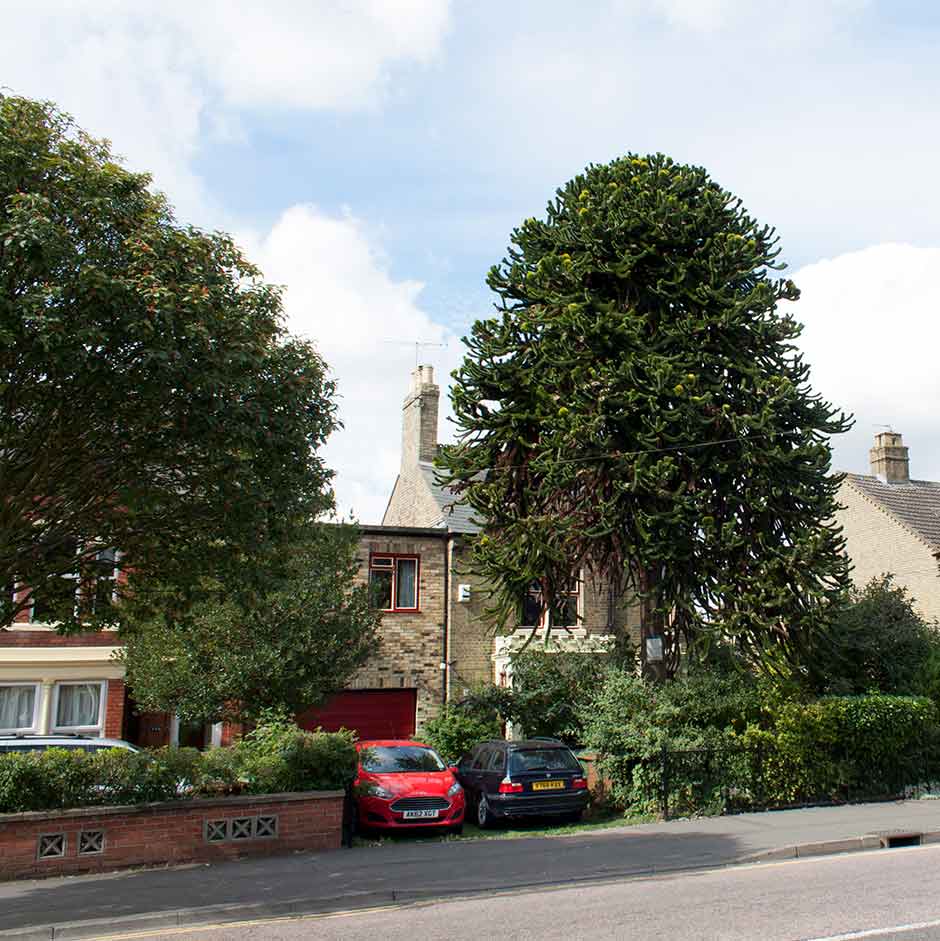 Large trees provide privacy to the front of this semi-detached home
11.3 Planting
Planting is a rewarding activity, which can result in a vibrant and peaceful garden that supports a wide range of species.
| 11.3.1 | When planning or designing a garden, residents should consider the following: - garden aspect/orientation, daily patterns of sun and shade, seasonal variation and micro-climate.
- time of year for planting. For most plants, Spring and Autumn are the best times to plant.
- watering plants regularly, especially during dry periods.
- checking plants regularly for pests and diseases. Plants can be pruned and dead-headed to encourage healthy growth.
- opting for natural pest control methods over pesticides, as these can disrupt natural ecosystems.
- planting flowers that bloom at different times, to provide a continuous food source for pollinators.
- allowing a small part of the garden to grow wild to boost its biodiversity. Further information about supporting biodiversity in gardens can be found here.
- native plants can provide the best resources for pollinators. See here for more information from the Royal Horticultural Society.
|
|
A variety of plants and trees in a rear garden in Chingford
Climate resilience
The Climate Emergency is affecting weather patterns, and extreme weather events are becoming more likely and frequent. Long periods of draught or heavy downpours can devastate gardens that have not been created with climate resilience in mind.
Some examples of climate-friendly planting include:
- Wildflower meadows are naturally climate resilient due to their extensive root system. See here for advice on creating your own wildflower meadow.
- Soleirolia is an alternative to grass that is attractive and maintenance-free. Soleirolia will tolerate sun or shade, and recovers quickly after dry spells. This page lists some more examples of resilient plants, including trees and grasses.
- This page lists some more examples of resilient plants, including trees and grasses.
| 11.3.2 | When selecting plants for climate resilience, residents should consider the following: - how much watering the plant requires and its tolerance to drought, in order to cope with increasingly hot and dry summers.
- though native plants can be suitable, trees such as beech, birch, rowan and Scot’s pine have recently failed in London’s dry summers.
- integrating a diverse range of trees and plants, for a better chance of survival, and also to support biodiversity.
|
|
| 11.3.3 | To counteract urban heat island effect and reduce surface water flooding in gardens, residents are encouraged to: - reduce areas of hard surfacing and replace hard standing with porous materials.
- add planting and soft landscaping.
- add soakaways beside hard standing, to allow surface water to drain away naturally
|
|
The tiny, rounded green leaves of Soleirolia grow to create a dense, tactile, moss-like carpet
Food growing
Whether you have a spacious garden or a small balcony, it is possible to grow your own fruits, vegetables and herbs. Food growing can provide fresh, nutritious food at low cost, while reducing the carbon footprint associated with the transportation of food.
| 11.3.7 | When considering food growing, consider: - planning the garden layout to maximise sunlight exposure and accommodate different plant sizes.
- adding compost to improve soil quality.
- the right time of year to plant seeds or seedlings. Some plants thrive in cooler weather while others need warmth.
- following the recommended spacing for each plant to ensure plants have enough room to grow.
- how frequently plants should be watered for proper maintenance.
- weeding regularly and using organic fertilisers to provide essential nutrients.
- picking produce regularly to encourage continued growth.
|
|
Apple trees can begin to bear fruit within 2-4 years of planting
Soil structure and health
Soil is the foundation of your garden. When food growing, it’s important to rotate crops each year to create healthy soil for growing productive flowers and vegetables. Healthy soil can also create a habitat for wildlife and help store carbon and water.
Tips for creating and maintaining healthy and productive soil in your garden:
- Compost, leaf mould, and well-rotted manure can improve soil structure and fertility. Any organic matter can be added, from lawn clippings to annual weeds, hedge-trimmings to faded flowers.
- Plant-based kitchen waste such as veg peelings can be added to compost, along with paper and cardboard. Compost can be made using a DIY or off-the-shelf composter.
- Mulching is the practice of covering the soil surface around plants with a layer of organic material. This can be organic, like straw, leaves, grass clippings, or compost, or inorganic, like gravel. Mulching helps retain moisture, suppress weeds, and add organic matter into the soil as materials decompose.
- Rotating plants prevents soil depletion and reduces pest and disease buildup.
- Soil testing can help to understand the nutrient needs and pH balance of soil.
Composting your uncooked, organic food waste helps to reduce food waste
Mature trees in a rear garden provide shade, helping to cool your home in the summer months11.4 Trees
Trees and planting provide a landscaped setting for the home and help to mediate between public and private space. Trees can support your physical and mental health, provide shade and improve air quality in your garden.
In addition to the private and public amenity provided by trees, they help to reduce the risk of flooding, and tree roots help to prevent soil erosion. Trees also support biodiversity by providing habitats for birds, insects, and other wildlife.
Consider planting fruit trees in your garden, as they have greater ecological impact than a non-native flowering tree, in addition to bearing edible fruit at the end of the season.
| 11.4.1 | Trees are a material planning consideration, and their removal should be avoided when possible and an alternative replacement arranged.
|
|
|
|
|
| 11.4.5 | All existing trees must be included in drawings submitted as part of a planning application.
|
|
| 11.4.6 | Proposals must identify if trees have a Tree Preservation Order (TPO), or are within a conservation area, as these trees have special protections. This information can be requested here.
|
|
| 11.4.7 | Tree removal is only acceptable if fully justified. Where removal of a protected tree is justified and approval been granted by the Council, replacement trees will need to be planted to restore the lost amenity. The species, size, and position of the replacement trees must be agreed in writing by the Tree Preservation Team following appropriate notification to the Council of the tree’s removal.
|
|
| 11.4.8 | Where trees are not subject to protection, consideration must be given to the retention of suitable trees and to their appropriate management.
|
|
| 11.4.9 | For all developments where trees are located within or adjacent to the application site, a tree survey and Arboricultural Impact Assessment (AIA) must be submitted. If impacts on trees are identified, an Arboricultural Method Statement (AMS) is also required.
|
|
| 11.4.10 | Trees close to a proposed extension must be protected, including their root systems, during the construction process. The tree root protection area is calculated as an area equivalent to a circle with a radius 12 times the stem diameter, measured at 1.5m above ground level. The tree protection area must be calculated in accordance with the most recent version of British Standard BS5837.
|
|
|
|
|
| 11.4.11 | Where new trees are proposed, proposals must: - select native trees, where possible. These species are best for helping native insects and animals to thrive. More information about native trees can be found here.
- understand how large the tree will grow and how far the canopy will spread, so an appropriate tree can be chosen for the space.
- place a tree at least its mature height away from the nearest building and consider the ultimate crown height, spread and the root protection area.
- not place large trees too close to buildings or walls that they will be harmed. Root barriers may be used to achieve this.
- consider planting trees when the roots are dormant as they are less easily disturbed by the moving process. This is typically from mid-November to late March.
- include a plan for watering trees. Newly planted trees require watering 1-2 times per week if there’s no rain, and consistent watering during the first year is crucial.
|
|
Large trees provide privacy to the front of this semi-detached home