Chestnuts Field, a green space tucked behind Forest Road, has undergone a remarkable transformation. Previously prone to flooding and underused, the site has been reimagined as a vibrant wetland, a haven for wildlife and welcoming space for local people. This project, delivered in partnership with the Environment Agency, Thames Water and Thames21, forms part of our wider efforts to make Waltham Forest greener, more climate resilient, and better connected to nature.
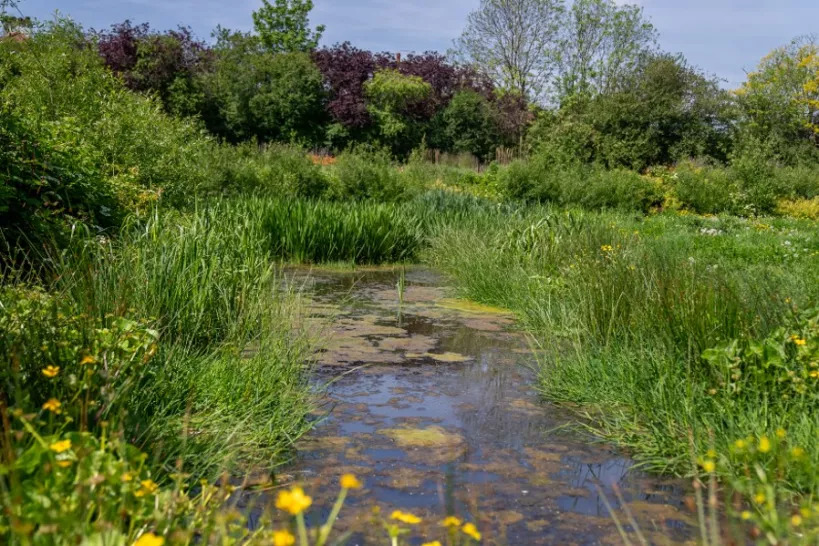 The wetlands have been designed to reduce pressure on local drainage systems (Source: LBWF)
Chestnuts Field before
For years Spruce Hills Road and Sturge Avenue struggled with surface-water flooding, especially during heavy rainfall. Chestnuts Field sits within the wider catchment of the Dagenham Brook, and as climate change increases the frequency of downpours, flood risk was increasing for downstream properties and businesses . The space also previously had limited ecological value consisting mainly of grassland, with few habitats for wildlife.
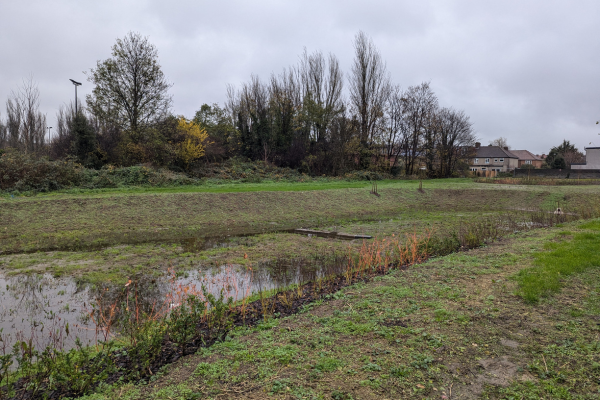 Chestnuts Field before the completion of the wetlands scheme (Source: Thames 21)
Restoring natural processes
The land has been reshaped to create natural water‑holding features, enabling the site to store up to 3000 cubic metres of rainwater. Formations in the landscape, known as swales, collect and filter rainwater runoff, reducing pressure on local drainage systems. By reducing flooding on the site, sustainable drainage features have made Chestnuts Field a usable amenity space for the community.
The project is also about creating a space for wildlife to thrive. The wetlands now include a mosaic of habitats that are increasingly rare in urban environments, including:
- wetland basins,
- wet meadows,
- reedbeds,
- wildflower areas.
Native trees and shrubs have been planted to boost biodiversity and create a more resilient landscape. These habitats will support birds, amphibians, insects, and a wide range of plant species.
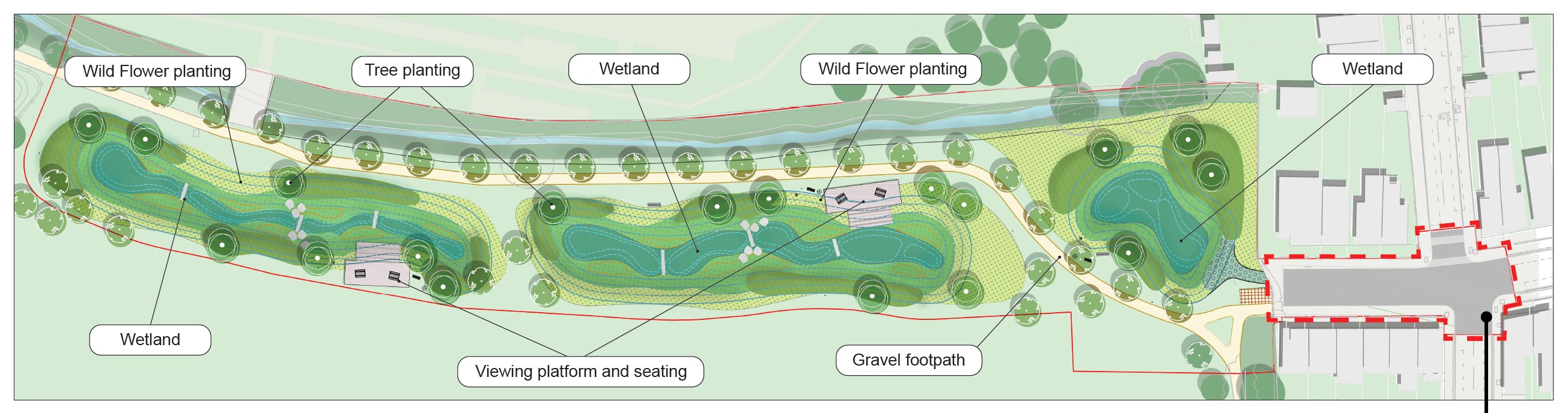
Site plan drawing of the Chestnuts Field wetlands scheme (Source: LBWF)
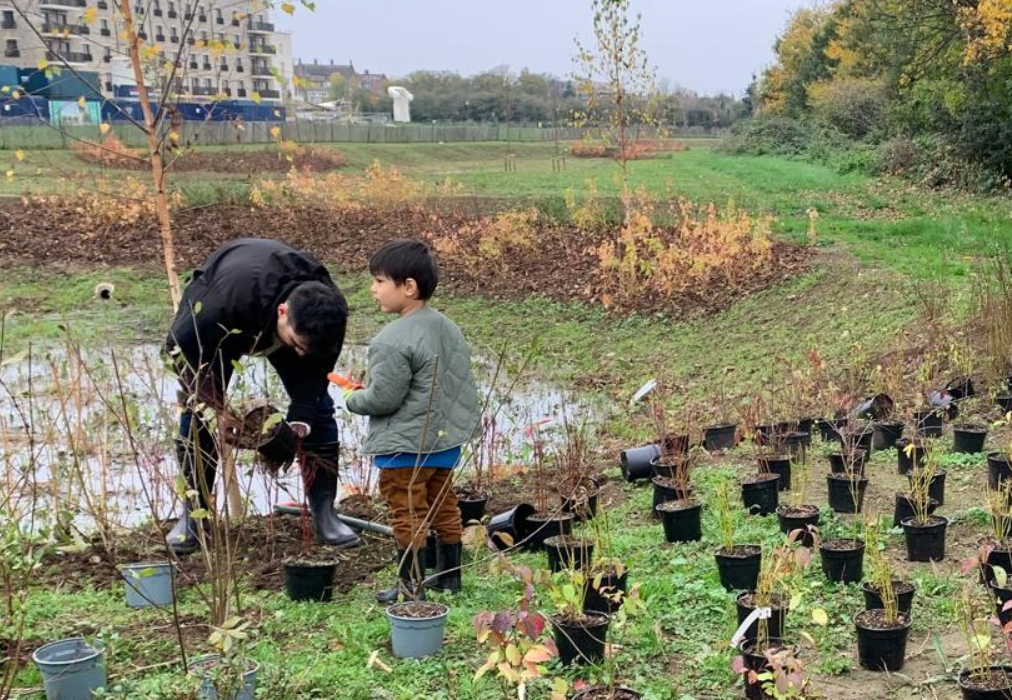 Volunteer planting day in Chestnut Fields (Source: Thames21)
A greenspace for the community
Community involvement has been central from the start. Through the Connecting Communities programme, led by Thames21:
- workshops, guided nature walks, and volunteer planting days have taken place,
- residents, schools, and local groups have helped shape the vision for the space,
- local residents have learned about wetland ecology and contributed to habitat creation.
Many local people were excited to see an underused space become a living landscape that supports both nature and wellbeing. The project demonstrates what can be achieved through collaboration and local stewardship. If you would like to get involved with greening near you, take a look at our list of green community groups in Waltham Forest.
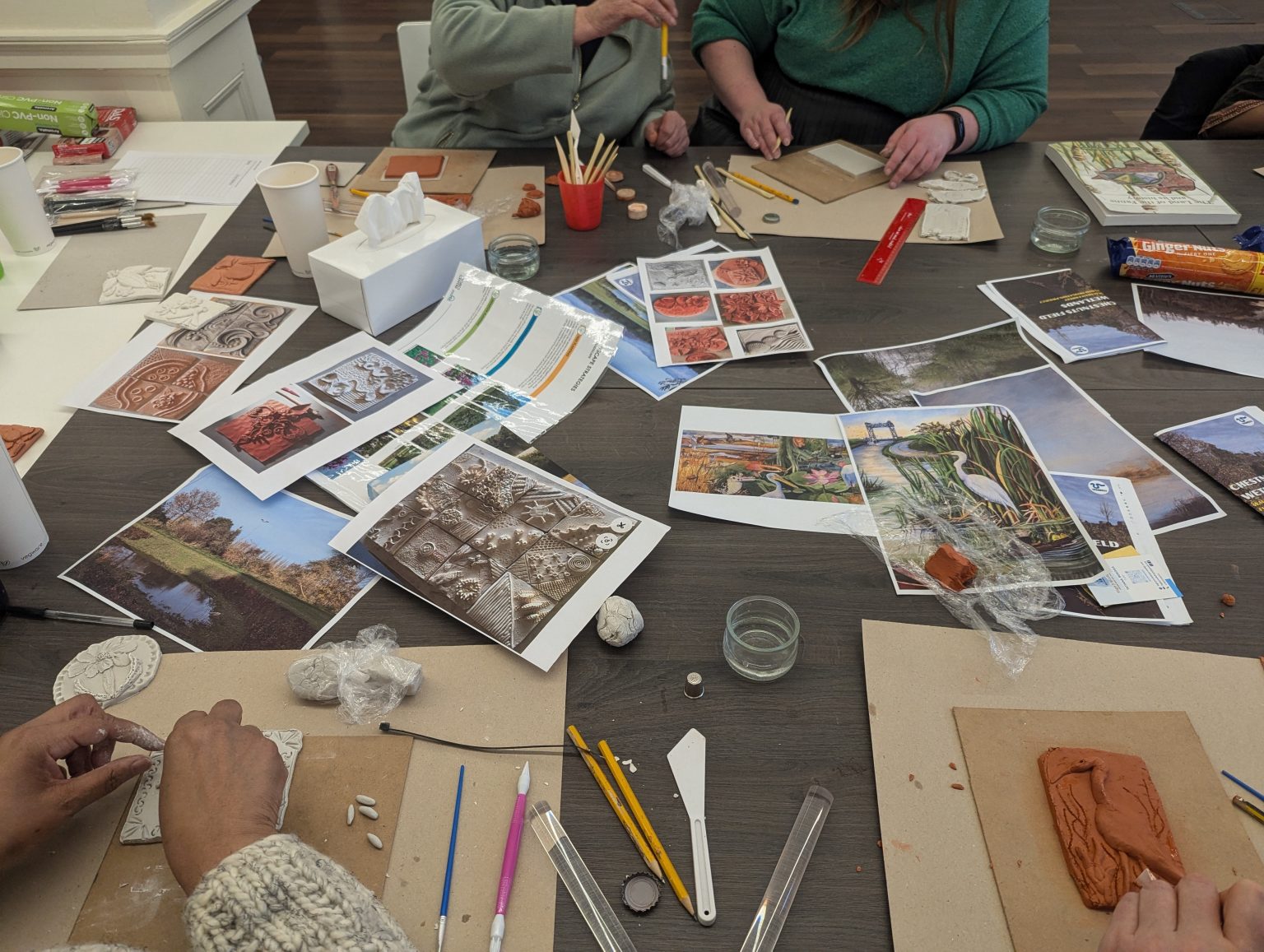 A creative workshop exploring wetlands themes, as part of the Connecting Communities programme (Source: Thames21)
Planting and wildlife features
The scheme includes the creation of a vibrant wetland ecosystem in the north‑eastern corner of the site, including:
- new trees and shrubs within waterlogged areas to manage run-off,
- planting to stabilise banks, reduce erosion and attract wildlife,
- habitats for insects, to help maintain healthy soil, recycle nutrients and pollinate flowers.
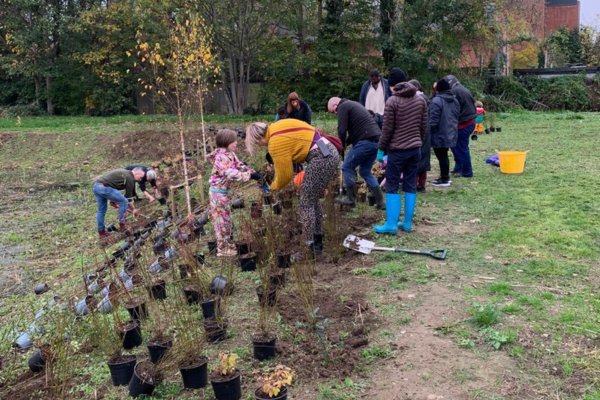 Residents planting species at the edges of the waterlogged areas, at the first volunteer day back in November 2024 (Source: Thames21)
Access and connectivity
The following features have been designed to make the wetlands feel safe, welcoming and easy to navigate:
- new footpaths link the site with Forest Road and the William Morris Gallery,
- seating areas and viewing points provide places to enjoy nature,
- open green areas remain available for play and community use,
- a new swale at the end of Spruce Hills Road has helped to reduce flood risk, by directing overland flows from surrounding roads into the wetlands.
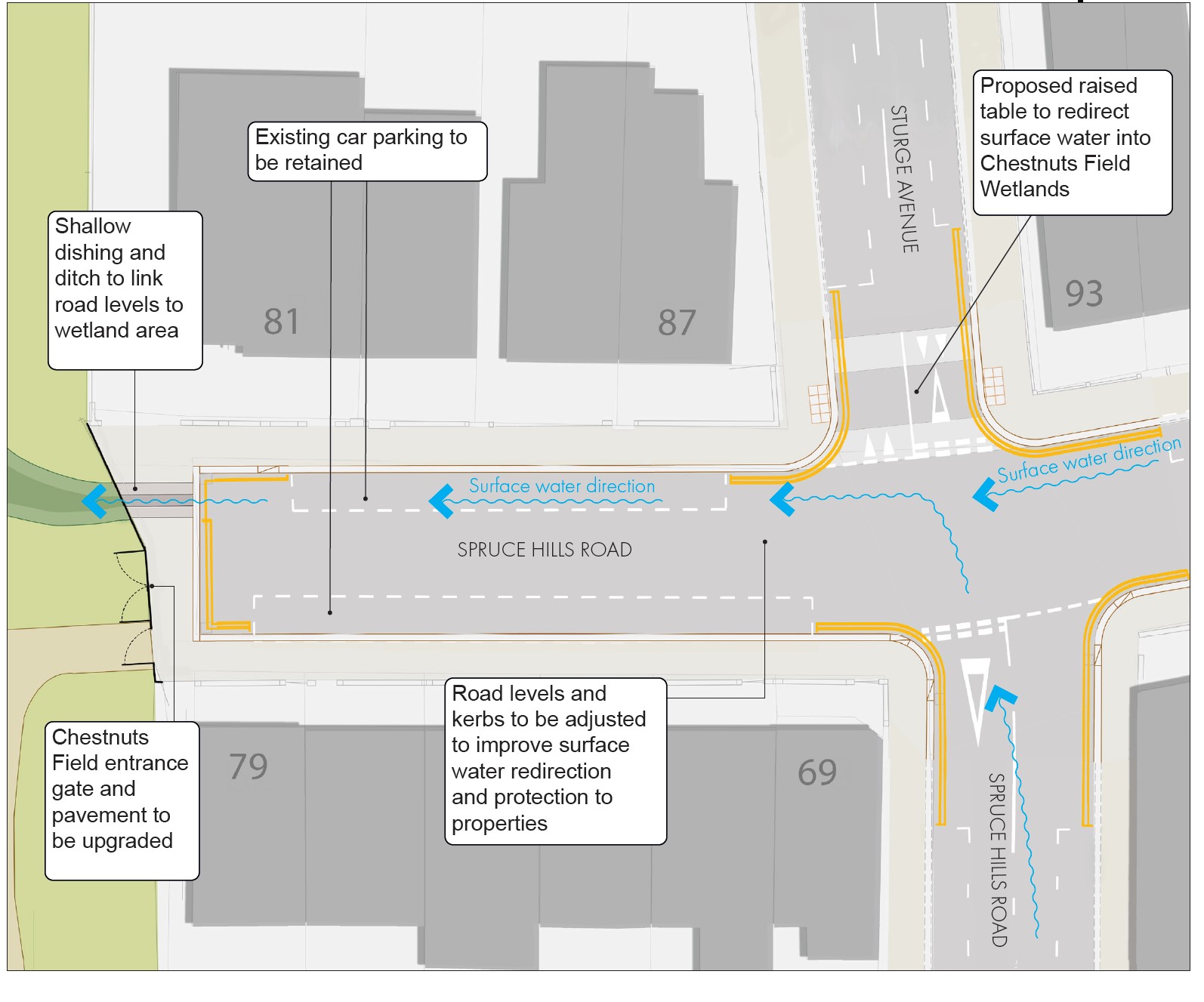 Site plan showing how the scheme directs rainwater run-off from Spruce Hills Road and Sturge Avenue into the wetlands, to drain away naturally (Source: LBWF)
The future of Chestnuts Field
The new Chestnuts Field has been thoughtfully designed with local residents in mind, providing a green retreat in the heart of Walthamstow. Information boards create a wetlands educational trail for children, and the site has already become a space for people of all ages to learn about biodiversity and water cycles. As the wetlands mature, Chestnuts Field will continue to grow into a place where water, wildlife, and community can come together.
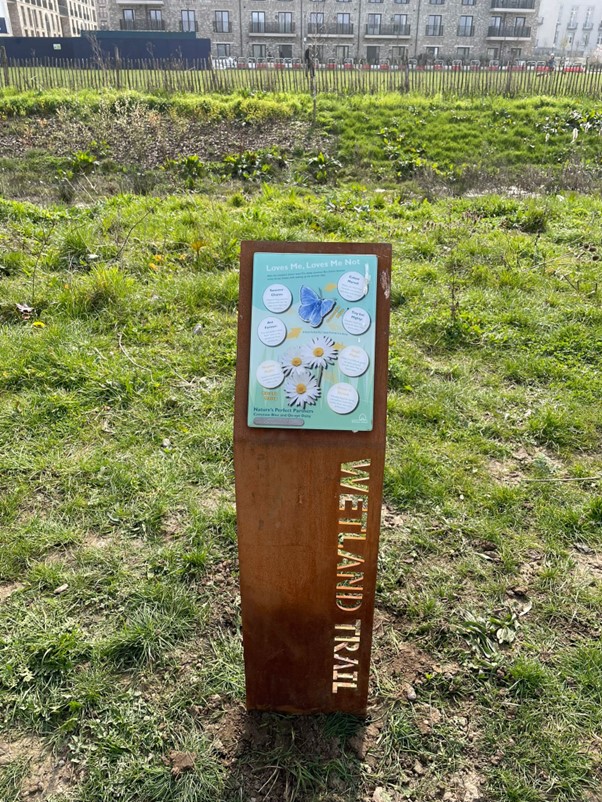 Information board, as part of the wetlands educational trail (Source: LBWF)
Chestnuts Field, a green space tucked behind Forest Road, has undergone a remarkable transformation. Previously prone to flooding and underused, the site has been reimagined as a vibrant wetland, a haven for wildlife and welcoming space for local people. This project, delivered in partnership with the Environment Agency, Thames Water and Thames21, forms part of our wider efforts to make Waltham Forest greener, more climate resilient, and better connected to nature.
The wetlands have been designed to reduce pressure on local drainage systems (Source: LBWF)
Chestnuts Field before
For years Spruce Hills Road and Sturge Avenue struggled with surface-water flooding, especially during heavy rainfall. Chestnuts Field sits within the wider catchment of the Dagenham Brook, and as climate change increases the frequency of downpours, flood risk was increasing for downstream properties and businesses . The space also previously had limited ecological value consisting mainly of grassland, with few habitats for wildlife.
Chestnuts Field before the completion of the wetlands scheme (Source: Thames 21)
Restoring natural processes
The land has been reshaped to create natural water‑holding features, enabling the site to store up to 3000 cubic metres of rainwater. Formations in the landscape, known as swales, collect and filter rainwater runoff, reducing pressure on local drainage systems. By reducing flooding on the site, sustainable drainage features have made Chestnuts Field a usable amenity space for the community.
The project is also about creating a space for wildlife to thrive. The wetlands now include a mosaic of habitats that are increasingly rare in urban environments, including:
- wetland basins,
- wet meadows,
- reedbeds,
- wildflower areas.
Native trees and shrubs have been planted to boost biodiversity and create a more resilient landscape. These habitats will support birds, amphibians, insects, and a wide range of plant species.
Site plan drawing of the Chestnuts Field wetlands scheme (Source: LBWF)
Volunteer planting day in Chestnut Fields (Source: Thames21)
A greenspace for the community
Community involvement has been central from the start. Through the Connecting Communities programme, led by Thames21:
- workshops, guided nature walks, and volunteer planting days have taken place,
- residents, schools, and local groups have helped shape the vision for the space,
- local residents have learned about wetland ecology and contributed to habitat creation.
Many local people were excited to see an underused space become a living landscape that supports both nature and wellbeing. The project demonstrates what can be achieved through collaboration and local stewardship. If you would like to get involved with greening near you, take a look at our list of green community groups in Waltham Forest.
A creative workshop exploring wetlands themes, as part of the Connecting Communities programme (Source: Thames21)
Planting and wildlife features
The scheme includes the creation of a vibrant wetland ecosystem in the north‑eastern corner of the site, including:
- new trees and shrubs within waterlogged areas to manage run-off,
- planting to stabilise banks, reduce erosion and attract wildlife,
- habitats for insects, to help maintain healthy soil, recycle nutrients and pollinate flowers.
Residents planting species at the edges of the waterlogged areas, at the first volunteer day back in November 2024 (Source: Thames21)
Access and connectivity
The following features have been designed to make the wetlands feel safe, welcoming and easy to navigate:
- new footpaths link the site with Forest Road and the William Morris Gallery,
- seating areas and viewing points provide places to enjoy nature,
- open green areas remain available for play and community use,
- a new swale at the end of Spruce Hills Road has helped to reduce flood risk, by directing overland flows from surrounding roads into the wetlands.
Site plan showing how the scheme directs rainwater run-off from Spruce Hills Road and Sturge Avenue into the wetlands, to drain away naturally (Source: LBWF)
The future of Chestnuts Field
The new Chestnuts Field has been thoughtfully designed with local residents in mind, providing a green retreat in the heart of Walthamstow. Information boards create a wetlands educational trail for children, and the site has already become a space for people of all ages to learn about biodiversity and water cycles. As the wetlands mature, Chestnuts Field will continue to grow into a place where water, wildlife, and community can come together.
Information board, as part of the wetlands educational trail (Source: LBWF)