Retrofit case studies
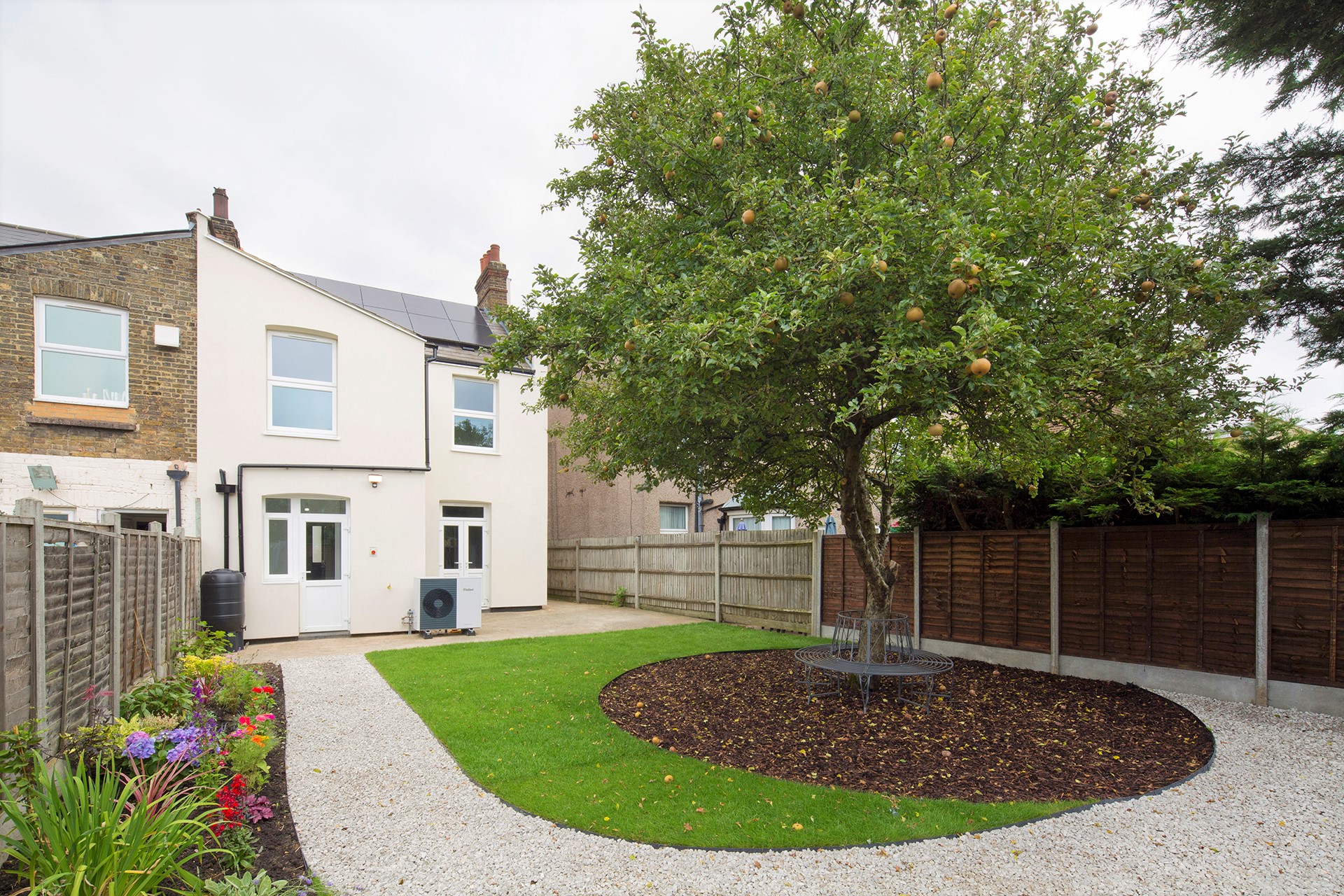 Greenleaf Road: Rear view of Retrofit House
10.1 Greenleaf Road
Project details
| Completed | 2021 | Retrofit measures | Interior insulation External wall insulation Glazing upgrades Air source heat pump Mechanical ventilation with heat recovery Underfloor heating Solar panels |
| Location | Walthamstow | ||
| Client | London Borough of Waltham Forest | ||
| Contractor | Contractor |
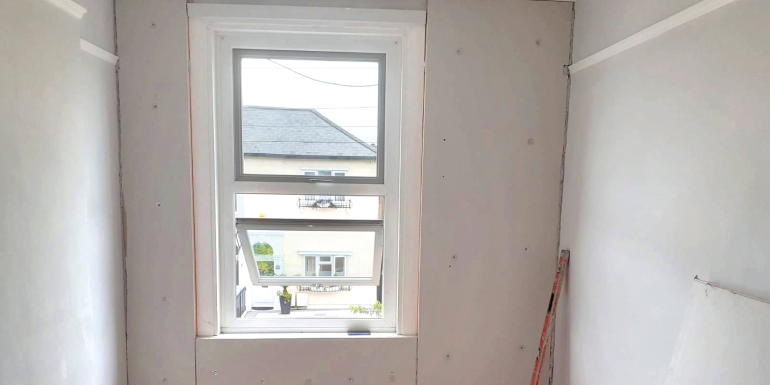 Greenleaf Road: New glazing with improved thermal efficiency and internal wall insulation upgrade
- In 2021, working in collaboration with Aston Group, we undertook an exemplar whole house retrofit on a typical Victorian terraced house, on Greenleaf Road in Walthamstow.
- The original house, built in 1902, had poor energy performance. A number of retrofit measures were integrated resulting in an incredible 81% reduction in the home’s CO2 emissions, and raising the property’s EPC rating from band E to band A.
- Solar panels and clean energy systems have helped to reduce carbon emissions to zero. This modernisation saves money, cuts carbon and shows how older homes across the borough can be upgraded to meet the challenges of the climate emergency.
- In 2022 a family moved into the property, and the benefits for residents are clear: electricity bills dropped by over £750 in just one year and heating and hot water costs fell by £530 annually, based on EPC estimates.
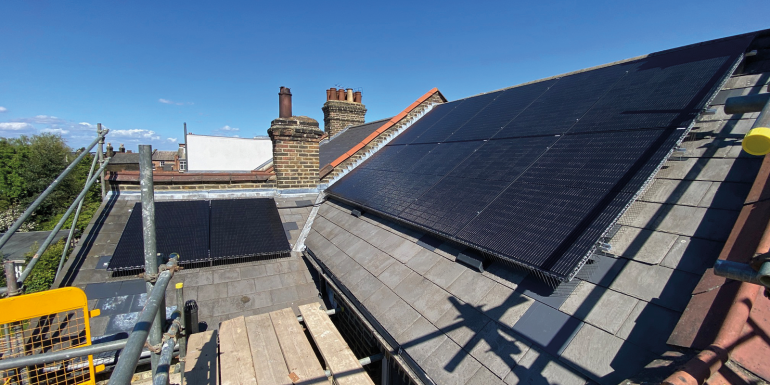 Greenleaf Road: Solar panels installed on the roof
The following retrofit measures were carried out, significantly improving energy efficiency and comfort:
Interior insulation
- The roof was upgraded by installing mineral wool insulation, between and above the roof joists, reducing heat loss through the roof by approximately 50%.
- Floor insulation was installed to the suspended floor via the Q-bot insulation system. This system is less invasive than other floor insulation methods, as only two small floor panels needed to be cut open for its installation.
Wall insulation
- External wall insulation was installed to the side and rear elevations of the property. The product used was 90mm of EPSslab, which was finished in render.
- External wall insulation was not feasible on the street elevation in order to preserve the property's character, so instead internal insulation was used for front external walls. The product used was 57.5mm of insulated plasterboard.
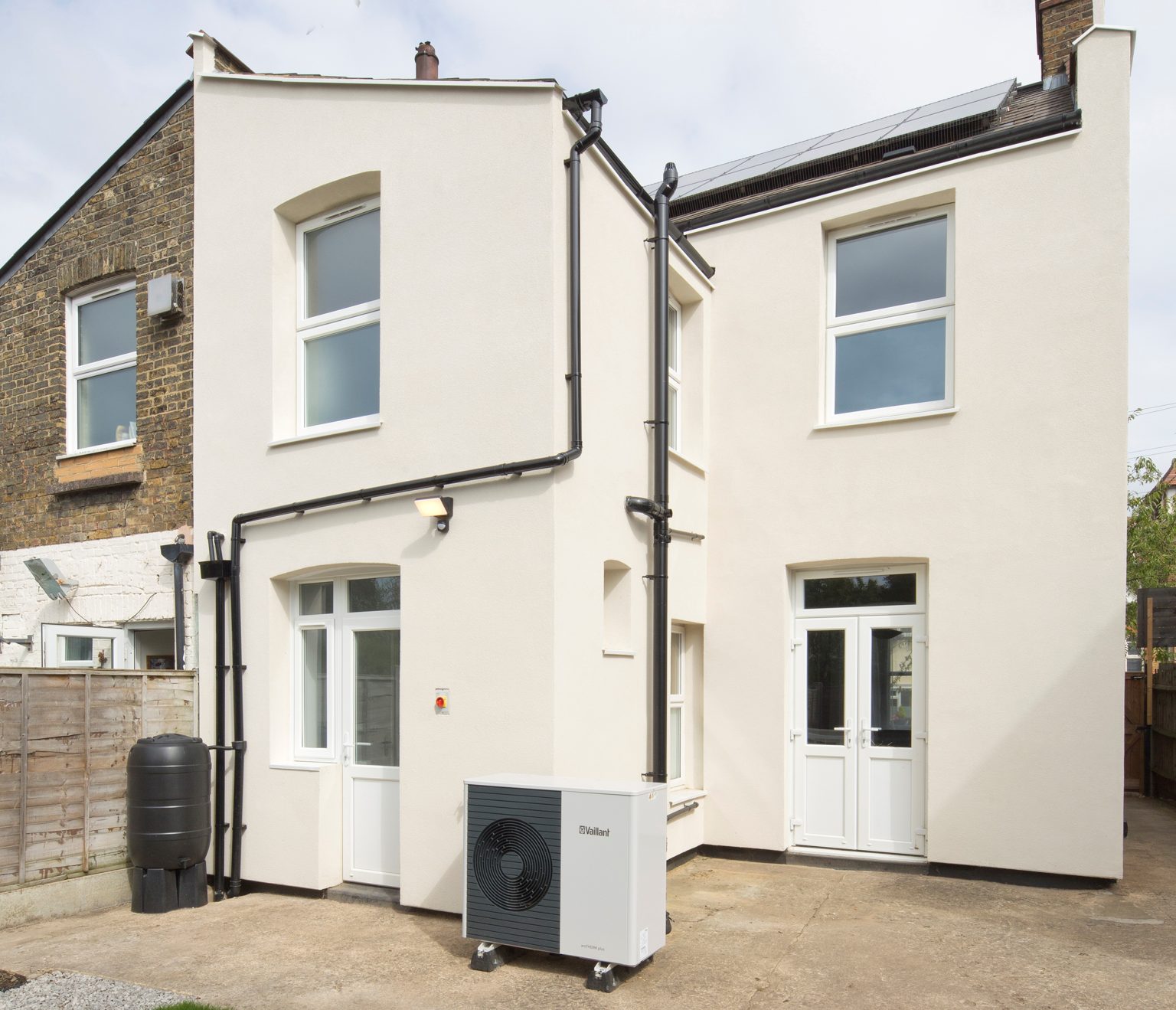 Greenleaf Road: Air source heat pump and external wall insulation installed to rear of the property
Glazing upgrades
- New high-performance double glazing was installed within the existing window frames.
Air source heat pump
- An existing gas boiler was replaced with an air source heat pump and associated hot water cylinder, helping to reduce the home’s carbon emissions.
Solar panels
- A 3.9 kWp solar photovoltaic array was installed to the roof, with associated battery storage.
- The battery storage system maximises the amount of renewable energy that remains at the property, for use of the occupant.
To learn more about the retrofit of 47 Greenleaf Road, see this case study by Aston group.
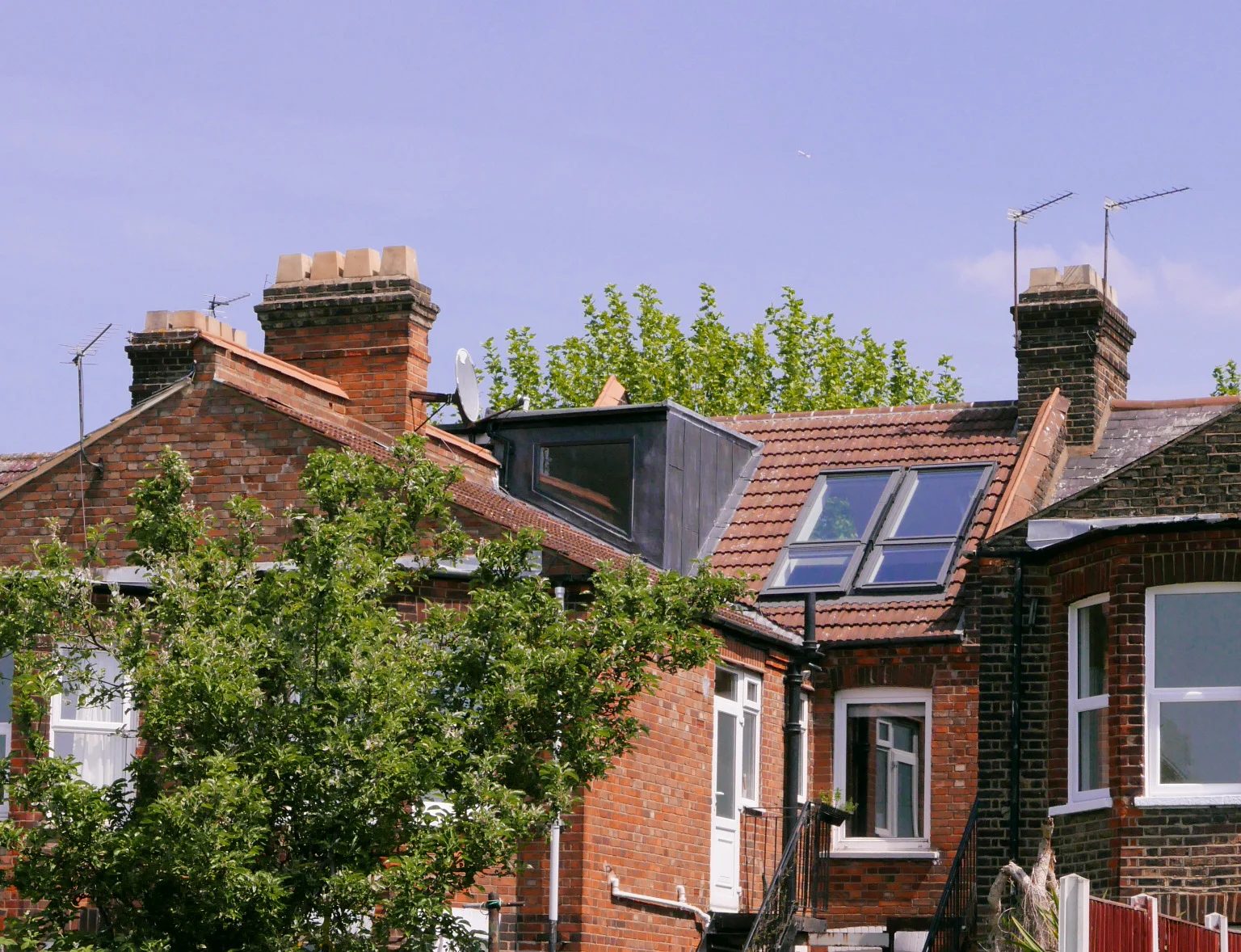 Edward Road: New rear roof dormer
10.2 Edward Road
Project details
| Completion | 2019 | Retrofit measures | Interior insulation Glazing upgrades |
| Location | Walthamstow | ||
| Practice | Syndicate West Architects | ||
| Client | Private residential clients | ||
| Contractor | Pioneer Concepts Ltd. |
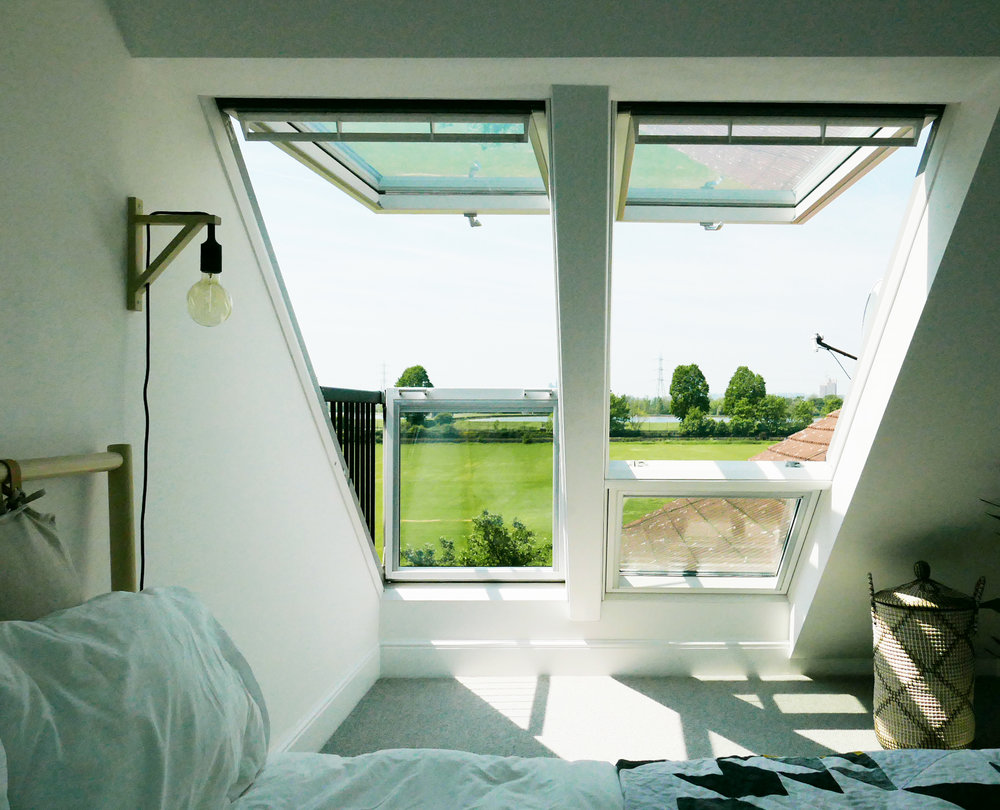 Edward Road: View from upper bedroom
- The owners of this upper floor Warner flat in Walthamstow wanted to create more space and light in their home, while also making their home more energy efficient.
- The flat had a small, narrow kitchen, but the redesign created an open plan kitchen/dining space by breaking through an existing chimney.
- The designers took a ‘less is more’ approach, prioritising spacious living areas over creating an additional bedroom.
- The main bedroom was moved into a converted loft space, with the addition of a lead-clad roof dormer, and two Velux windows.
- At the same time as making these alterations, interior insulation was upgraded and windows were replaced with new, more energy-efficient double glazed windows.
- This project shows how significant improvements can be made through only a couple of key retrofit measures
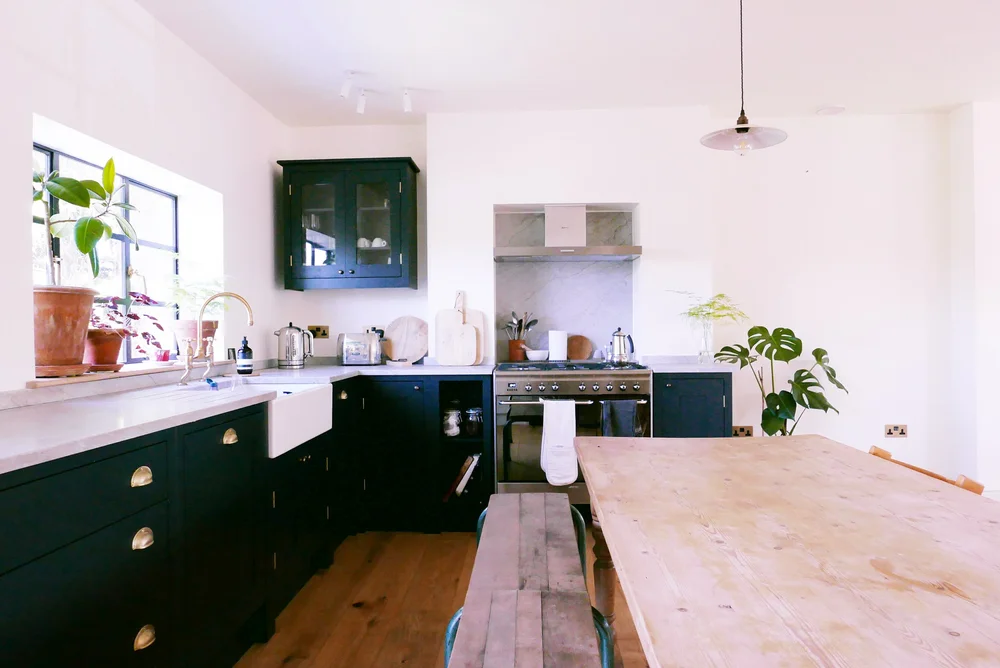 Thorpe Crescent: View into kitchen/living space
10.3 Thorpe Crescent
Project details
| Completion | 2022 | Retrofit measures | Interior insulation Glazing upgrades Mechanical ventilation with heat recovery |
| Location | Walthamstow | ||
| Practice | Syndicate West Architects | ||
| Client | Private residential clients | ||
| Contractor | AMB Construction Ltd. |
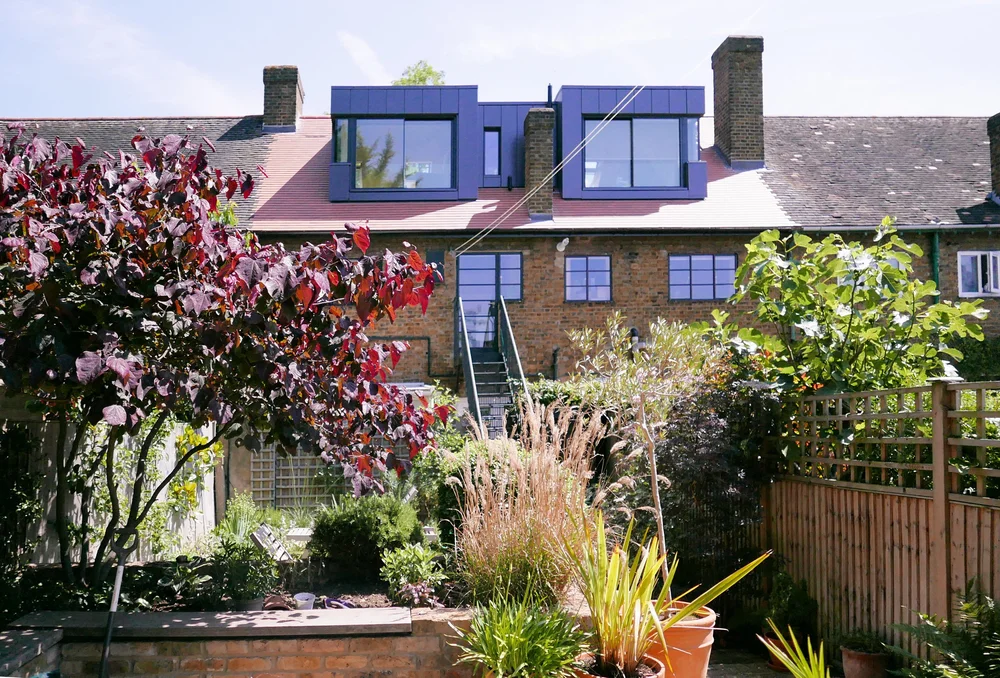 Thorpe Crescent: Front view of house following project completion
- The owners of this converted Warner home were struggling to keep it warm, and wanted to make better use of their unconverted loft space.
- The architects created an open plan double-height kitchen, living and dining space, with two bedrooms and a bathroom on the newly converted upper floor. To achieve this a dormer box was added, but otherwise, exterior work was minimal.
- A fabric first strategy was taken to the project, meaning external elements have been upgraded to best practice standards.
- Air tightness was enhanced, and mechanical ventilation with heat recovery was introduced, to help improve air quality and manage air moisture.
- Existing elements were reused where possible, including wooden floorboards being upcycled and re-used in the final project, helping to reduce the carbon footprint associated with the production and transportation of new materials.
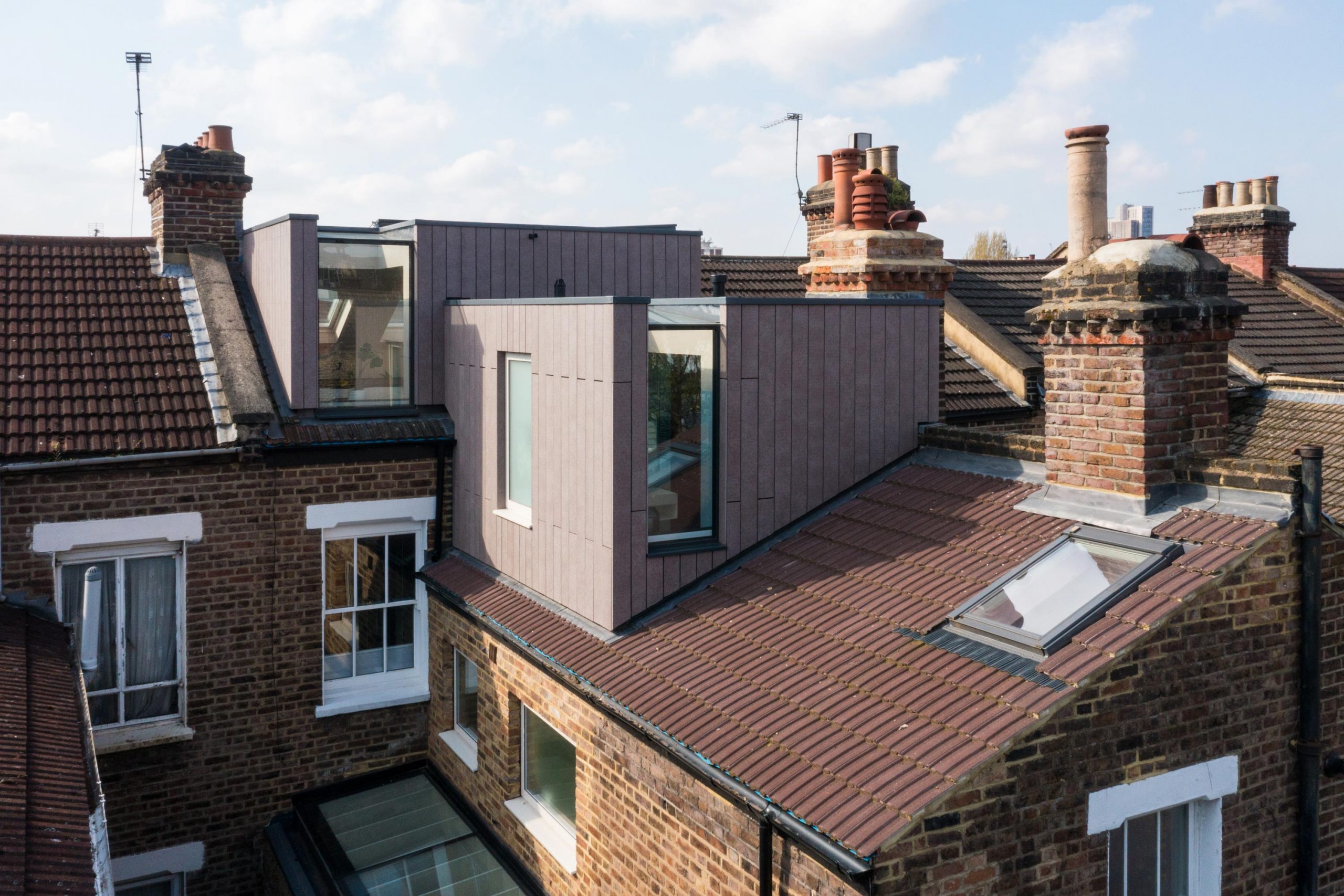 Judd House: Rear roof dormer
10.4 Judd House
Project details
| Completed | 2023 | Retrofit measures | Interior insulation Glazing upgrades Air source heat pump Mechanical ventilation with heat recovery Underfloor heating Solar panels |
| Location | Tottenham | ||
| Practice | Bradley Van Der Straeten | ||
| Client | Private residential clients | ||
| Contractor | Pioneer Concepts Ltd. |
- This extension and refurbishment project in Tottenham involved integrating a number of retrofit measures to reduce energy consumption and increase efficiency.
- Victorian terrace properties typically have low thermal efficiency, making them expensive to run and challenging to make comfortable.
- A ‘fabric first’ approach was taken to this project, to make it as thermally efficient as possible, helping to reduce the need for heating.
- A rear single storey extension and roof dormer were added, and internal works meant an additional bedroom could be added to the first floor.
- The retrofit measures introduced resulted in an incredible 67% reduction in energy use, and meant the house could run off only electricity without gas, further helping to reduce energy bills.
Insulation
- The brick walls of the house were lined internally with cork insulation, and finished with lime render.
- As well as improving the energy efficiency of the walls, these materials are “breathable”, allowing moisture to move through the wall and preventing condensation.
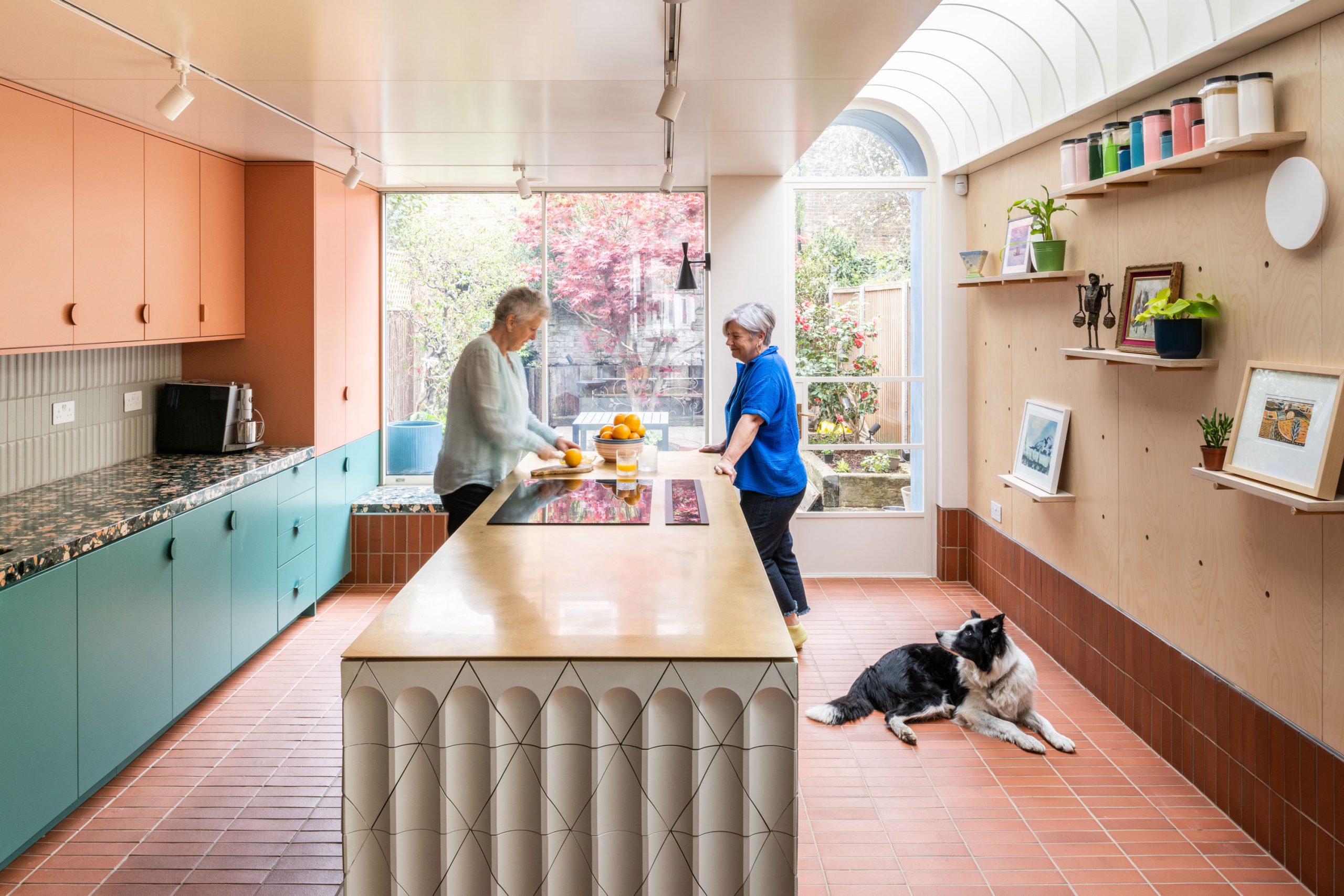 Judd House: View towards rear garden from kitchen
Air source heat pump (ASHP)
- An air source heat pump was fitted in the rear garden to heat the home by taking energy from the outside air.
Solar panels
- Solar panels were installed on the roof, providing a way to generate renewable energy for the home.
- Energy generated from the solar panels supplements the small amount of electricity used to run the heat pump.
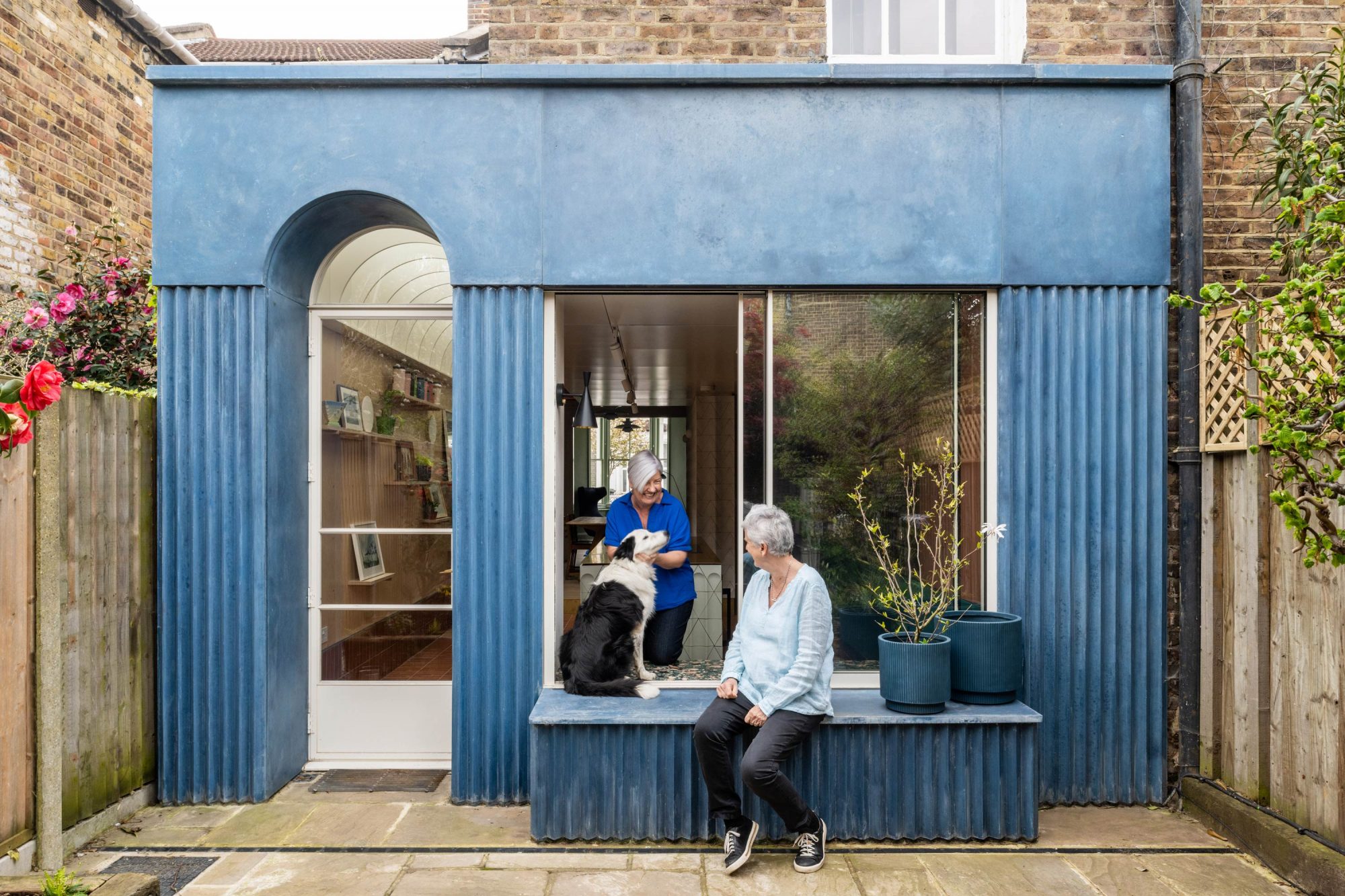 Judd House: Rear extension with coloured plaster finish
Natural, low carbon materials
- The clients opted to use cork insulation, even though it would result in a thicker wall than foam insulation.
- This is because cork sequesters carbon as it grows, making it a much lower-carbon option than most synthetic insulation options.
- Lime render was used as a lower-carbon alternative to gypsum plaster, and clay and water-based paints were used to improve air quality.
Re-use of materials
- Existing elements of the house were retained wherever possible, and materials were re-used to minimise waste.
- Sanitaryware and rooflights were carefully removed and reinstalled in new locations to work with the new design.
- This approach not only helped to reduce the total cost of the project, but also reduced its associated carbon footprint.