Signs for Birds

Signs for Birds is a creative public art project developed as part of the Coppermill Area Art Initiative by Europa and what if: projects, and supported by the Waltham Forest Council and St James Big Local.
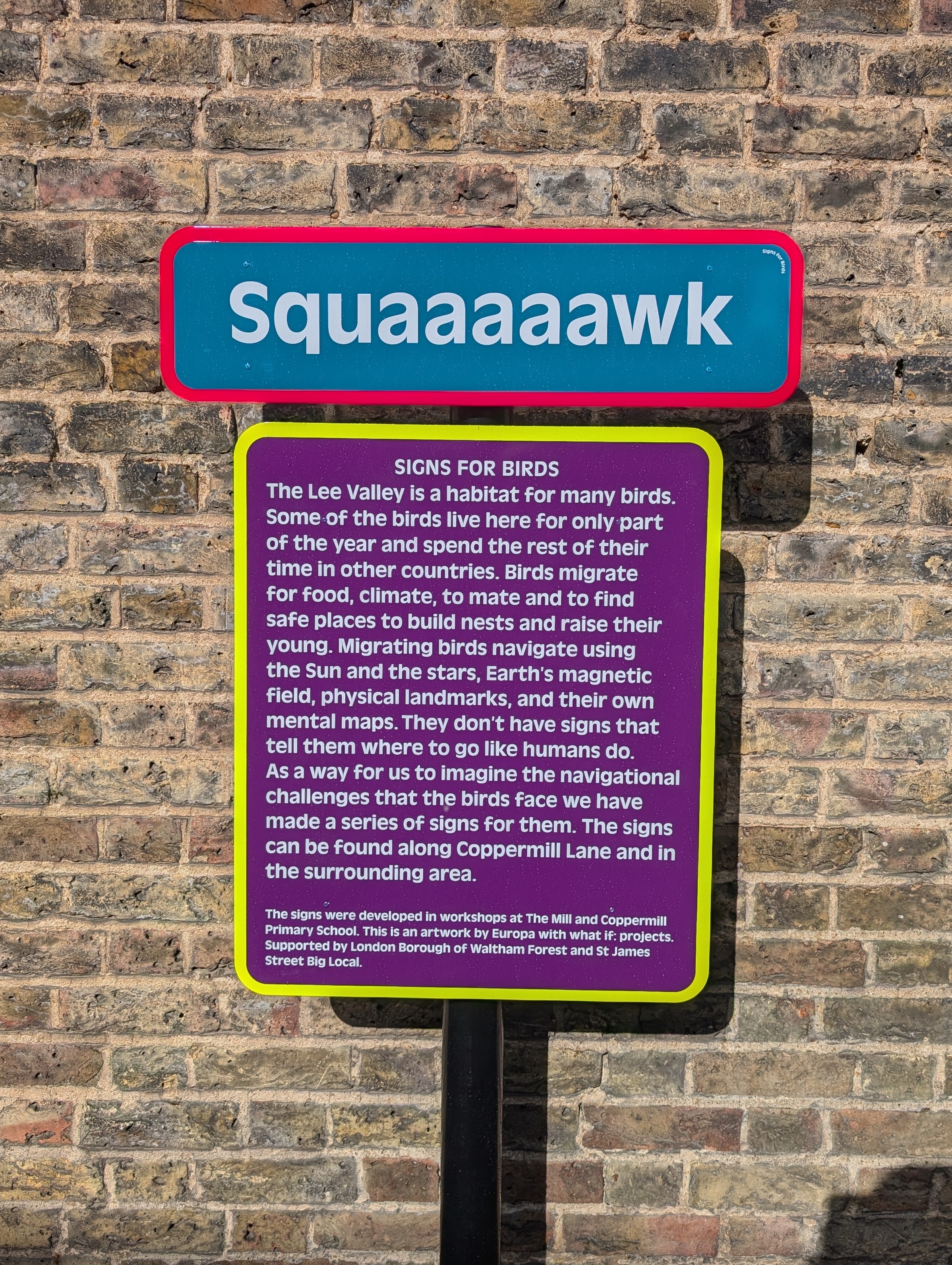

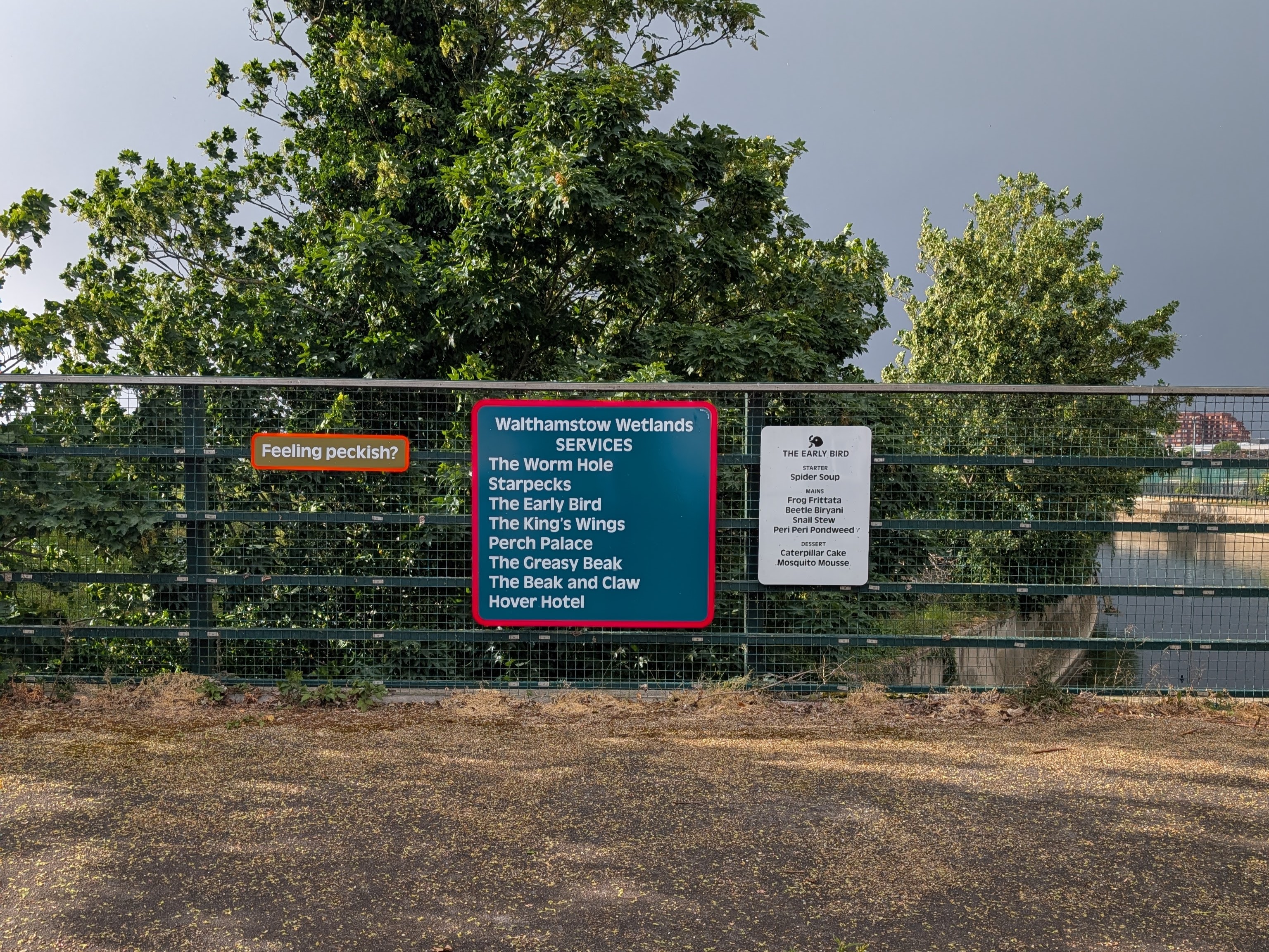
The project reimagines traditional street signage by placing birds at the centre of communication, designing playful, imaginative “signs” that speak both to people and to migratory bird species.

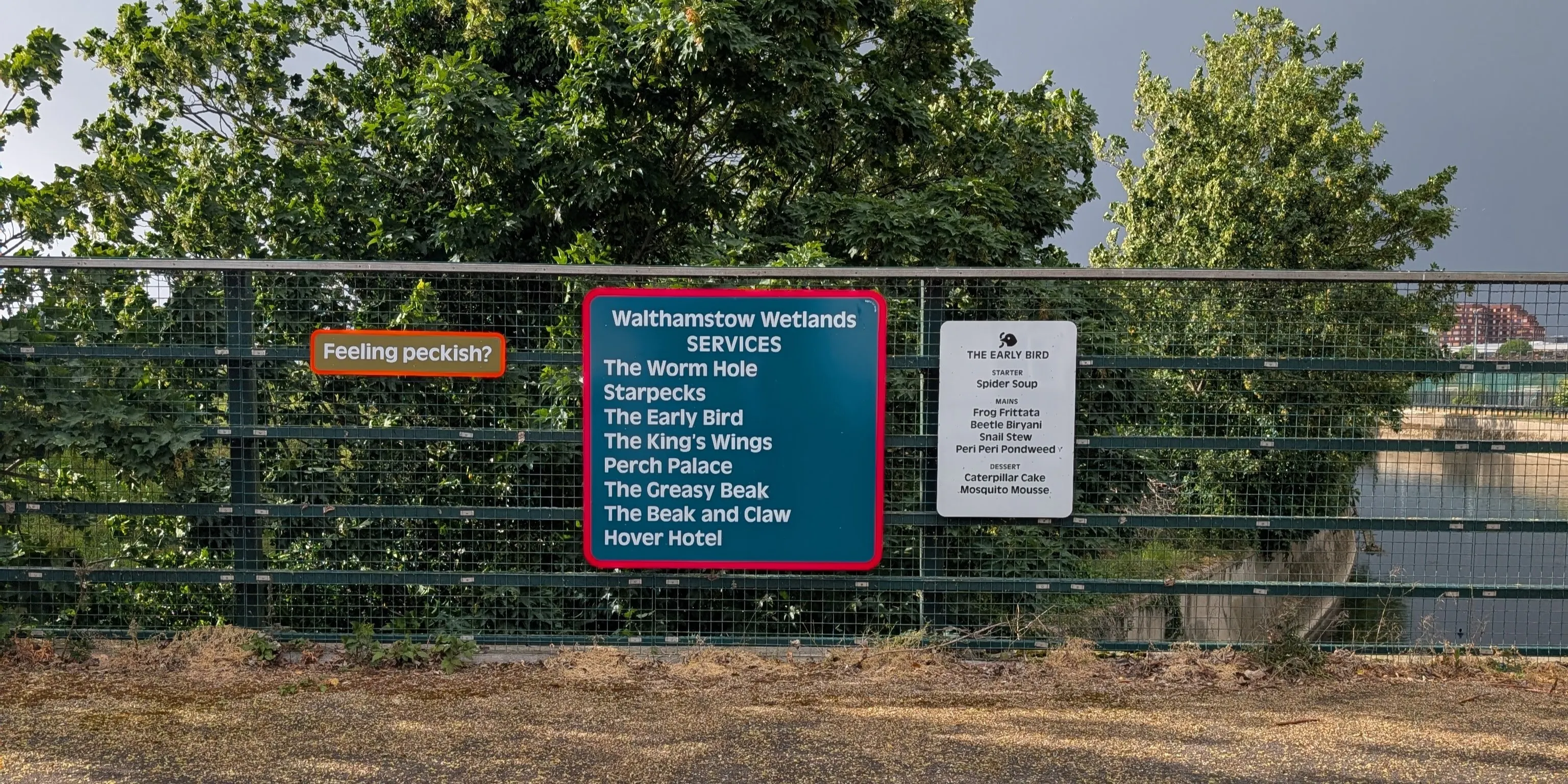
The project explores the idea of signage not just as something humans read, but as a medium that could reflect how birds see, navigate, and experience the world. Concepts include signs “for birds to read,” visual language inspired by birds’ enhanced colour perception, and humorous interpretations such as menus, calls, and bird-oriented messages.

Set within the context of the Walthamstow Wetlands and Coppermill area, the project also highlights the international journeys of migratory birds along the East Atlantic Flyway, connecting London to wetlands across Europe and Africa.
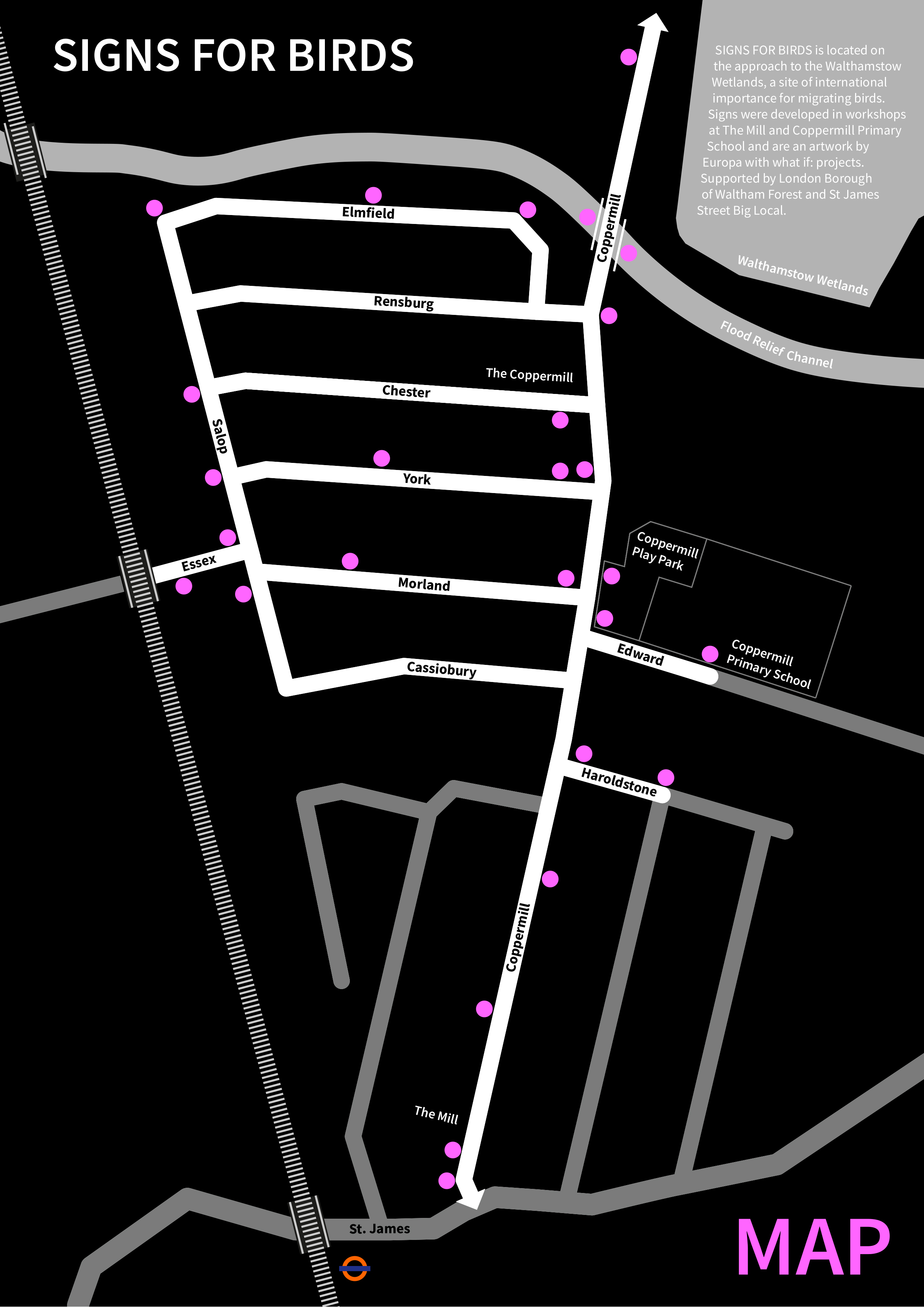
Signs for Birds Map (download link to the right), image credit: Europa and what if: projects


Who was involved?

The project has been collaboratively developed through a combination of commissioning, design expertise, and community participation:

  • Commissioned by: London Borough of Waltham Forest (LBWF Highways) and St James Big Local
  • Artists / Designers: Europa and what if: projects
  • Partners and contributors:
    • Lee Valley Regional Park Authority
    • Coppermill Lane Residents Group
    • Coppermill Primary School (pupils contributing creative ideas)
    • Local community participants through workshops at The Mill
    • International input, including a guest contributor from Finima Nature Park, Nigeria, reflecting the global nature of bird migration routes

This strong engagement approach ensures the project reflects local voices while connecting to wider ecological and global themes.
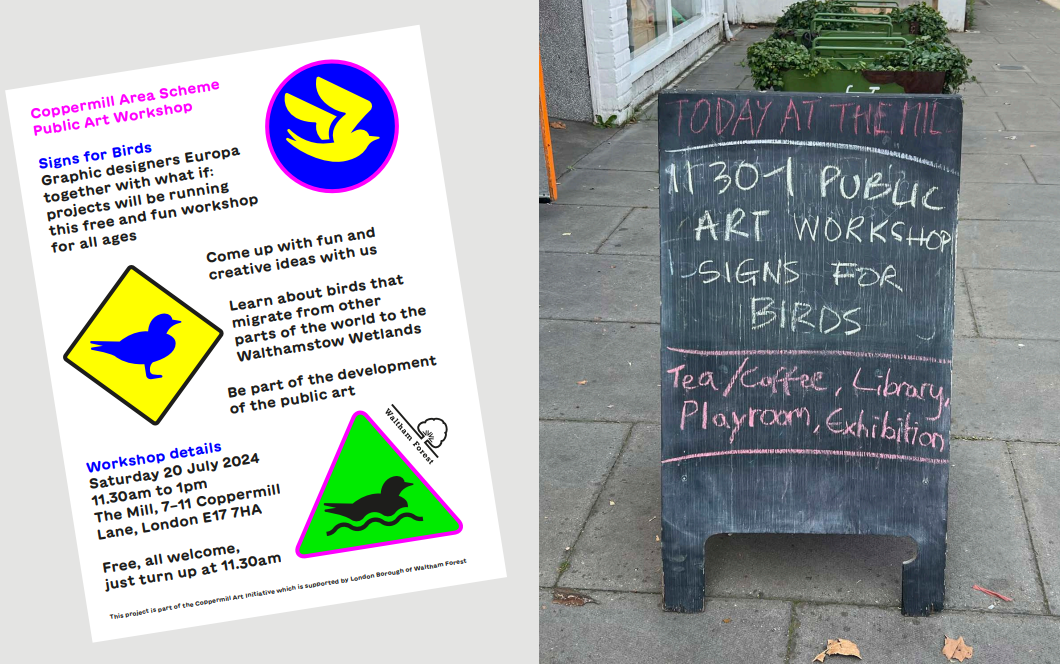
Engagement workshop at The Mill 2024, photo credit: Europa and what if: projects


International engagement

A key dimension of Signs for Birds is its international outlook, reflecting the global journeys of migratory birds and connecting the Coppermill area to a much wider ecological network. The project incorporates international input through collaboration with Finima Nature Park in Nigeria, including the participation of guest contributor Chuwuike Ebuzome during the public workshop at The Mill in July 2024.

This contribution brought first-hand knowledge of bird habitats and conservation efforts from West Africa, one of the regions connected to the UK via migratory routes. By including this perspective, the project moves beyond a purely local focus and highlights the shared responsibility of protecting bird species across continents.
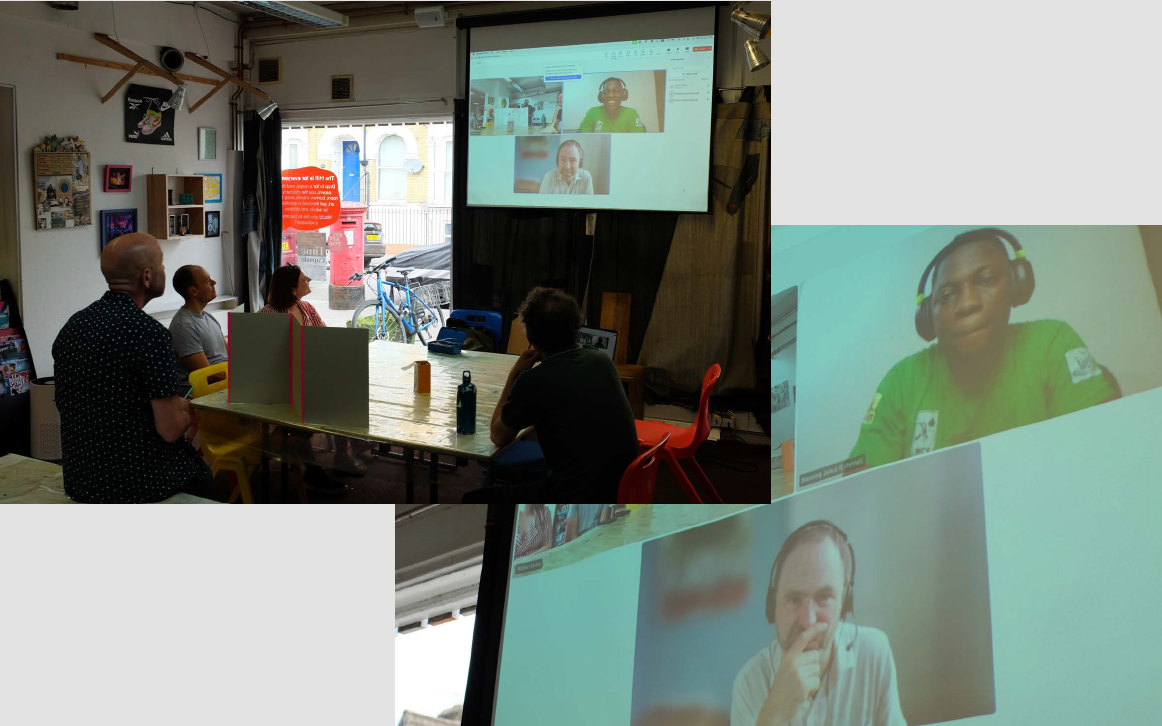
Workshop at The Mill with Chuwuike Ebuzome from Finima Nature Park in Nigeria, image credit: Europa and what if: projects


Reflecting migratory routes

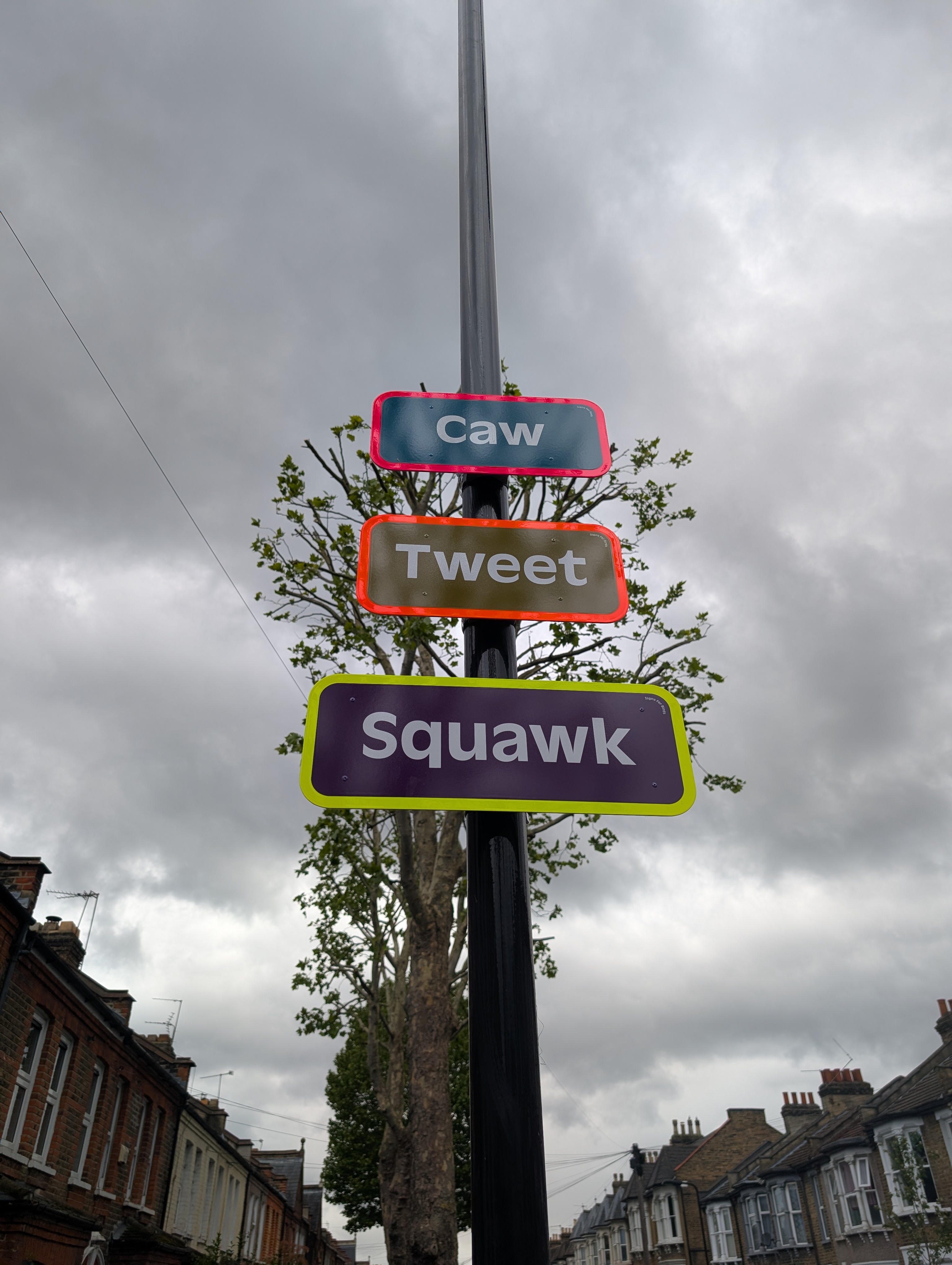
The artistic concept is grounded in the reality that many birds seen in Walthamstow Wetlands travel vast distances each year, linking London with ecosystems across Europe and Africa. The project references these connections through design ideas such as “south-facing” signage and the identification of Ramsar-recognised wetlands, emphasising internationally significant habitats.

This approach encourages audiences to think about the Coppermill area not as an isolated site, but as part of a global environmental network.

Learning across borders

International engagement was also embedded in the project’s public workshops, where participants were invited to:

  • Learn about bird species that migrate between different continents
  • Explore how environmental conditions differ across these regions
  • Consider how communication - through signage, colour, and symbols - might work across species and landscapes

These activities helped translate complex global ecological issues into accessible, creative ideas for local audiences.


Linking local action to global impact

By connecting community-led art in Waltham Forest with international conservation perspectives, Signs for Birds highlights an important message:
local environments are part of global systems.

The project’s engagement with international partners reinforces the idea that:

  • Protecting habitats in London contributes to global biodiversity
  • Migratory birds act as natural ambassadors between countries
  • Creative projects can bridge geographical and cultural boundaries.


What are the aims of the project?

The Signs for Birds project has several key aims:

1. Reimagining public signage

To creatively reinterpret everyday traffic and wayfinding signs, transforming them into artworks that are engaging, playful, and thought-provoking.

2. Connecting people to nature

To raise awareness of local birdlife and the importance of wetlands such as Walthamstow, while highlighting their links to global ecosystems and migratory routes.

3. Exploring non-human perspectives

To challenge human-centred design by imagining how birds perceive colour, language, and visual communication—incorporating ideas such as fluorescent colour ranges visible to birds.

4. Community co-creation

To actively involve residents, young people, and local organisations in shaping the artwork through workshops, meetings, and collaborative design activities.

5. Celebrating creativity and place

To create a distinctive identity for the Coppermill area through public art that reflects its character, biodiversity, and community spirit.

Signs for Birds is a creative public art project developed as part of the Coppermill Area Art Initiative by Europa and what if: projects, and supported by the Waltham Forest Council and St James Big Local.


The project reimagines traditional street signage by placing birds at the centre of communication, designing playful, imaginative “signs” that speak both to people and to migratory bird species.

The project explores the idea of signage not just as something humans read, but as a medium that could reflect how birds see, navigate, and experience the world. Concepts include signs “for birds to read,” visual language inspired by birds’ enhanced colour perception, and humorous interpretations such as menus, calls, and bird-oriented messages.

Set within the context of the Walthamstow Wetlands and Coppermill area, the project also highlights the international journeys of migratory birds along the East Atlantic Flyway, connecting London to wetlands across Europe and Africa.

Signs for Birds Map (download link to the right), image credit: Europa and what if: projects


Who was involved?

The project has been collaboratively developed through a combination of commissioning, design expertise, and community participation:

  • Commissioned by: London Borough of Waltham Forest (LBWF Highways) and St James Big Local
  • Artists / Designers: Europa and what if: projects
  • Partners and contributors:
    • Lee Valley Regional Park Authority
    • Coppermill Lane Residents Group
    • Coppermill Primary School (pupils contributing creative ideas)
    • Local community participants through workshops at The Mill
    • International input, including a guest contributor from Finima Nature Park, Nigeria, reflecting the global nature of bird migration routes

This strong engagement approach ensures the project reflects local voices while connecting to wider ecological and global themes.

Engagement workshop at The Mill 2024, photo credit: Europa and what if: projects


International engagement

A key dimension of Signs for Birds is its international outlook, reflecting the global journeys of migratory birds and connecting the Coppermill area to a much wider ecological network. The project incorporates international input through collaboration with Finima Nature Park in Nigeria, including the participation of guest contributor Chuwuike Ebuzome during the public workshop at The Mill in July 2024.

This contribution brought first-hand knowledge of bird habitats and conservation efforts from West Africa, one of the regions connected to the UK via migratory routes. By including this perspective, the project moves beyond a purely local focus and highlights the shared responsibility of protecting bird species across continents.

Workshop at The Mill with Chuwuike Ebuzome from Finima Nature Park in Nigeria, image credit: Europa and what if: projects


Reflecting migratory routes

The artistic concept is grounded in the reality that many birds seen in Walthamstow Wetlands travel vast distances each year, linking London with ecosystems across Europe and Africa. The project references these connections through design ideas such as “south-facing” signage and the identification of Ramsar-recognised wetlands, emphasising internationally significant habitats.

This approach encourages audiences to think about the Coppermill area not as an isolated site, but as part of a global environmental network.


Learning across borders

International engagement was also embedded in the project’s public workshops, where participants were invited to:

  • Learn about bird species that migrate between different continents
  • Explore how environmental conditions differ across these regions
  • Consider how communication - through signage, colour, and symbols - might work across species and landscapes

These activities helped translate complex global ecological issues into accessible, creative ideas for local audiences.


Linking local action to global impact

By connecting community-led art in Waltham Forest with international conservation perspectives, Signs for Birds highlights an important message:
local environments are part of global systems.

The project’s engagement with international partners reinforces the idea that:

  • Protecting habitats in London contributes to global biodiversity
  • Migratory birds act as natural ambassadors between countries
  • Creative projects can bridge geographical and cultural boundaries.


What are the aims of the project?

The Signs for Birds project has several key aims:

1. Reimagining public signage

To creatively reinterpret everyday traffic and wayfinding signs, transforming them into artworks that are engaging, playful, and thought-provoking.

2. Connecting people to nature

To raise awareness of local birdlife and the importance of wetlands such as Walthamstow, while highlighting their links to global ecosystems and migratory routes.

3. Exploring non-human perspectives

To challenge human-centred design by imagining how birds perceive colour, language, and visual communication—incorporating ideas such as fluorescent colour ranges visible to birds.

4. Community co-creation

To actively involve residents, young people, and local organisations in shaping the artwork through workshops, meetings, and collaborative design activities.

5. Celebrating creativity and place

To create a distinctive identity for the Coppermill area through public art that reflects its character, biodiversity, and community spirit.