Gardens are a crucial contributor to green infrastructure in Waltham Forest. Biodiversity and greening contribute to the character of a neighbourhood, provide important amenity space, help to mitigate flood risk, and bring visual and health benefits. Trees and plants provide a vital habitat for wildlife.
Gardens provide an opportunity to enhance your space and personalise it. Every small contribution across the borough will collectively make a huge difference environmentally.
11.1 Supporting the environment with your garden
Gardening is a great form of exercise that can support your mental health. Spending time in green spaces has been shown to improve overall wellbeing, and trees, planting and water features can work together to create a beautiful, calming retreat for your home.
| 11.1.1 | Greening gardens can have a number of other benefits:- Trees and plants provide natural cooling and shade, helping to regulate the temperature of the home.
- Planting and trees help to improve air quality.
- Soft landscaping and sustainable drainage systems help to reduce local flood risk.
- Rainwater harvesting can help to reduce mains water usage.
|
|
The guidance in this chapter is aligned with the principles of London-wide measures, such as the Local Nature Recovery Strategy (LNRS). This is a mandatory spatial strategy under the Environment Act 2021 designed to reverse biodiversity loss by creating, restoring, and connecting habitats across the capital.
Led by the Greater London Authority (GLA), the LNRS identifies priority locations for nature-based solutions to enhance wildlife and improve climate resilience.
Supporting biodiversity
Gardens serve as crucial habitats, providing shelter and food for many different species. There are so many ways to support local biodiversity, from making a bug hotel in your garden, to planting flowers for pollinators, to creating your own pond to attract frogs, toads, and insects.
Enhancing your garden to support wildlife is a fun activity for everyone, and seeing what animals you attract is the best part. Every small action helps to protect vital habitats, and contributes to a healthier, more vibrant ecosystem.
Mitigating local flood risk
Residential areas in the borough have experienced flooding from surface water during major storm events, and some areas are at greater risk than others.
| 11.1.2 | Reducing the area of hard surfacing in gardens, by de-paving and integrating planting, is key in reducing surface water flooding.
|
|
Combating urban heat island effect
Urban heat island (UHI) effect is the phenomenon where metropolitan areas become warmer than surrounding rural areas, as heat is generated through human activities and buildings, roads, and other hard surfaces trap this heat. All of Greater London, including Waltham Forest, is impacted by urban heat island effect.
Urban heat island effect increases the risk of heat exhaustion and stroke, making it a major driver of increasing rates of heat-related illness during the summer in London. It also results in lower air quality, which can aggravate respiratory conditions. Older people are more at risk of all of these health impacts.
Deprived communities are disproportionately impacted, as areas with increased deprivation typically have fewer cooling green spaces, resulting in higher temperatures.
| 11.1.3 | Reducing the area of hard surfacing in gardens and integrating planting is key in combating urban heat island effect. Plants reduce the amount of radiated heat, and cool surrounding air by releasing water vapour. |
|
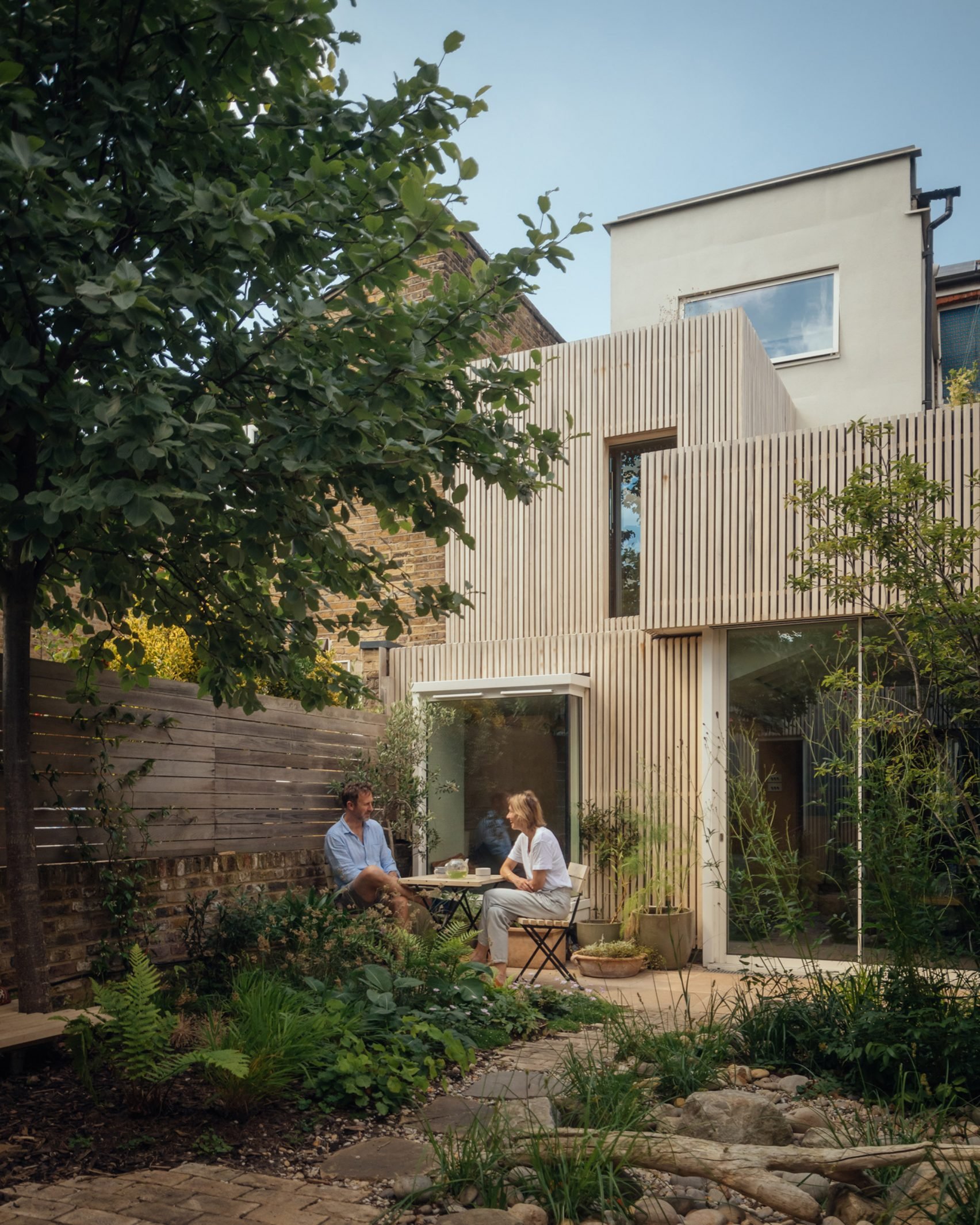 A combination of trees, planting, shrubs and permeable paving create a biodiverse and calming retreat for this home in Southwark (Proctor & Shaw. Photography: Jim Stephenson)
11.2 Gardens
Front gardens
Front gardens provide an opportunity to turn streets into green and vibrant neighbourhoods. They are an extension of the home and an opportunity to express yourself.
For example, seating in front gardens can foster conversation with neighbours, bringing communities together. The blooming of different plants can help to announce the seasons and create a sense of place.
| 11.2.1 | When choosing plants and materials, the character of the street should be considered. |
|
| 11.2.2 | Built-in planters or green roofs can soften the impact of storage for bins and bikes in front gardens. |
|
|
|
|
| 11.2.3 | Planning permission is required for laying traditional impermeable driveways that do not provide for surface water to run to permeable area. Read guidance from the Environmental Agency here. |
|
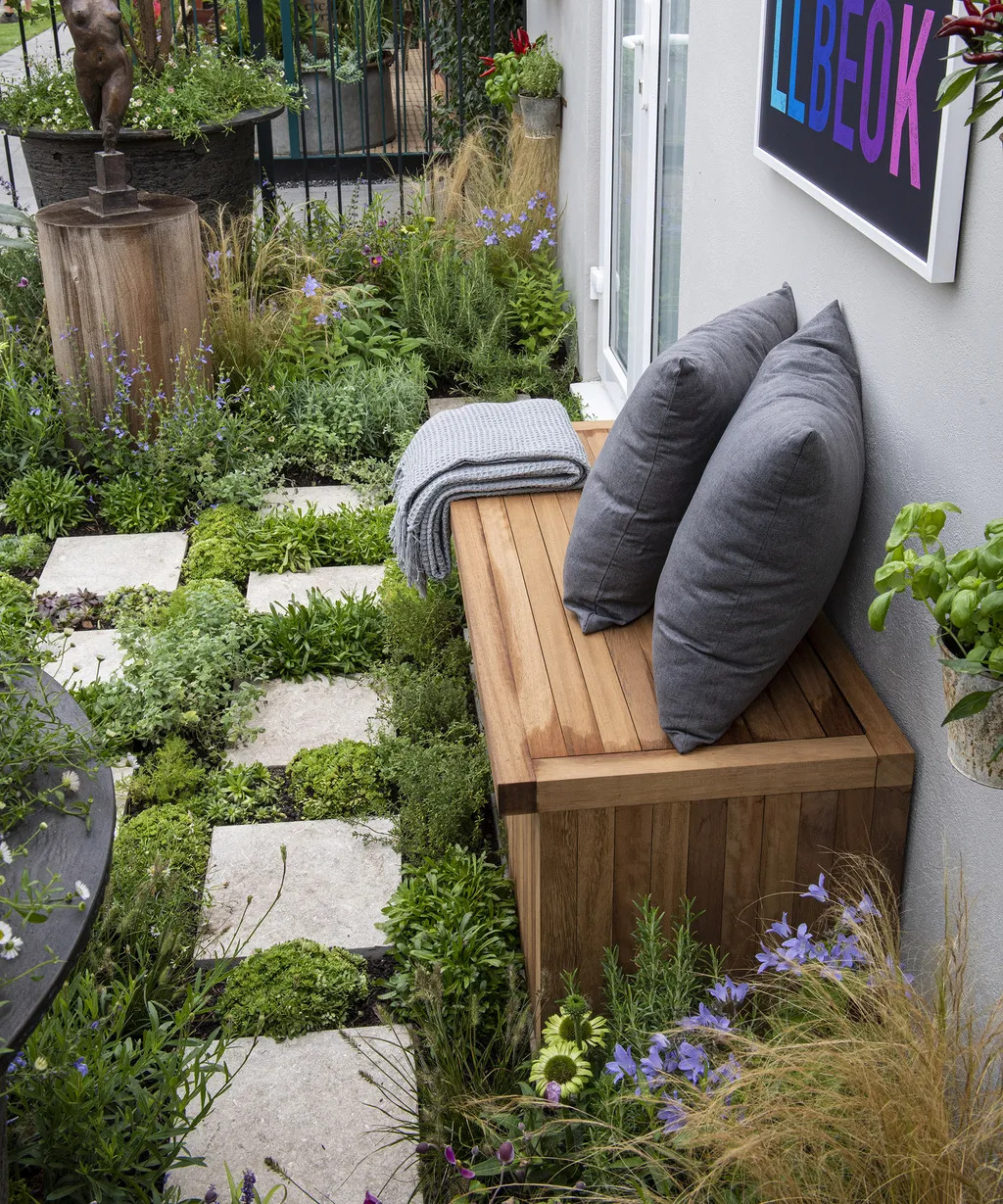 Planting, permeable paving and seating in a front garden
Rear gardens
Rear gardens serve as a private retreat from the neighbourhood, and can also provide visual amenity to neighbouring homes. They often serve as multifunctional outdoor space for activities including play, sport, gardening, and food growing.
Dividing the rear garden into various areas can help to personalise and manage a garden space. A small pond, fountain, or birdbath can add a soothing element to any garden and attract wildlife.
| 11.2.4 | Planting standard shaped specimen trees can help to provide privacy, particularly for smaller rear gardens. |
|
| 11.2.5 | Planters containing flowers, herbs, or even small shrubs offer an easy way to provide urban greening. |
|
| 11.2.6 | Planters with flowering plants can help to support pollinators. Rotating plants based on the seasons will ensure that they thrive throughout the year. |
|
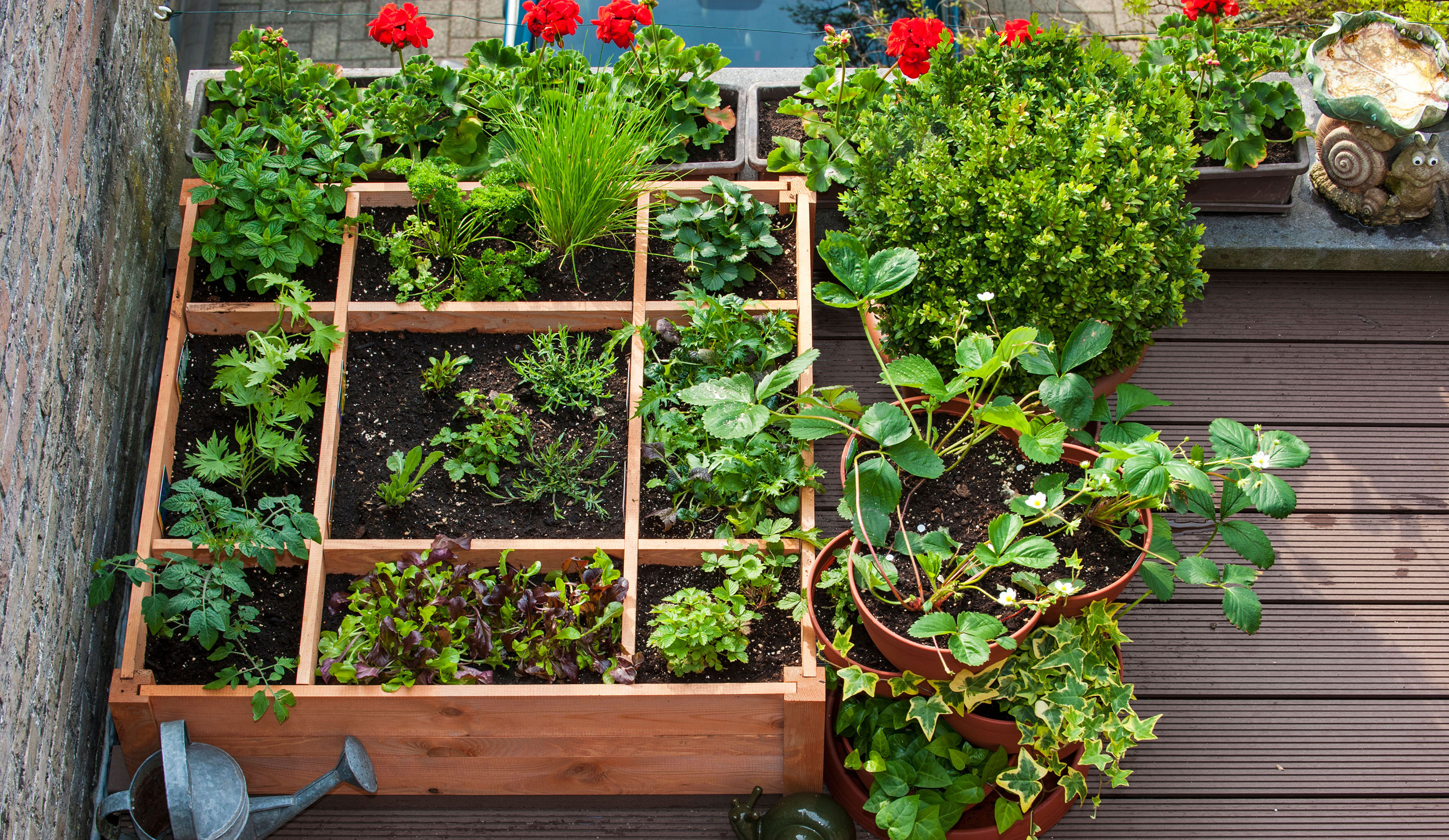 Small planters can be used to create a mini vegetable or herb garden on your balcony
Balconies
Even a small balcony can provide a garden oasis, and through careful use of space, can help to support local biodiversity.
| 11.2.7 | Consider using pots, buckets, or grow bags to grow plants in limited spaces. |
|
| 11.2.8 | When adding plants to a balcony, be mindful of the additional weight of soil and pots. Only add what the balcony can support in weight. |
|
| 11.2.9 | To maximise space on balconies opt for vertical planters, hanging baskets, or wall-mounted containers. |
|
| 11.2.10 | Create a mini vegetable or herb garden in a container. This can be both decorative and functional.
|
|
| 11.2.11 | Bird feeders, nesting boxes and bird baths can be fixed to balconies to help support local birdlife. |
|
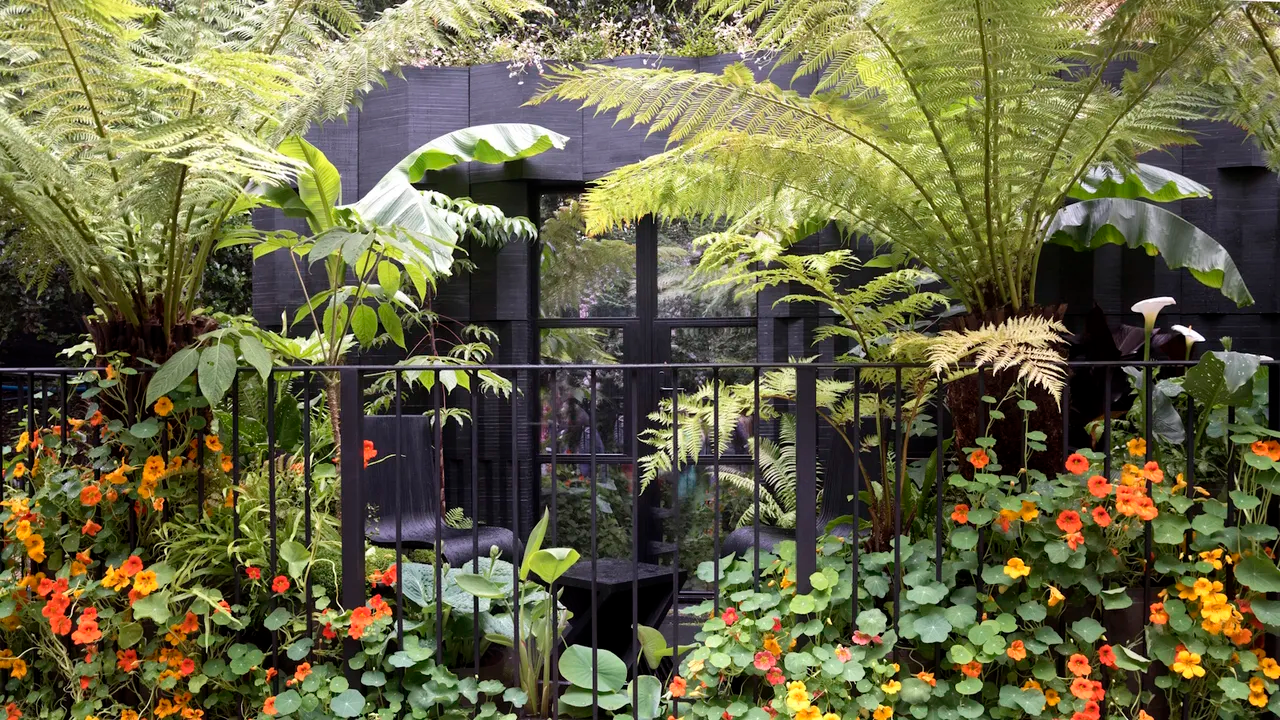 Addleshaw Goddard Junglette Garden, a thriving balcony garden exhibited at the Chelsea Flower Show
Gardens are a crucial contributor to green infrastructure in Waltham Forest. Biodiversity and greening contribute to the character of a neighbourhood, provide important amenity space, help to mitigate flood risk, and bring visual and health benefits. Trees and plants provide a vital habitat for wildlife.
Gardens provide an opportunity to enhance your space and personalise it. Every small contribution across the borough will collectively make a huge difference environmentally.
11.1 Supporting the environment with your garden
Gardening is a great form of exercise that can support your mental health. Spending time in green spaces has been shown to improve overall wellbeing, and trees, planting and water features can work together to create a beautiful, calming retreat for your home.
| 11.1.1 | Greening gardens can have a number of other benefits:- Trees and plants provide natural cooling and shade, helping to regulate the temperature of the home.
- Planting and trees help to improve air quality.
- Soft landscaping and sustainable drainage systems help to reduce local flood risk.
- Rainwater harvesting can help to reduce mains water usage.
|
|
The guidance in this chapter is aligned with the principles of London-wide measures, such as the Local Nature Recovery Strategy (LNRS). This is a mandatory spatial strategy under the Environment Act 2021 designed to reverse biodiversity loss by creating, restoring, and connecting habitats across the capital.
Led by the Greater London Authority (GLA), the LNRS identifies priority locations for nature-based solutions to enhance wildlife and improve climate resilience.
Supporting biodiversity
Gardens serve as crucial habitats, providing shelter and food for many different species. There are so many ways to support local biodiversity, from making a bug hotel in your garden, to planting flowers for pollinators, to creating your own pond to attract frogs, toads, and insects.
Enhancing your garden to support wildlife is a fun activity for everyone, and seeing what animals you attract is the best part. Every small action helps to protect vital habitats, and contributes to a healthier, more vibrant ecosystem.
Mitigating local flood risk
Residential areas in the borough have experienced flooding from surface water during major storm events, and some areas are at greater risk than others.
| 11.1.2 | Reducing the area of hard surfacing in gardens, by de-paving and integrating planting, is key in reducing surface water flooding.
|
|
Combating urban heat island effect
Urban heat island (UHI) effect is the phenomenon where metropolitan areas become warmer than surrounding rural areas, as heat is generated through human activities and buildings, roads, and other hard surfaces trap this heat. All of Greater London, including Waltham Forest, is impacted by urban heat island effect.
Urban heat island effect increases the risk of heat exhaustion and stroke, making it a major driver of increasing rates of heat-related illness during the summer in London. It also results in lower air quality, which can aggravate respiratory conditions. Older people are more at risk of all of these health impacts.
Deprived communities are disproportionately impacted, as areas with increased deprivation typically have fewer cooling green spaces, resulting in higher temperatures.
| 11.1.3 | Reducing the area of hard surfacing in gardens and integrating planting is key in combating urban heat island effect. Plants reduce the amount of radiated heat, and cool surrounding air by releasing water vapour. |
|
A combination of trees, planting, shrubs and permeable paving create a biodiverse and calming retreat for this home in Southwark (Proctor & Shaw. Photography: Jim Stephenson) 11.2 Gardens
Front gardens
Front gardens provide an opportunity to turn streets into green and vibrant neighbourhoods. They are an extension of the home and an opportunity to express yourself.
For example, seating in front gardens can foster conversation with neighbours, bringing communities together. The blooming of different plants can help to announce the seasons and create a sense of place.
| 11.2.1 | When choosing plants and materials, the character of the street should be considered. |
|
| 11.2.2 | Built-in planters or green roofs can soften the impact of storage for bins and bikes in front gardens. |
|
|
|
|
| 11.2.3 | Planning permission is required for laying traditional impermeable driveways that do not provide for surface water to run to permeable area. Read guidance from the Environmental Agency here. |
|
Planting, permeable paving and seating in a front garden
Rear gardens
Rear gardens serve as a private retreat from the neighbourhood, and can also provide visual amenity to neighbouring homes. They often serve as multifunctional outdoor space for activities including play, sport, gardening, and food growing.
Dividing the rear garden into various areas can help to personalise and manage a garden space. A small pond, fountain, or birdbath can add a soothing element to any garden and attract wildlife.
| 11.2.4 | Planting standard shaped specimen trees can help to provide privacy, particularly for smaller rear gardens. |
|
| 11.2.5 | Planters containing flowers, herbs, or even small shrubs offer an easy way to provide urban greening. |
|
| 11.2.6 | Planters with flowering plants can help to support pollinators. Rotating plants based on the seasons will ensure that they thrive throughout the year. |
|
Small planters can be used to create a mini vegetable or herb garden on your balcony
Balconies
Even a small balcony can provide a garden oasis, and through careful use of space, can help to support local biodiversity.
| 11.2.7 | Consider using pots, buckets, or grow bags to grow plants in limited spaces. |
|
| 11.2.8 | When adding plants to a balcony, be mindful of the additional weight of soil and pots. Only add what the balcony can support in weight. |
|
| 11.2.9 | To maximise space on balconies opt for vertical planters, hanging baskets, or wall-mounted containers. |
|
| 11.2.10 | Create a mini vegetable or herb garden in a container. This can be both decorative and functional.
|
|
| 11.2.11 | Bird feeders, nesting boxes and bird baths can be fixed to balconies to help support local birdlife. |
|
Addleshaw Goddard Junglette Garden, a thriving balcony garden exhibited at the Chelsea Flower Show