FAQs
16 homes
Of the 16 homes, the majority are larger family sized homes. The mix is: 1 x studio, 1 x 1 bedroom, 6 x 2 bedrooms, 4 x 3 bedrooms, 4 x 4 bedrooms
Provide better quality, more stable homes for families
Provide temporary accommodation within the borough close to peoples existing support networks, work, schools etc
Reduce the cost of relying on private landlords
Make use of buildings that would otherwise remain unused
- It is already owned by the council, so we don’t need to buy any new land.
- It is currently empty, which means it can be brought back into use quickly.
- Only internal changes are needed, making it cost effective to convert.
- It aligns with the council’s Asset Transformation Strategy 2025 – 2030 to make better use of unused buildings and create much needed homes for local families who are homeless.
You must be legally eligible under immigration rules to receive housing help (for example, some people, such as asylum seekers, are not eligible).
You must be homeless, or being evicted from a private sector tenancy, or about to lose your home, for example, if you’ve been evicted, asked to leave by family or friends, or are fleeing domestic abuse.
You must have dependent children or be vulnerable, such as due to age, disability, or other specific needs.
Speaking with the residents involved
Carrying out extra visits or checks
Putting support in place if needed
Taking enforcement action if behaviour does not improve
- Upgraded site gates and fencing where required
- Upgraded windows and doors where required
- CCTV at key points
- Secure access systems so only residents and authorised staff can enter
- Good lighting and other security features around the building
Complete the short online survey
Come to one of the engagement events to speak with the project team
Contact the project team directly if you have questions or comments
What is being proposed at Cedar Wood House?
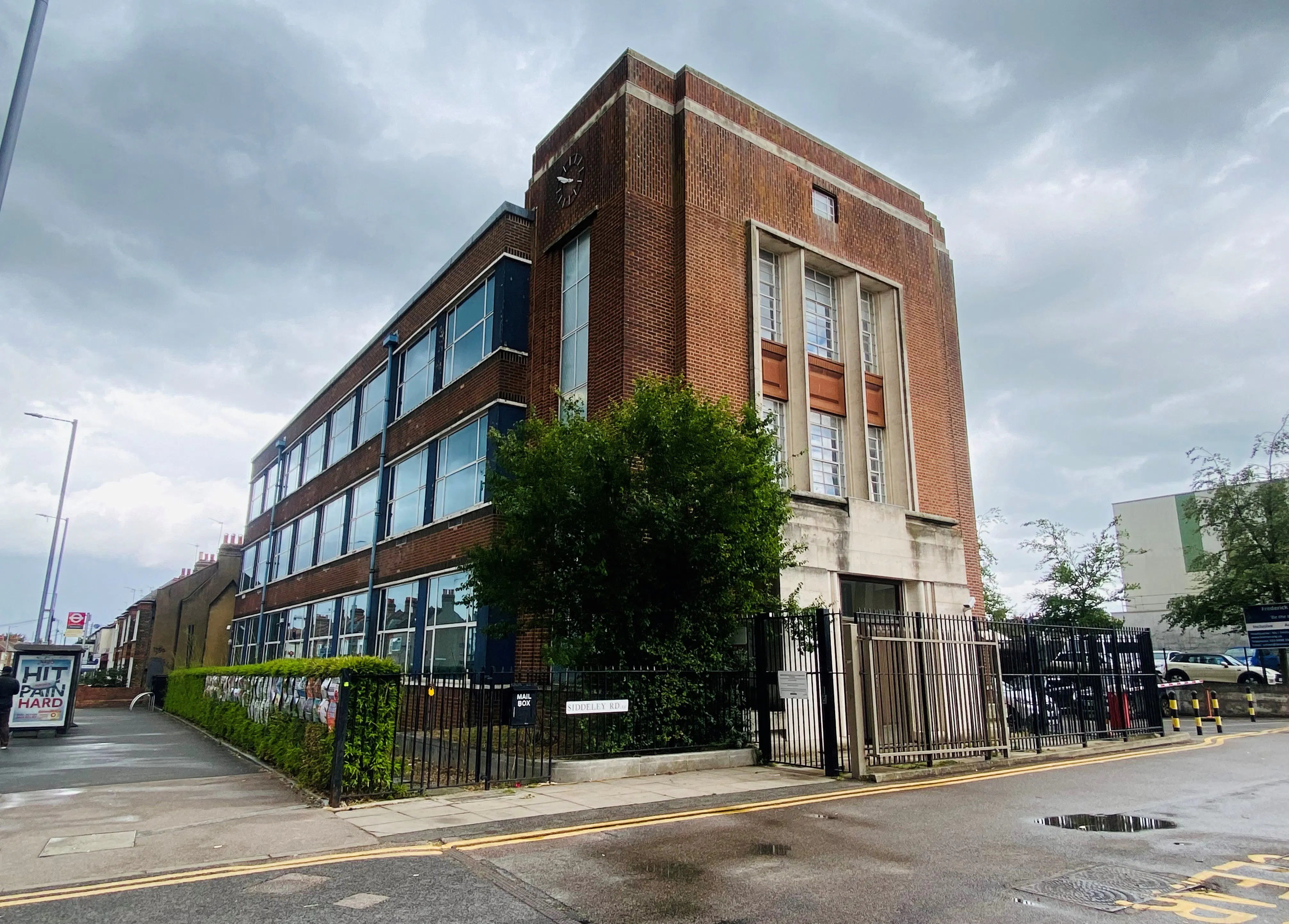
The council is proposing to change the use of this existing, vacant council-owned building to provide Temporary Accommodation. The building will be internally reconfigured to create 16 new self-contained homes.
Why is this building being brought back into use?
This building is currently empty, and bringing it back into use means we can provide much‑needed homes more quickly and at a lower cost than building new ones. Refurbishing existing buildings is also better for the environment, as it uses fewer materials and creates less carbon than new construction.
Will the buildings change externally?
Only small external changes are planned and the locally listed elements of the building will be safeguarded. Most of the work will take place inside the buildings to create the new homes, rather than altering how the buildings look from the outside. New external planting, lighting and gating will improve the external appearance of the building.
How many homes will be created?
The planning applications propose:
What does temporary accommodation actually mean?
Temporary accommodation refers to any accommodation provided by the council to individuals and families; it has a legal duty to provide accommodation because they are homeless. It is provided while other housing options are explored, such as helping people find private rented accommodation or going on the waiting list for permanent council housing.
Temporary accommodation ranges from emergency accommodation such as hostels and hotels to longer-term accommodation in self-contained homes owned or leased by the council. The proposals for these two sites are for longer-term temporary accommodation owned by the council, and primarily for families.
Why does the council need more temporary accommodation?
More local families are becoming homeless, and the council has a legal duty to make sure people who are homeless or at serious risk of homelessness, including families with dependent children, older or vulnerable residents, or people with disabilities or other reasons, have somewhere safe to stay.
Across London, the number of households needing temporary accommodation has increased because there aren’t enough affordable homes available. At the same time, the cost of providing temporary accommodation has also gone up.
The council is building new social housing, but there are still far more people in need than homes available. We are working hard to prevent homelessness and help people find other housing options, but many households still need temporary accommodation.
Using empty council‑owned buildings helps us:
This is why increasing the supply of temporary accommodation is so important.
Why was this site chosen?
This building was chosen because:
This site allows us to provide safe, good quality homes faster and more efficiently than starting from scratch.
Who is eligible to live in the accommodation?
Temporary accommodation is only provided to households for whom the council has a legal duty to help under homelessness legislation. This means:
Only households that meet these criteria can be placed in temporary accommodation.
Will the accommodation be for families or individuals?
The accommodation is mainly intended for families with children. Given the family led nature of the development, any single person allocated to a studio home would be housed within the context of a predominantly family environment, with appropriate management arrangements in place. The very limited number of studio flats means there will not be a concentration of single person households.
The site borders a school, and we will take this into account when making appropriate placements and the security of the site.
Will people be placed here from outside Waltham Forest?
No. These homes will only be used for households that Waltham Forest Council has a legal duty to accommodate. The homelessness legislation includes local connection criteria, which means we generally will not accommodate people who live outside of Waltham Forest, but there are some exceptions to this, for example, if someone is fleeing domestic abuse and needs to be housed somewhere safe.
Will the addition of the 16 homes for temporary accommodation put pressure on local services and infrastructure?
It is not anticipated that the addition of these new homes for temporary accommodation will put pressure on existing services in the area. The residents in these homes will mostly be local families, who already access key services in the borough and whose children will already be attending local schools.
Who will manage the accommodation day-to-day?
The council’s temporary accommodation and housing teams will be responsible for managing the temporary accommodation. These homes will not be permanently staffed, but council staff will visit regularly to support residents and report any building maintenance issues.
A management plan for the building will be developed and submitted as part of the planning application process.
What support will the residents within the temporary accommodation receive?
The council’s Temporary Accommodation Team works closely with the residents to provide them the support they need. This team also works closely with Early Help and Employment services. The council’s Settled Homes Team works with residents living in temporary accommodation to facilitate move-on into settled accommodation.
What happens if issues arise?
If any issues come up, including concerns raised by neighbours, the council will investigate them and take appropriate action. This may include:
Residents and neighbours will be able to report issues directly to the council, and the Temporary Accommodation Team will manage and respond to these reports.
How will safety and security be managed?
The buildings will have safety and security measures similar to other residential homes. These will include:
These measures are designed to keep residents and the surrounding area safe.
Will the schemes increase parking pressure?
The proposals are not expected to increase parking pressures in the area. These homes will be car‑free, which means no general parking is provided on site and residents cannot apply for parking permits (unless they are Blue Badge holders or there are special circumstances where an exemption is considered by the council). One disabled parking space will be provided on each site.
How will waste and recycling be managed?
Waste and recycling will be collected and managed in the same way as other homes in the borough, following the council’s standard waste and recycling services. Residents will have clear instructions on how to sort and dispose of their waste properly.
Will there be more deliveries?
Deliveries are expected to be similar to any other residential building. Residents will receive parcels and post in the usual way.
Will there be disruption in the construction phase?
There may be some disruption during the works, which are expected to take around 12 months starting from early 2027. We will manage noise, dust and deliveries carefully and keep residents updated throughout.
We will work closely with the adjacent Frederick Bremer School to make sure works are coordinated, disruption is kept to a minimum and prioritised in school holidays.
A construction logistics plan will be developed and submitted as part of the planning application process.
Why is the council consulting on these proposals?
The council wants to ensure local residents are fully informed about the plans and have the chance to ask questions, share views, and raise any concerns before the planning applications are submitted. Your feedback will help shape the final proposals.
How can I provide feedback?
Residents can share their views in several different ways:
What will happen to the feedback received?
All feedback will be reviewed by the council and the project team. We will write to let you know a summary of the engagement feedback and how we intend to use this to help shape the proposals.
The engagement feedback will also be summarised in a Consultation Statement, which will be submitted alongside the planning applications.
Will the proposals change as a result of consultation?
Where appropriate, if residents raise concerns or suggest improvements, the council will consider these and may update parts of the proposals or the way the accommodation is managed.