We use cookies to ensure our site functions properly and to store limited information about your usage. You may give or withdraw consent at any time. To find out more, read our privacy policy and cookie policy.
Manage Cookies
A cookie is information stored on your computer by a website you visit. Cookies often store your settings for a website, such as your preferred language or location. This allows the site to present you with information customized to fit your needs. As per the GDPR law, companies need to get your explicit approval to collect your data. Some of these cookies are ‘strictly necessary’ to provide the basic functions of the website and can not be turned off, while others if present, have the option of being turned off. Learn more about our Privacy and Cookie policies. These can be managed also from our cookie policy page.
Strictly necessary cookies(always on):
Necessary for enabling core functionality. The website cannot function properly without these cookies. This cannot be turned off. e.g. Sign in, Language
Analytics cookies:
Analytical cookies help us to analyse user behaviour, mainly to see if the users are able to find and act on things that they are looking for. They allow us to recognise and count the number of visitors and to see how visitors move around our website when they are using it. Tools used: Google Analytics
Solar panels, also known as photovoltaic panels or systems, turn sunlight into electricity through solar cells they contain. These cells are made from thin layers of a ‘semiconductor’ material, such as silicon, between layers of glass. An inverter converts the solar energy into electric current which can be used in your home. Many types of solar panels are also compatible with green roofs.
When can the energy be used?
When your solar panels are generating, the electricity can be used in appliances that are switched on at the time.
Usually, surplus electricity is exported to the electricity grid. You can be paid for all the energy you export through ‘Smart Export Guarantee’ tariffs with energy suppliers.
To store and use this excess energy later, it can be used to heat water in a hot water cylinder. Alternatively it can be stored as electricity using a domestic battery.
Further detailed guidance on solar panels can be found here.
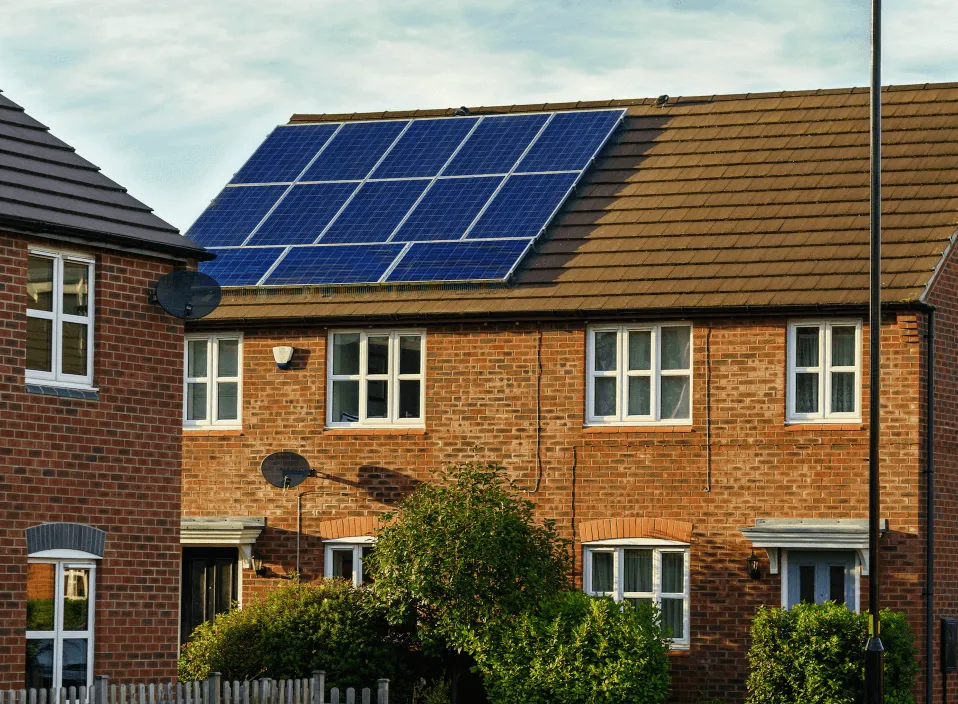
Solar panels should be oriented south to capture the maximum possible amount of solar energy
9.5.1
Planning permission is not normally required for installing solar panels as it is usually considered permitted development. Residents are advised to view the permitted development rights applicable to their property.
9.5.2
Where planning permission is required for the installation of solar panels, applications must include:
plans and elevation drawings clearly indicating the proposed number and arrangement of panels.
the solar panel type, manufacturer and product name.
9.5.3
Planning permission will be required:
for the installation of solar panels on properties that are located within a Conservation Area on a wall or roof which faces roads, paths or public rights of way.
for the installation of solar panels where an Article 4 direction has been issued for the area.
9.5.4
Under permitted development, proposed solar panels must:
not project in front of the building, when measured horizontally from the wall or roof slope, by more than 0.2m.
not be positioned so that they are higher than the main ridge line of the roof, or higher than the highest flat roof where roofs on the building are flat. This does not include chimneys, firewalls or parapet walls.
be sited to minimise their effect on the external appearance of the building.
be sited to minimise their effect on the amenity of the area.
be removed as soon as reasonably practicable when they are no longer needed.
9.5.5
For the installation of solar panels on a listed building, listed building consent will also be required. Engaging with the LPA is recommended at the earliest stage through a pre-application.
9.5.6
The Council will be receptive to innovative solutions which can limit the impact of solar panels and preserve and enhance heritage assets. In these instances, the quality of proposals should be of exemplar quality. Proposals should:
closely match the original roofing material, in terms of appearance, robustness and quality.
place the panels as flush as possible to the roof slope.
9.5.7
To work effectively, solar panels should be installed on south-facing (or close to south-facing) roofs.
9.5.8
Consider whether trees or buildings could cast shadows over the solar panel, as this would reduce the energy generation potential.
9.5.9
Solar panels should only be installed on roofs that are structurally sound and able to take the extra weight of solar panels and fixing frames.
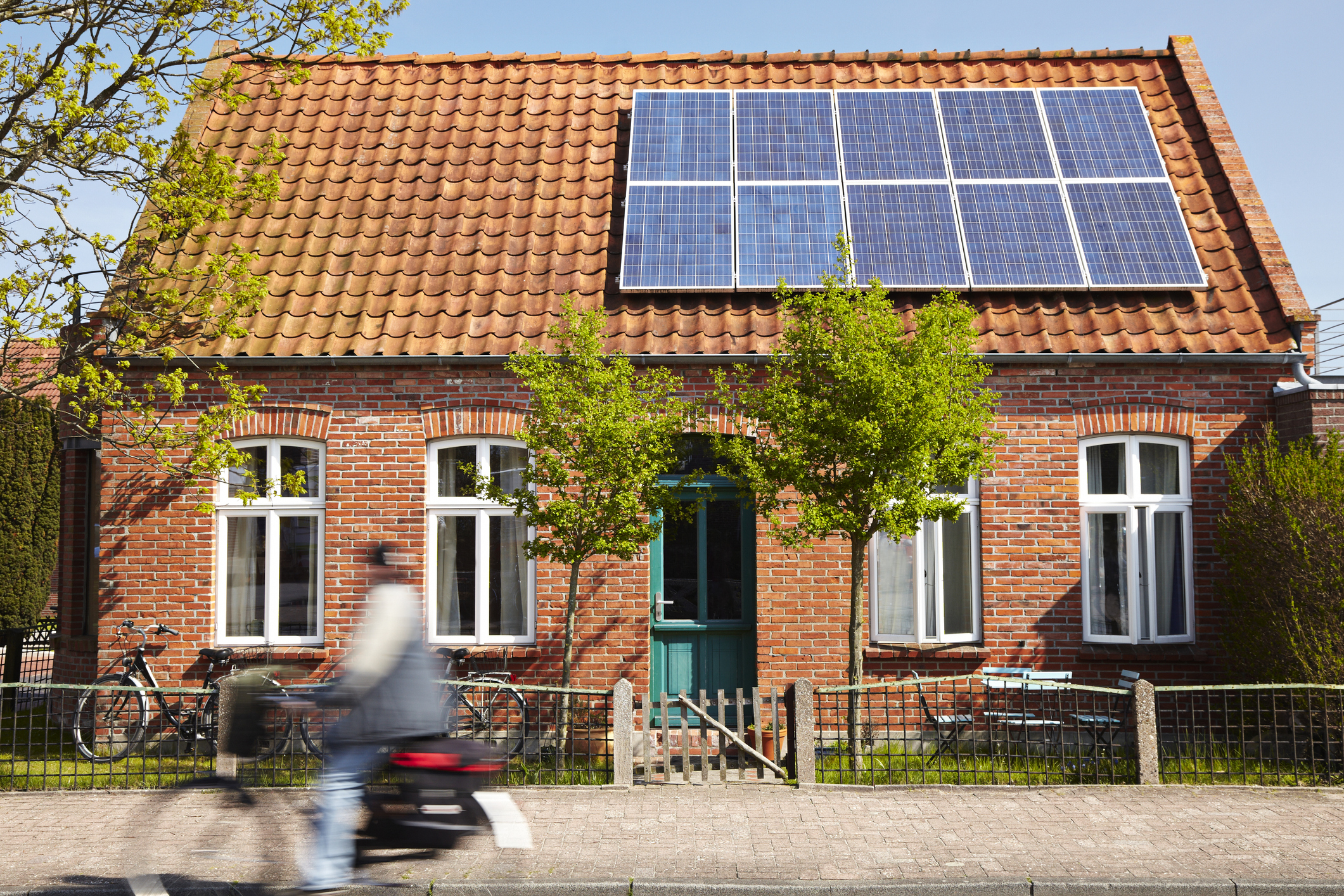
Rail mounted solar panels over existing roof tiles
Rail mounted
Rail mounting is where solar panels are fitted over the existing roof finish, which may be clay tiles, concrete tile or another material.
This allows the roof finish to be kept. If the solar panels are removed in the future, the roof can be easily reinstated.
A discrete low profile mounting rails keep the solar panel close to the roof.
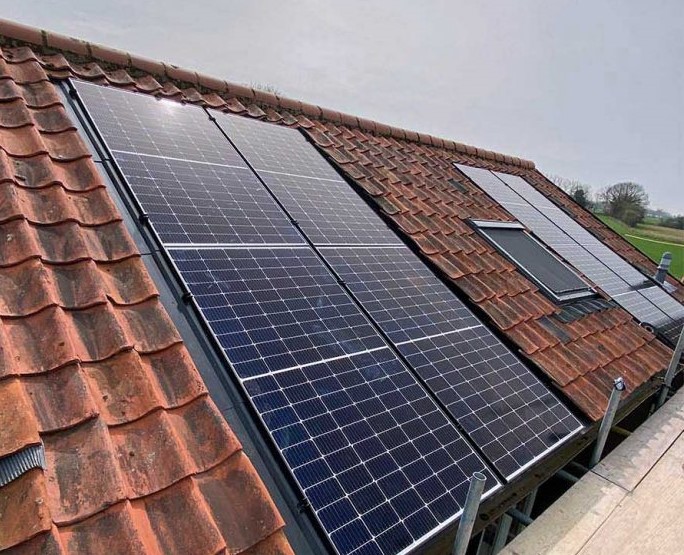
Sunken trays with solar panels set into roof tiles
Sunken trays
Sunken trays involve removing sections of existing roof tiles and fitting the solar panels.
This allows the solar panels to remain flush with the roof, which can result in an improved appearance from ground level.
However, it involves the removal of original roof tiles, meaning it is more difficult to reinstate the roof in the future.
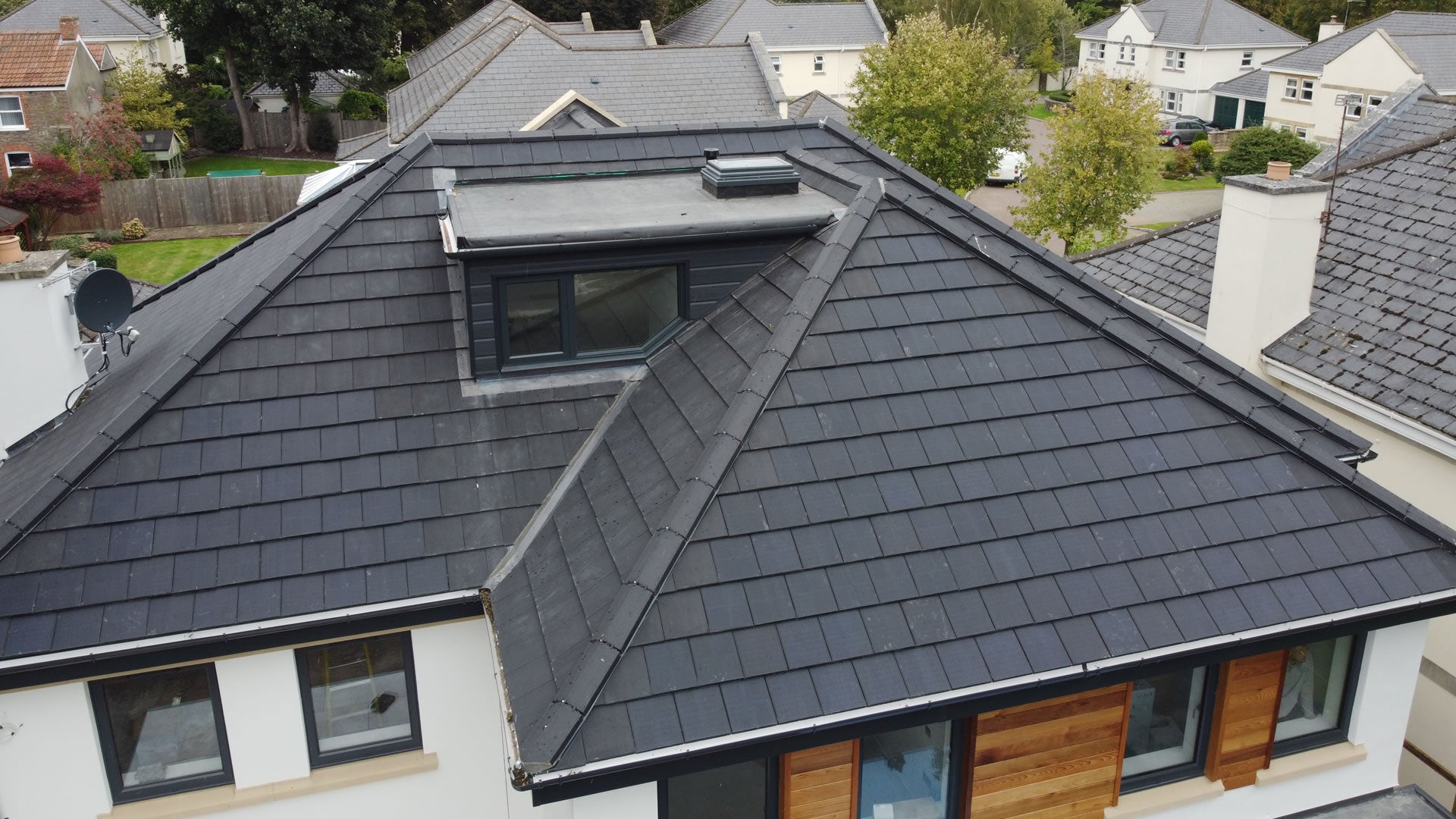
Roof tiles fully replaced with photovoltaic tiles
Solar roof tiles
Photovoltaic tiles are available which can be used in place of roof tiles to give a seamless look.
However, PV tiles will have a shorter lifespan than traditional roof tiles.
For this reason, they need to be well-maintained and appropriately replaced at their end-of-life.
Battery Storage
Domestic batteries allow households to store electricity for later use. The amount of electricity generated by solar panels depends of the time of day and time of the year.
A battery means that, rather than electricity being exported to the national grid, it can be kept and used in your home.
In addition to storing electricity generated by solar panels, domestic batteries can be used to store electricity from the grid.
With a time-of-use (ToU) tariff your battery can store cheaper electricity during off-peak hours (typically at night) to be used in the day when electricity is more expensive.
9.5.11
Batteries help to make electricity generation in your home more efficient. There are different types of batteries, and different export tariffs, which allow homeowners to sell electricity back to the national grid. For further information on battery storage, see here.
Solar panels
Solar panels, also known as photovoltaic panels or systems, turn sunlight into electricity through solar cells they contain. These cells are made from thin layers of a ‘semiconductor’ material, such as silicon, between layers of glass. An inverter converts the solar energy into electric current which can be used in your home. Many types of solar panels are also compatible with green roofs.
When can the energy be used?
When your solar panels are generating, the electricity can be used in appliances that are switched on at the time.
Usually, surplus electricity is exported to the electricity grid. You can be paid for all the energy you export through ‘Smart Export Guarantee’ tariffs with energy suppliers.
To store and use this excess energy later, it can be used to heat water in a hot water cylinder. Alternatively it can be stored as electricity using a domestic battery.
Further detailed guidance on solar panels can be found here.
Solar panels should be oriented south to capture the maximum possible amount of solar energy
9.5.1
Planning permission is not normally required for installing solar panels as it is usually considered permitted development. Residents are advised to view the permitted development rights applicable to their property.
9.5.2
Where planning permission is required for the installation of solar panels, applications must include:
plans and elevation drawings clearly indicating the proposed number and arrangement of panels.
the solar panel type, manufacturer and product name.
9.5.3
Planning permission will be required:
for the installation of solar panels on properties that are located within a Conservation Area on a wall or roof which faces roads, paths or public rights of way.
for the installation of solar panels where an Article 4 direction has been issued for the area.
9.5.4
Under permitted development, proposed solar panels must:
not project in front of the building, when measured horizontally from the wall or roof slope, by more than 0.2m.
not be positioned so that they are higher than the main ridge line of the roof, or higher than the highest flat roof where roofs on the building are flat. This does not include chimneys, firewalls or parapet walls.
be sited to minimise their effect on the external appearance of the building.
be sited to minimise their effect on the amenity of the area.
be removed as soon as reasonably practicable when they are no longer needed.
9.5.5
For the installation of solar panels on a listed building, listed building consent will also be required. Engaging with the LPA is recommended at the earliest stage through a pre-application.
9.5.6
The Council will be receptive to innovative solutions which can limit the impact of solar panels and preserve and enhance heritage assets. In these instances, the quality of proposals should be of exemplar quality. Proposals should:
closely match the original roofing material, in terms of appearance, robustness and quality.
place the panels as flush as possible to the roof slope.
9.5.7
To work effectively, solar panels should be installed on south-facing (or close to south-facing) roofs.
9.5.8
Consider whether trees or buildings could cast shadows over the solar panel, as this would reduce the energy generation potential.
9.5.9
Solar panels should only be installed on roofs that are structurally sound and able to take the extra weight of solar panels and fixing frames.
Rail mounted solar panels over existing roof tiles
Rail mounted
Rail mounting is where solar panels are fitted over the existing roof finish, which may be clay tiles, concrete tile or another material.
This allows the roof finish to be kept. If the solar panels are removed in the future, the roof can be easily reinstated.
A discrete low profile mounting rails keep the solar panel close to the roof.
Sunken trays with solar panels set into roof tiles
Sunken trays
Sunken trays involve removing sections of existing roof tiles and fitting the solar panels.
This allows the solar panels to remain flush with the roof, which can result in an improved appearance from ground level.
However, it involves the removal of original roof tiles, meaning it is more difficult to reinstate the roof in the future.
Roof tiles fully replaced with photovoltaic tiles
Solar roof tiles
Photovoltaic tiles are available which can be used in place of roof tiles to give a seamless look.
However, PV tiles will have a shorter lifespan than traditional roof tiles.
For this reason, they need to be well-maintained and appropriately replaced at their end-of-life.
Battery Storage
Domestic batteries allow households to store electricity for later use. The amount of electricity generated by solar panels depends of the time of day and time of the year.
A battery means that, rather than electricity being exported to the national grid, it can be kept and used in your home.
In addition to storing electricity generated by solar panels, domestic batteries can be used to store electricity from the grid.
With a time-of-use (ToU) tariff your battery can store cheaper electricity during off-peak hours (typically at night) to be used in the day when electricity is more expensive.
9.5.11
Batteries help to make electricity generation in your home more efficient. There are different types of batteries, and different export tariffs, which allow homeowners to sell electricity back to the national grid. For further information on battery storage, see here.
 Solar panels should be oriented south to capture the maximum possible amount of solar energy
 Rail mounted solar panels over existing roof tiles
 Sunken trays with solar panels set into roof tiles
 Roof tiles fully replaced with photovoltaic tiles