We use cookies to ensure our site functions properly and to store limited information about your usage. You may give or withdraw consent at any time. To find out more, read our privacy policy and cookie policy.
Manage Cookies
A cookie is information stored on your computer by a website you visit. Cookies often store your settings for a website, such as your preferred language or location. This allows the site to present you with information customized to fit your needs. As per the GDPR law, companies need to get your explicit approval to collect your data. Some of these cookies are ‘strictly necessary’ to provide the basic functions of the website and can not be turned off, while others if present, have the option of being turned off. Learn more about our Privacy and Cookie policies. These can be managed also from our cookie policy page.
Strictly necessary cookies(always on):
Necessary for enabling core functionality. The website cannot function properly without these cookies. This cannot be turned off. e.g. Sign in, Language
Analytics cookies:
Analytical cookies help us to analyse user behaviour, mainly to see if the users are able to find and act on things that they are looking for. They allow us to recognise and count the number of visitors and to see how visitors move around our website when they are using it. Tools used: Google Analytics
Consider how you use your home and how it can best support the way you live now and in the future.
If you need to extend
Reconfiguring the internal layout of your home can dramatically improve the use of space, while changing elements like windows can make a big difference to comfort levels.
Speaking to your neighbours
An informal chat about the nature and duration of work well before you begin work can create goodwill and opens lines of communication with your neighbours.
Planning permission
Some alteration and extension projects can be undertaken without the need for planning permission. These are referred to as permitted development rights. Read more about applying for planning permission here.
Your budget
Before starting your project it is important to establish your budget. Request quotes from at least three contractors, using a list of everything you would like to be included in the project. Compare quotes item by item, and check if VAT is included. As all of the alterations in this document can be done on a sliding scale of costs, it is important to do your own research, and ask your chosen contractor about available options.
Timing and duration
Try to plan around the seasons, as weather plays an important factor in any building project. Take advantage of the darker, wetter months to design and plan your project, so that construction can commence in spring or summer.
Home insurance
An extension or alteration may increase the rebuilding cost of your property, which could affect the policy premium. Speak to you insurer early to find out if your current policy covers any works.
Hiring an architect
It’s a good idea to appoint an architect where a project requires planning permission. They can oversee the works and ensure that the project suits your needs. You can find a local architect here on the RIBA website. It’s a good idea to ask for recommendations for a building contractor and, if possible, visit completed projects beforehand.
Rear extension with timber roof structure in Walthamstow (Studio Verve. Photography: Romain Forquy)
Aims and future needs
Consider how you use your home and how it can best support the way you live now and in the future.
If you need to extend
Reconfiguring the internal layout of your home can dramatically improve the use of space, while changing elements like windows can make a big difference to comfort levels.
Speaking to your neighbours
An informal chat about the nature and duration of work well before you begin work can create goodwill and opens lines of communication with your neighbours.
Planning permission
Some alteration and extension projects can be undertaken without the need for planning permission. These are referred to as permitted development rights. Read more about applying for planning permission here.
Your budget
Before starting your project it is important to establish your budget. Request quotes from at least three contractors, using a list of everything you would like to be included in the project. Compare quotes item by item, and check if VAT is included. As all of the alterations in this document can be done on a sliding scale of costs, it is important to do your own research, and ask your chosen contractor about available options.
Timing and duration
Try to plan around the seasons, as weather plays an important factor in any building project. Take advantage of the darker, wetter months to design and plan your project, so that construction can commence in spring or summer.
Home insurance
An extension or alteration may increase the rebuilding cost of your property, which could affect the policy premium. Speak to you insurer early to find out if your current policy covers any works.
Hiring an architect
It’s a good idea to appoint an architect where a project requires planning permission. They can oversee the works and ensure that the project suits your needs. You can find a local architect here on the RIBA website. It’s a good idea to ask for recommendations for a building contractor and, if possible, visit completed projects beforehand.
Rear extension with timber roof structure in Walthamstow (Studio Verve. Photography: Romain Forquy)
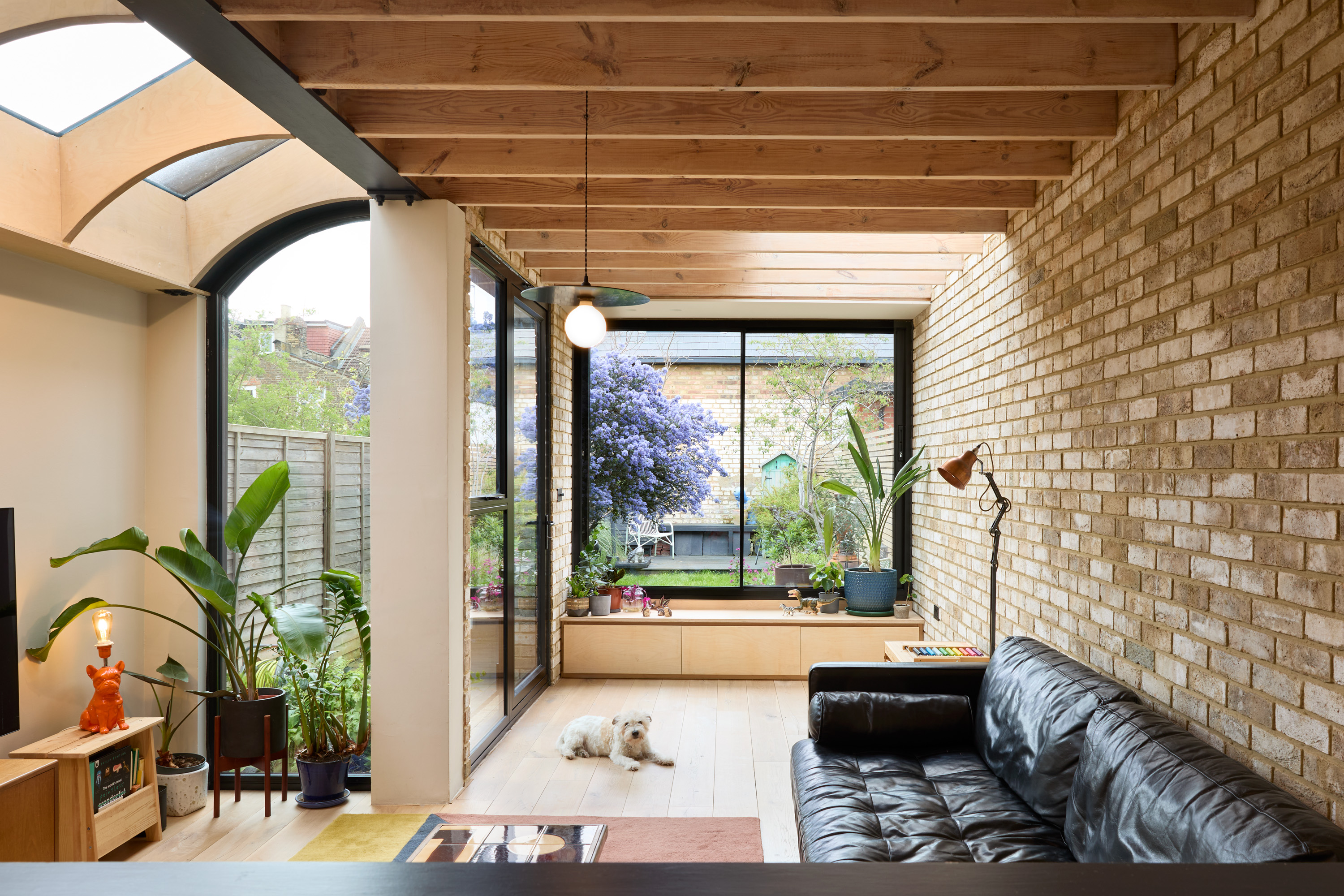 Rear extension with timber roof structure in Walthamstow (Studio Verve. Photography: Romain Forquy)