We use cookies to ensure our site functions properly and to store limited information about your usage. You may give or withdraw consent at any time. To find out more, read our privacy policy and cookie policy.
Manage Cookies
A cookie is information stored on your computer by a website you visit. Cookies often store your settings for a website, such as your preferred language or location. This allows the site to present you with information customized to fit your needs. As per the GDPR law, companies need to get your explicit approval to collect your data. Some of these cookies are ‘strictly necessary’ to provide the basic functions of the website and can not be turned off, while others if present, have the option of being turned off. Learn more about our Privacy and Cookie policies. These can be managed also from our cookie policy page.
Strictly necessary cookies(always on):
Necessary for enabling core functionality. The website cannot function properly without these cookies. This cannot be turned off. e.g. Sign in, Language
Analytics cookies:
Analytical cookies help us to analyse user behaviour, mainly to see if the users are able to find and act on things that they are looking for. They allow us to recognise and count the number of visitors and to see how visitors move around our website when they are using it. Tools used: Google Analytics
The materials used in your garden can significantly impact the environment, particularly in terms of flood risk, carbon emissions and urban heat island effect. Hardstanding contributes to flash flooding by preventing water from filtering back into the ground.
Reducing the area of hard surfacing in gardens, by depaving and integrating planting, is key in mitigating local flood risk and reducing overheating.
Gravel and bark chips serve as low-maintenance, permeable materials for paths. Where hardstanding is unavoidable, permeable concrete and porous asphalt help water to permeate.
Where hard ground surfaces can’t be removed, plants in containers help to provide shade and absorb water. Plants in pots also provide opportunities for pollinators and attract other insects, providing food for birds.
Reducing hardstanding
11.8.1
To help mitigate local flood risk, residents should keep hardstanding to a minimum, use permeable materials and maximise rainwater-absorbing plants. Residents are advised to retain at least 75% of their garden as green space.
11.8.2
Patios and paths should be minimised wherever possible. Where impervious materials are used, rainwater should be directed to a lawn or border to drain naturally, known as a soakaway.
Permeable timber decking, gravel and planters create a garden that is easy to maintain and access
Sustainable materials
11.8.3
Wood used in gardens should be sourced from managed forests. Look for the Forest Stewardship Council (FSC) or Programme for the Endorsement of Forest Certification (PEFC) mark.
11.8.4
Residents should consider using locally sourced or reclaimed materials to reduce the carbon footprint associated with building materials, for example recycled ceramic gravel or reclaimed stone slabs for paths.
11.8.5
Use of cement-based concrete in gardens is discouraged due to the high levels of carbon released in its production, and residents are encouraged to consider more sustainable alternatives.
Sustainable alternatives to cement-based concrete:
Ferrock is made from 90% waste materials, primarily iron dust, which reacts with carbon dioxide to form iron carbonate, thereby absorbing carbon from the atmosphere.
Timbercrete is a reduced-cement concrete that substitutes up to 10% with sawmill waste, creating a material about 2.5 times lighter than conventional concrete. It is available in forms such as blocks, bricks, and pavers.
Rammed earth consists of compacted subsoil or chalk packed between temporary panels. It can be used for steps, external walls, and seating, though its durability may be limited in damp climates.
Gravel can serve as a low-maintenance permeable surface for portions of front or rear gardens
11.8 Non-greening elements
Parking surfaces
11.9.1
Planning permission is required to lay an impermeable surface over an area larger than 5sqm. Read government guidance on paving front gardens here.
11.9.2
If off-street private parking is the only option for your house, the use of impermeable driveway materials is discouraged, due to the increase to flood risk posed by these materials.
11.9.3
For alterations to existing driveways, residents should consider using permeable materials such as gravel, vegetation, grass-crete or wheel tracks in order to mitigate flood risk.
Gravel serves a permeable surface material for driveways
Air conditioning units
11.9.4
Affixing air conditioning units to the house exterior is generally discouraged, due to resulting noise and visual clutter.
11.9.5
As detailed here, mechanical ventilation with heat recovery serves as a more energy efficient alternative to air conditioning, providing better indoor air quality and humidity control.
11.9.6
If there are unused air conditioning units fixed to a dwelling, their removal is encouraged in order to improve external appearance and reduce visual clutter.
Satellite dishes
11.9.7
Any unused satellite dishes or other legacy items fixed to the exterior of a dwelling should be removed.
Electric vehicle charging
The ownership of electric vehicles in Waltham Forest is rapidly increasing, and the Council is working to ensure that switching to an electric vehicle is as convenient as possible.
Opting for an electric vehicle over a petrol or diesel vehicle is an excellent way to reduce your carbon footprint. As we progress towards a low-carbon society, electric vehicles are becoming a crucial mode of transport, alongside cycling, walking and public transportation.
11.9.8
For details of permitted development rights for a electric vehicle chargers, refer to this page on the Planning Portal. If the proposal does not fulfil the criteria stated here, planning permission will be required to install a charger within the curtilage of a property.
11.9.9
Where an electric vehicle charging point is being introduced it must:
adhere to building regulations Approved Document S: Infrastructure for charging electric vehicles.
be discretely placed in a convenient location.
consider the practicalities of charging and parking.
For residents who are unable to install an EV charger close to their home, there are apps available that can connect you to a neighbour with an EV charger. This can enable access to a charger close to the home, for a small fee.
Electric car charging point installed close to the highway
11.8 Garden Materials
The materials used in your garden can significantly impact the environment, particularly in terms of flood risk, carbon emissions and urban heat island effect. Hardstanding contributes to flash flooding by preventing water from filtering back into the ground.
Reducing the area of hard surfacing in gardens, by depaving and integrating planting, is key in mitigating local flood risk and reducing overheating.
Gravel and bark chips serve as low-maintenance, permeable materials for paths. Where hardstanding is unavoidable, permeable concrete and porous asphalt help water to permeate.
Where hard ground surfaces can’t be removed, plants in containers help to provide shade and absorb water. Plants in pots also provide opportunities for pollinators and attract other insects, providing food for birds.
Reducing hardstanding
11.8.1
To help mitigate local flood risk, residents should keep hardstanding to a minimum, use permeable materials and maximise rainwater-absorbing plants. Residents are advised to retain at least 75% of their garden as green space.
11.8.2
Patios and paths should be minimised wherever possible. Where impervious materials are used, rainwater should be directed to a lawn or border to drain naturally, known as a soakaway.
Permeable timber decking, gravel and planters create a garden that is easy to maintain and access
Sustainable materials
11.8.3
Wood used in gardens should be sourced from managed forests. Look for the Forest Stewardship Council (FSC) or Programme for the Endorsement of Forest Certification (PEFC) mark.
11.8.4
Residents should consider using locally sourced or reclaimed materials to reduce the carbon footprint associated with building materials, for example recycled ceramic gravel or reclaimed stone slabs for paths.
11.8.5
Use of cement-based concrete in gardens is discouraged due to the high levels of carbon released in its production, and residents are encouraged to consider more sustainable alternatives.
Sustainable alternatives to cement-based concrete:
Ferrock is made from 90% waste materials, primarily iron dust, which reacts with carbon dioxide to form iron carbonate, thereby absorbing carbon from the atmosphere.
Timbercrete is a reduced-cement concrete that substitutes up to 10% with sawmill waste, creating a material about 2.5 times lighter than conventional concrete. It is available in forms such as blocks, bricks, and pavers.
Rammed earth consists of compacted subsoil or chalk packed between temporary panels. It can be used for steps, external walls, and seating, though its durability may be limited in damp climates.
Gravel can serve as a low-maintenance permeable surface for portions of front or rear gardens
11.8 Non-greening elements
Parking surfaces
11.9.1
Planning permission is required to lay an impermeable surface over an area larger than 5sqm. Read government guidance on paving front gardens here.
11.9.2
If off-street private parking is the only option for your house, the use of impermeable driveway materials is discouraged, due to the increase to flood risk posed by these materials.
11.9.3
For alterations to existing driveways, residents should consider using permeable materials such as gravel, vegetation, grass-crete or wheel tracks in order to mitigate flood risk.
Gravel serves a permeable surface material for driveways
Air conditioning units
11.9.4
Affixing air conditioning units to the house exterior is generally discouraged, due to resulting noise and visual clutter.
11.9.5
As detailed here, mechanical ventilation with heat recovery serves as a more energy efficient alternative to air conditioning, providing better indoor air quality and humidity control.
11.9.6
If there are unused air conditioning units fixed to a dwelling, their removal is encouraged in order to improve external appearance and reduce visual clutter.
Satellite dishes
11.9.7
Any unused satellite dishes or other legacy items fixed to the exterior of a dwelling should be removed.
Electric vehicle charging
The ownership of electric vehicles in Waltham Forest is rapidly increasing, and the Council is working to ensure that switching to an electric vehicle is as convenient as possible.
Opting for an electric vehicle over a petrol or diesel vehicle is an excellent way to reduce your carbon footprint. As we progress towards a low-carbon society, electric vehicles are becoming a crucial mode of transport, alongside cycling, walking and public transportation.
11.9.8
For details of permitted development rights for a electric vehicle chargers, refer to this page on the Planning Portal. If the proposal does not fulfil the criteria stated here, planning permission will be required to install a charger within the curtilage of a property.
11.9.9
Where an electric vehicle charging point is being introduced it must:
adhere to building regulations Approved Document S: Infrastructure for charging electric vehicles.
be discretely placed in a convenient location.
consider the practicalities of charging and parking.
For residents who are unable to install an EV charger close to their home, there are apps available that can connect you to a neighbour with an EV charger. This can enable access to a charger close to the home, for a small fee.
Electric car charging point installed close to the highway
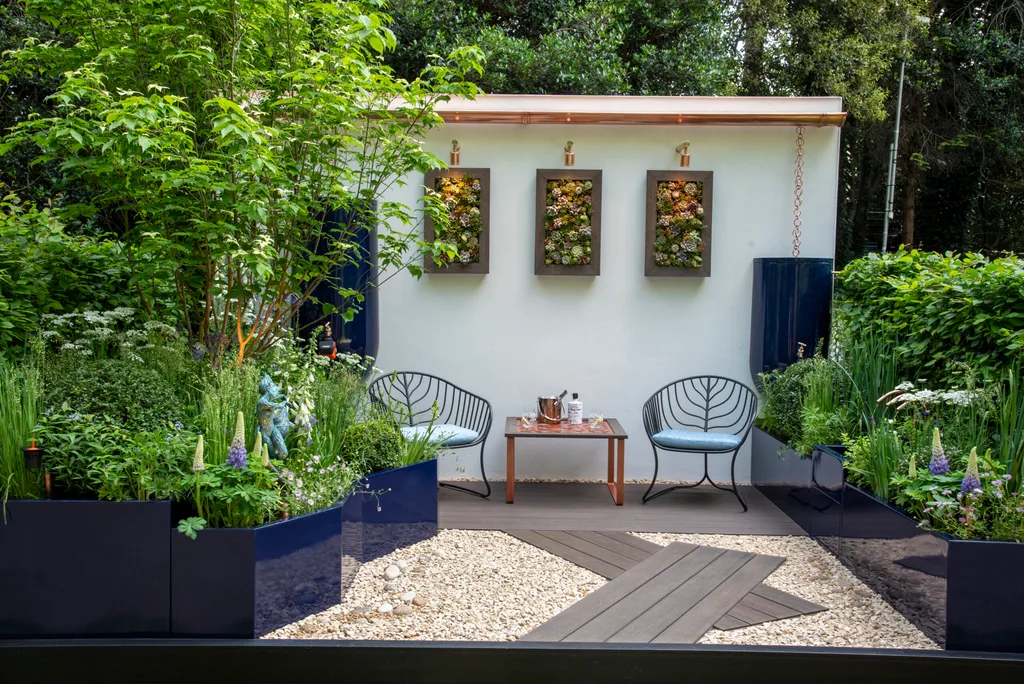 Permeable timber decking, gravel and planters create a garden that is easy to maintain and access
 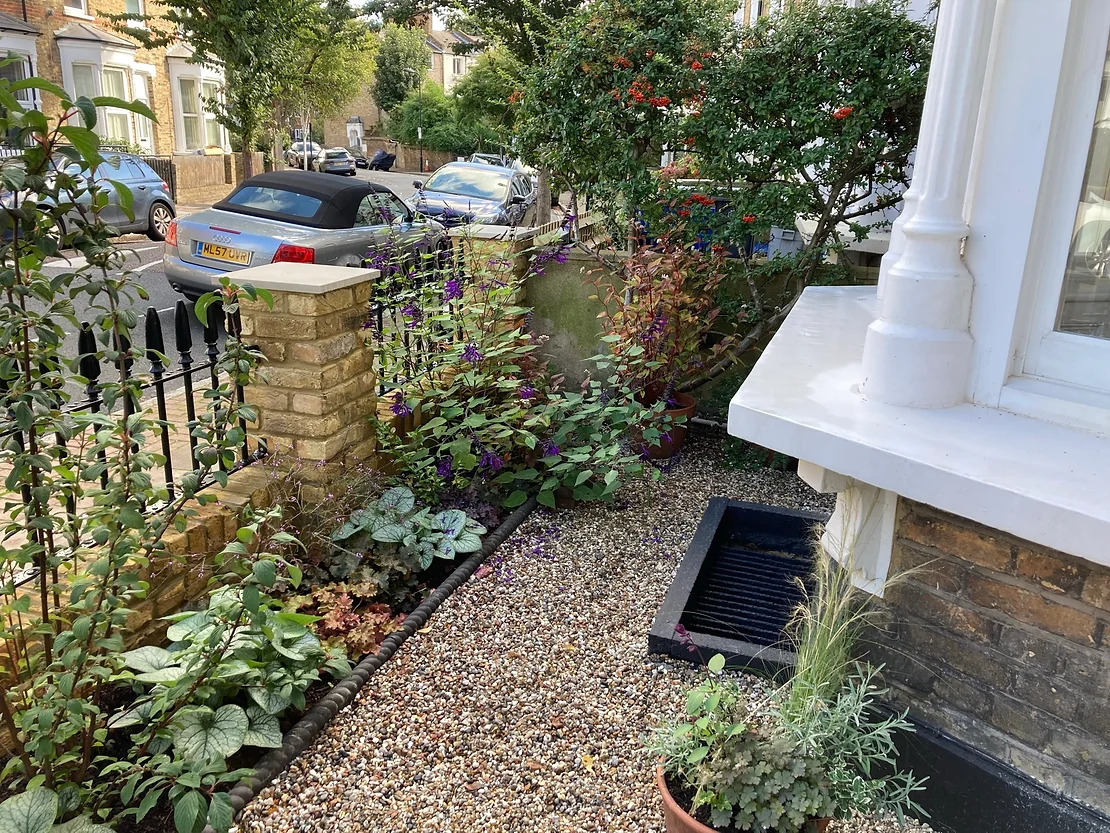 Gravel can serve as a low-maintenance permeable surface for portions of front or rear gardens
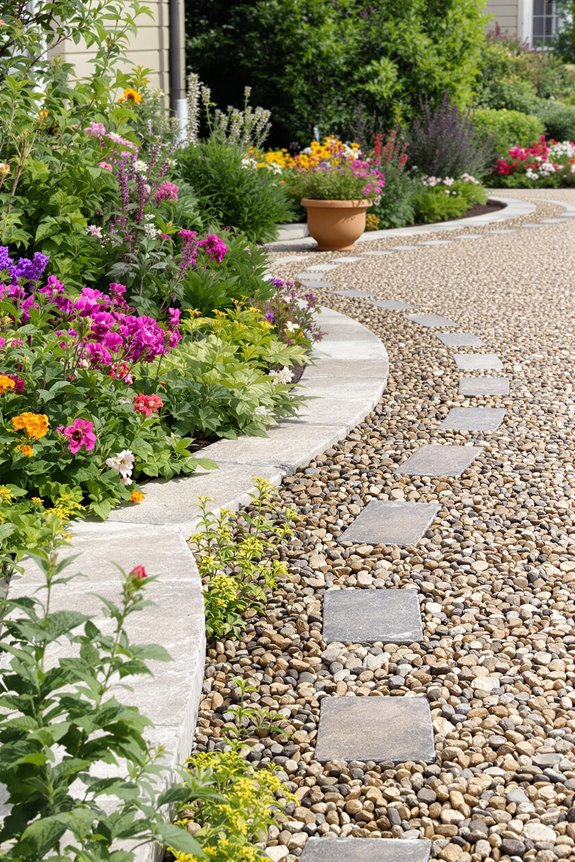 Gravel serves a permeable surface material for driveways
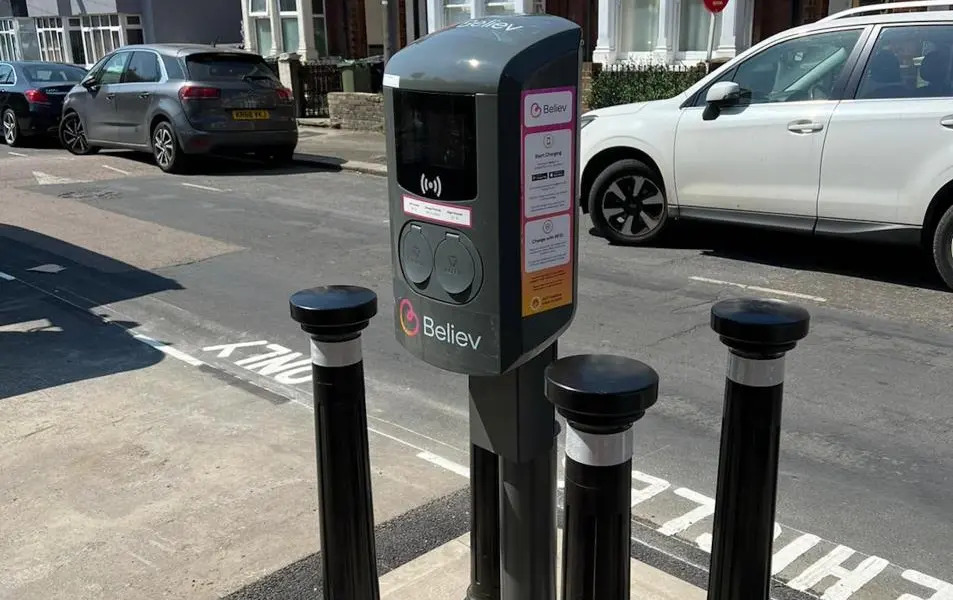 Electric car charging point installed close to the highway