Materials can significantly impact the streetscene and character of your neighbourhood, and should be chosen carefully.
Proposed materials should take into consideration the character and material palette of the host dwelling and surrounding area.
Choosing high quality, robust and sustainable materials can increase the lifespan of your build, while reducing its carbon impact. Sourcing materials locally can reduce both environmental impact and costs.
|
|
Local Plan Context: Policy 8 - Character-Led Intensification Policy 53 - Delivering High Quality Design Policy 59 - Amenity
|
|
8.1 Materials
| 8.1.1 | Applicants should consider their property in its context and all proposals should take into consideration established building lines and forms.
|
|
| 8.1.2 | The character and style, including height, age, materials and massing of surrounding buildings should be taken into consideration at planning stage to ensure that the proposal preserves or complements the character of the surrounding area.
|
|
| 8.1.3 | All materials used for residential alterations and extensions should be of the highest possible quality. Materials should be well-detailed, durable, robust, and appropriate for their location.
|
|
|
|
|
| 8.1.4 | All proposed external materials including cladding must be non-combustible and compliant with Approved Document B, Volume 1: Dwellings. |
|
|
|
|
| 8.1.5 | Materials can be finalised in more detail during the planning conditions stage of a planning application.
|
|
| 8.1.6 | Generally there is more opportunity for the exploration of unusual or innovative materials at the rear of a property than at the front. More consideration is given to the use of materials in conservation areas.
|
|
| 8.1.7 | Proposed materials should be indicated on planning drawings, and product names and colours included. It is advisable for applications to include a material schedule, detailing all proposed materials, including windows and doors.
|
|
| 8.1.8 | Where proposals deviate from the predominant existing materials in the surrounding area, applicants will need to demonstrate exemplar design quality. This will be addressed at the planning conditions stage, through the submission of precedent images or cladding samples.
|
|
| 8.1.9 | The interface between built elements should be carefully considered. Not only does neat and careful detailing look better but is also more likely to be robust and weather tight.
|
|
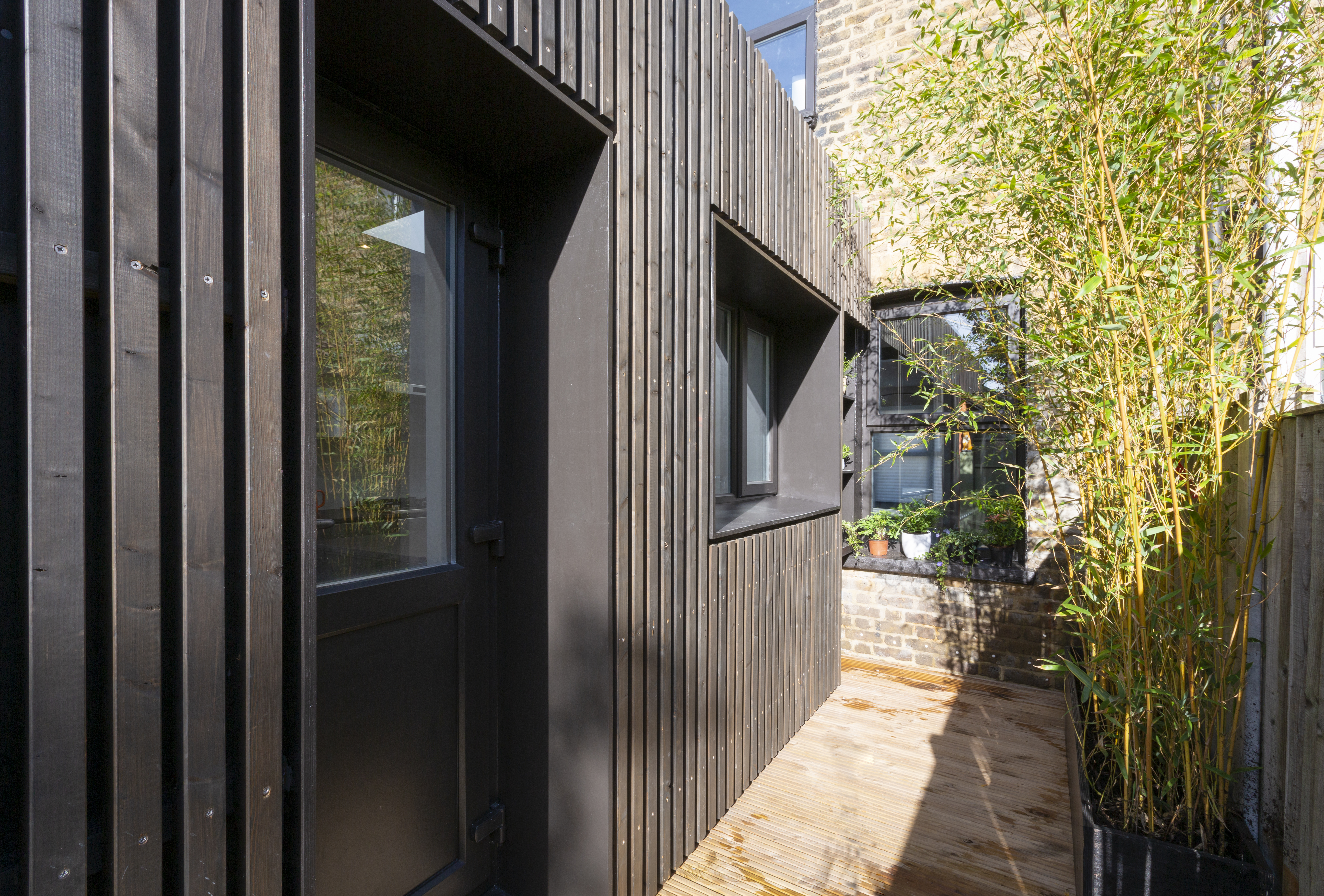 Careful detailing between timber cladding and metal window reveals on home extension (MW Architects)
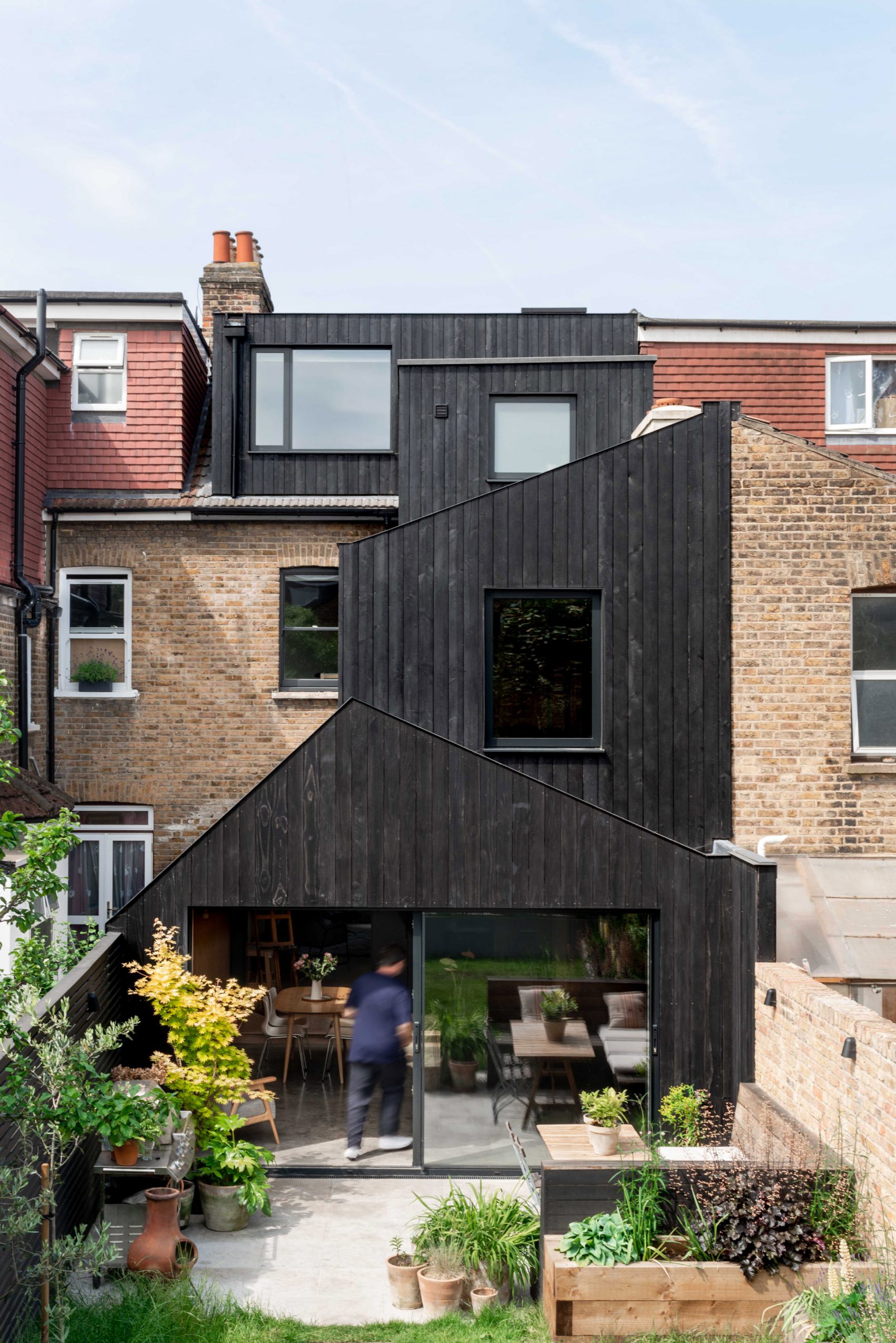 This project in Walthamstow, including a rear roof dormer, outrigger dormer and single storey rear extension, was clad in dark timber cladding (Gresford Architects. Photography: French & Tye)
8.4 Facade materials
| 8.4.1 | Where materials are to match existing, they should complement and integrate well with the existing materials in order to ensure this, proposals should: - identify existing materials.
- specify an appropriate material and colour palette, to ensure the proposal integrates well with existing built elements
|
|
| 8.4.2 | Where materials deviate from the existing materials of a property, facade materials should be chosen to contribute to a coherent street character. |
|
| 8.4.3 | If a building has original features like cornices, string courses or mouldings, these should be retained wherever possible. |
|
| 8.4.4 | The removal of original features is unlikely to be supported. It may be acceptable in certain circumstances, for example where the addition of external wall insulation is proposed. Read more about external wall insulation and where it may be acceptable here. |
|
| 8.4.5 | It should be considered how the material will change over time, including aging and weathering. This may involve using recycled or pre-weathered materials where appropriate.
|
|
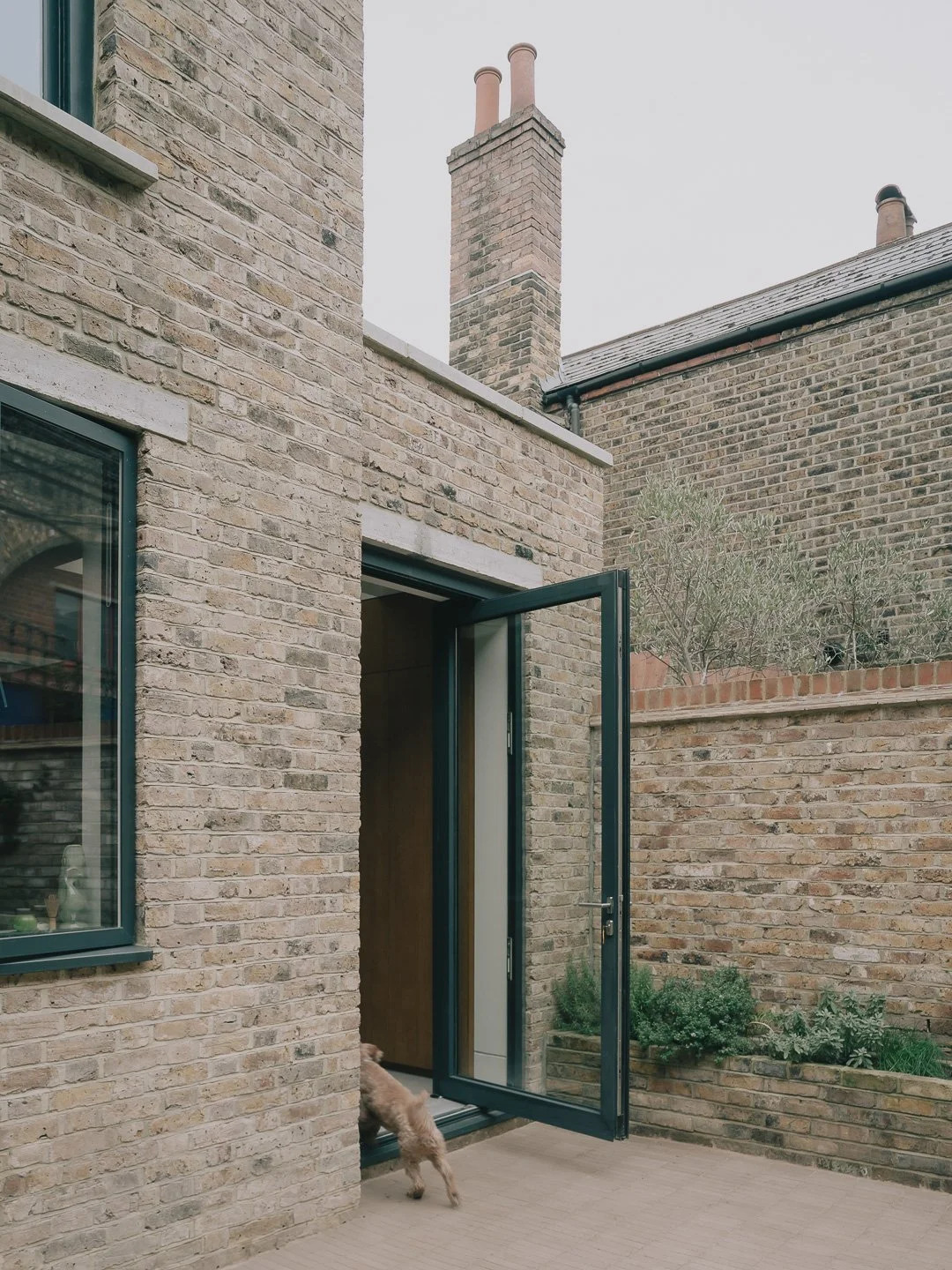 Brick rear extension in west London (Studio MCW. Photography: Tim Crocker)
Brick masonry
Brick is a popular facade material, due to bricks being relatively inexpensive, fire-resistant and robust. There is a huge variety of colours, textures and brick sizes to choose from, and bricks can be arranged in a number of different patterns, known as bonds.
Though the embodied carbon of brick is typically not as low as that of timber, due to its natural properties and local availability, brick serves as the primary building material of London’s housing.
| 8.4.6 | For brickwork, the following considerations are key to achieving exemplar design quality. The following should be specified in the submission of a planning application for a proposal clad in brick: - brick type and colour.
- mortar mix and colour.
- pointing technique.
- brick bond.
- brickwork texture.
|
|
| 8.4.7 | It should be noted that brick slips are generally not acceptable on street-facing façades, listed buildings or properties in conservation areas.
|
|
| 8.4.8 | Where brick slips are proposed they should be fixed using mechanical rail systems, and then pointed with mortar. Adhesive brick slips are not considered acceptable.
|
|
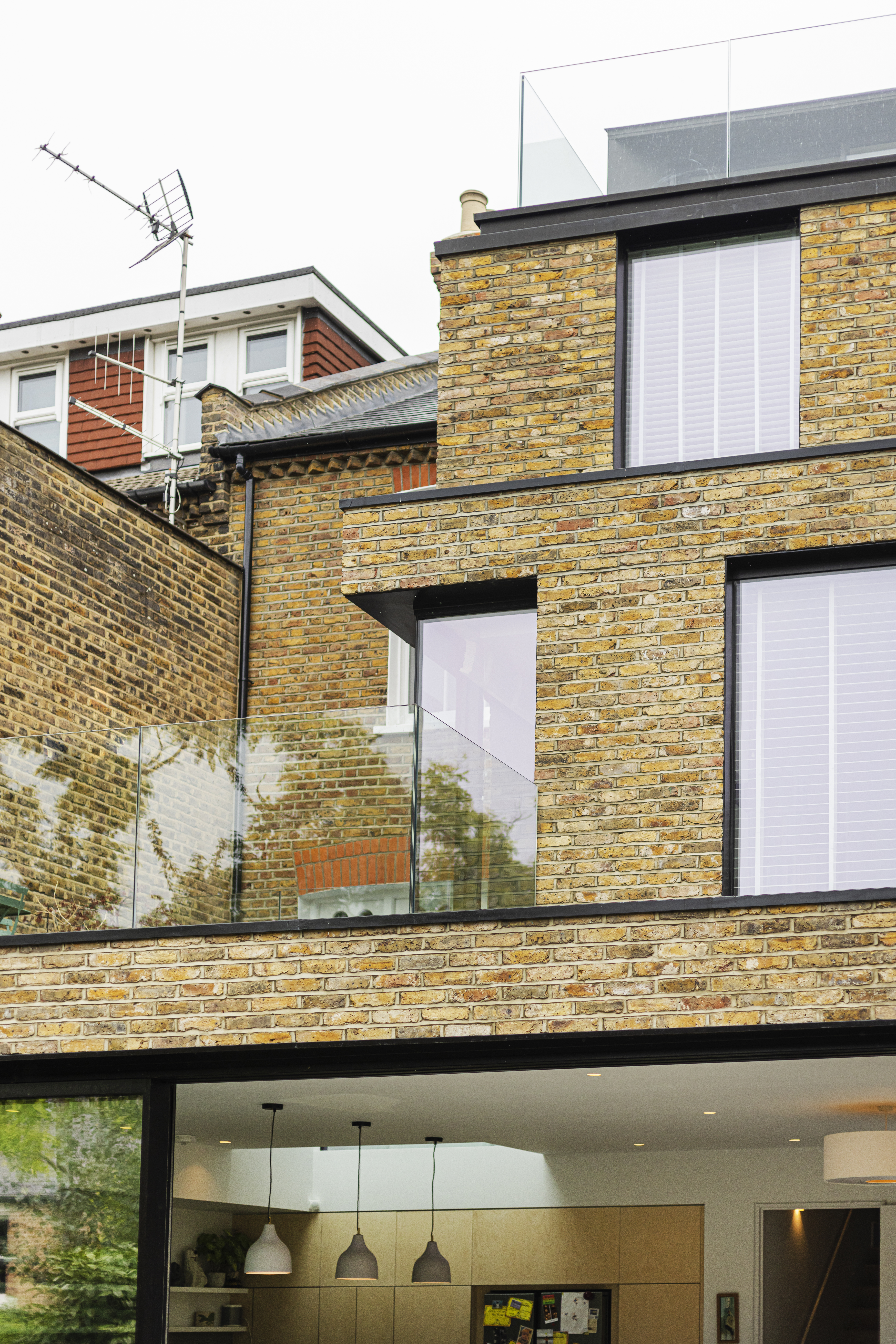 Details of a two storey rear extension, with brick chosen to suit the existing house in Crouch End (Formwork Architects. Photography: Neil Perry)
Timber
Timber is a traditional and sustainable building material, which has less embodied carbon than other materials. Timber can be used structurally, for example as crosslaminated timber, laminated veneer lumber or glulam, or for external use as cladding or rain screens.
There are a number of types of timber cladding, including hardwood timber, reclaimed timber, thermally-treated timber and bamboo panels. It should be noted that composite timber panels typically contain a mixture of wood, fibreglass and resin, making them more difficult to recycle and less sustainable than solid wood.
| 8.4.9 | Timber is generally more acceptable on the rear elevation.
|
|
| 8.4.10 | Use of timber cladding is generally more acceptable on the rear elevation than the front. |
|
| 8.4.11 | Where timber is used as an external facing material, the following should be considered: - the type of wood. Hardwoods should be used externally rather than softwoods, as they are more durable.
- the timber cladding profile, size, orientation, and the size of gaps, as each of these elements can greatly affect overall appearance.
- fixtures and fittings used. Whether the fixings are expressed or hidden can affect overall appearance. It should be ensured that fixings do not break, corrode or result in staining to the wood.
|
|
| 8.4.12 | Oils or treatments may be required to help timber cladding performing long-term. Woods such as larch weather to a silvery finish overtime, though this depends on exposure to daylight. |
|
| 8.4.13 | Timber cladding should be checked annually for rot, soft spots and loose boards. Maintenance requirements depend on the type of wood and position of the cladding:- reapplications of any oils and stains may be required every 2-5 years.
- charred timber requires minimal maintenance but should still be checked frequently.
- south-facing walls and areas with high sun or rain exposure often require more frequent retreatment.
|
|
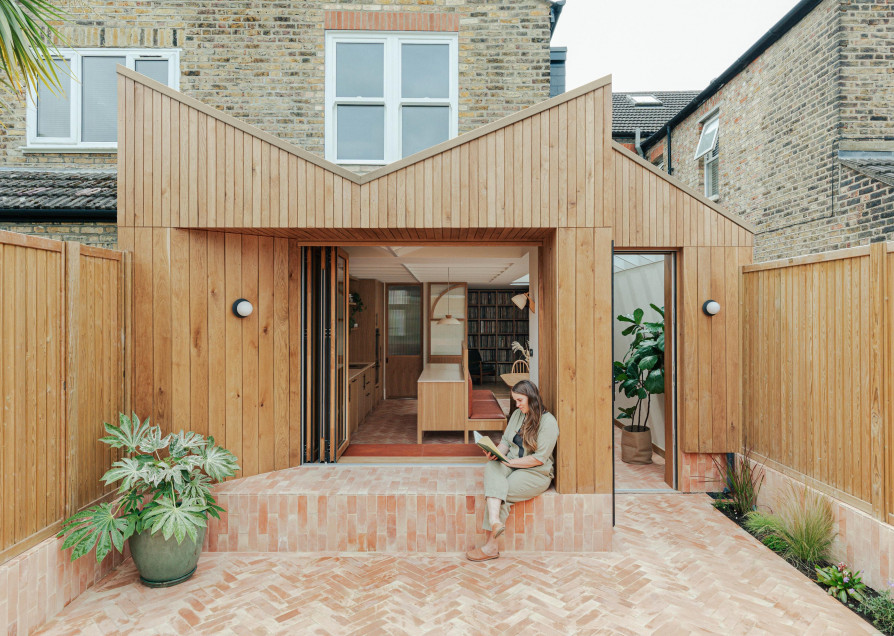 Timber cladding brings warmth to this rear extension in Leytonstone (Benjamin Wilkes. Photography: Chris Wharton)
Render and plaster
Render is also referred to as external plaster. It may be rough-cast, also known as pebbledash, or smooth. Render or pebbledash may be applied over brick, blockwork or concrete to create a weather-resistant surface.
| 8.4.14 | The use of render is not usually encouraged as in urban areas as it tends to discolour and weather badly and can be costly to maintain.
|
|
| 8.4.15 | Where render is being used, it is more likely to be supported: - if there is render on the existing building facade, where it matches by colour, texture and design.
- where render would be an enhancement of the appearance.
- if the chosen render is a breathable material, for example lime render.
|
|
| 8.4.16 | Where render is proposed, it is important to consider maintenance requirements. Cement render should generally be replaced every 20 to 30 years, and repainted every 5 to 10 years to maintain protection and appearance.
|
|
| 8.4.17 | Lime-based renders can last up to 70 years, and re-limewashing (coating with a traditional paint made from limestone) every 5–10 years helps extend lifespan.
|
|
| 8.4.18 | Modern silicone renders often do not require repainting as they are durable, self-coloured, and water-repellent, potentially lasting over 20 years without paint.
|
|
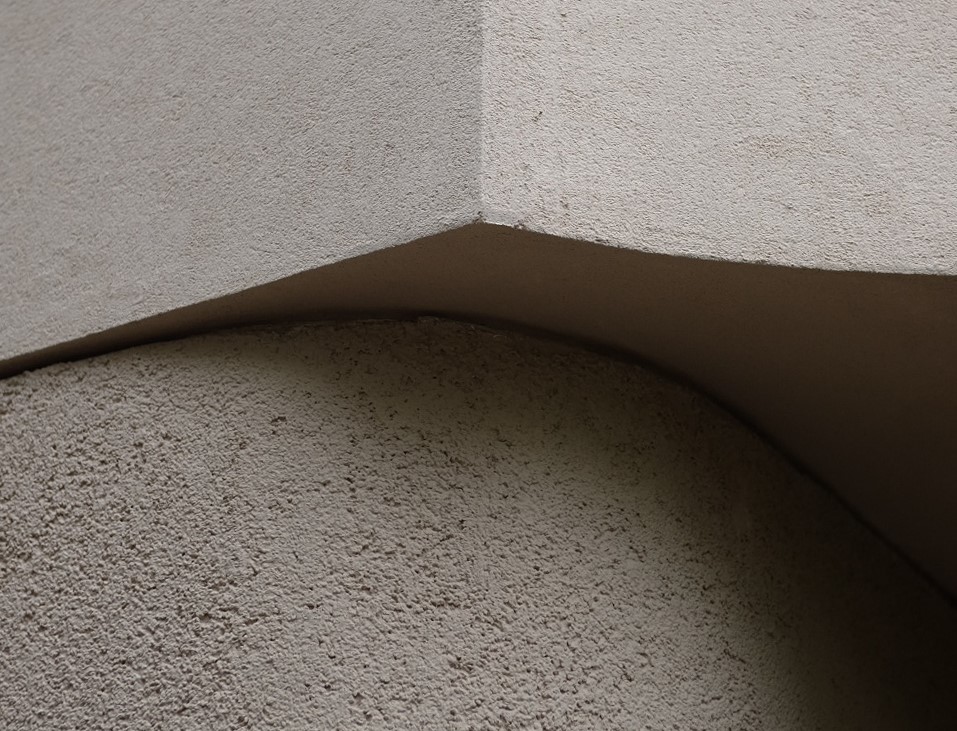
Both rough-cast and smooth render were used to finish this rear extension in Hackney (Sonn Studio. Photography: Philippa Langley)
Stone
Though typically a more expensive option than brick, stone offers durability and aesthetic appeal. Stone can be used as an external cladding material, as well as in flooring, window sills and decorative elements.
Stone agglomerate, or engineered stone, is a composite material made from a mixture of natural or recycled stone aggregates, bonded together with resin or cement binder. It is an engineered product that is formed into large slabs, which are then cut into tiles and blocks.
| 8.4.19 | Using stone as a structural element requires careful detailing in order to avoid cold bridging. Read more about insulation and cold bridging here.
|
|
| 8.4.20 | Stone can have lower embodied carbon than brick, as stone is simply mined and cut to shape, removing the need for firing at high temperatures. Stone should be sourced in the UK rather than from abroad, in order to reduce the embodied energy associated with its transportation.
|
|
| 8.4.21 | Flint and limestone are commonly found in the south of England, while Portland stone, quarried in Dorset, is also commonly used in London. |
|
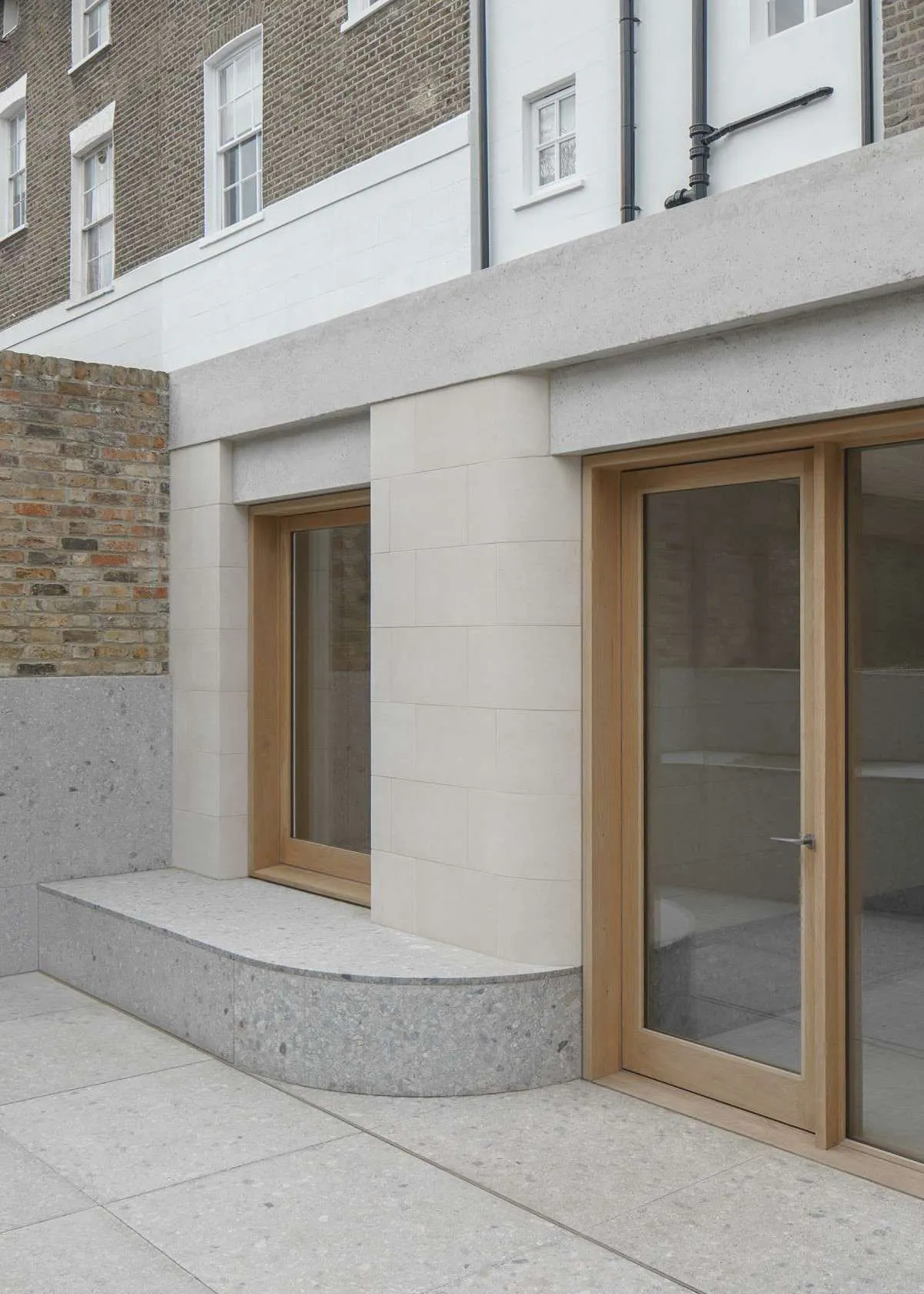
Rear extension in Islington, with agglomerate stone plinth and limestone piers (Architecture for London)
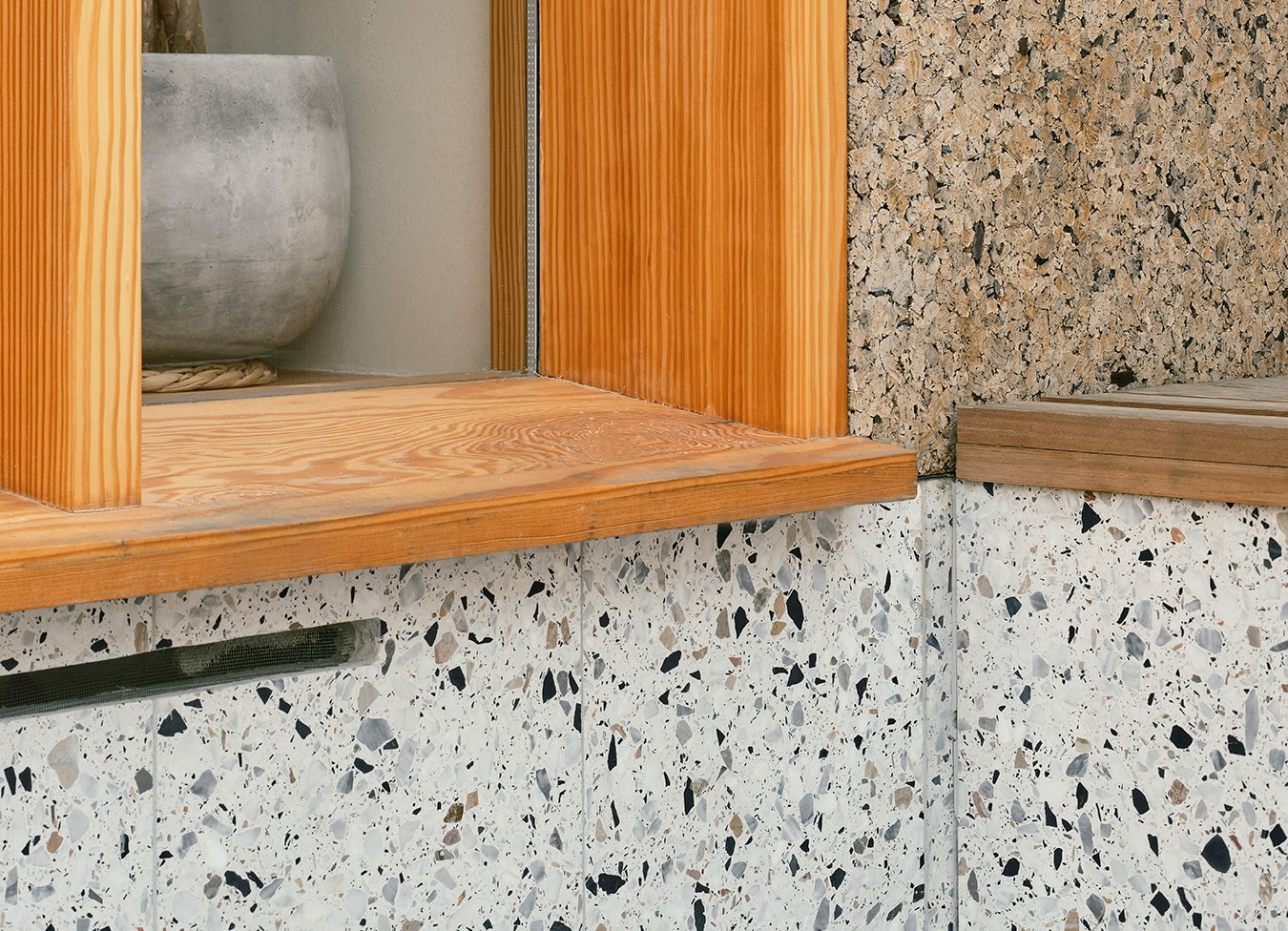
Detail of rear extension incorporating timber, stone and stone composite in Leytonstone (Mike Tuck Studio)
Ceramic and terracotta tile
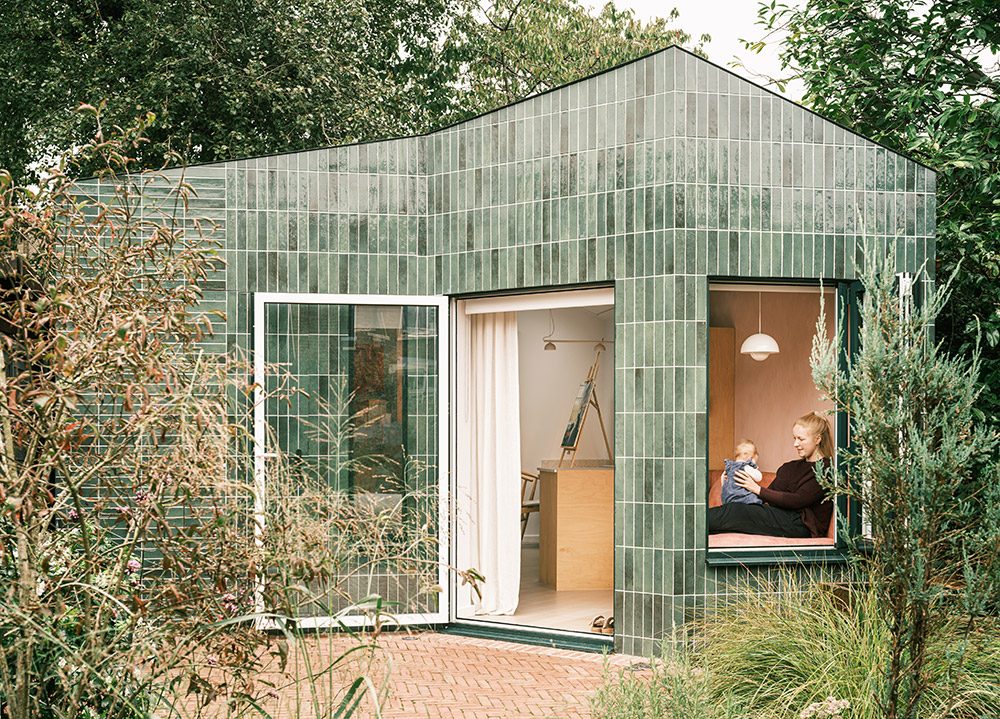
Ceramic and terracotta tiles can serve as an attractive and unique cladding material. Terracotta is made from natural clay, is fired at a lower temperatures, and is more porous, giving it a characteristic reddish-brown colour and rustic appearance.
Ceramic tiles are made from a wide range of clays and minerals, fired at high temperatures, making them generally more durable and water-resistant. Ceramic tiles are available in many colours, glazes, and finishes.
| 8.4.22 | Where ceramic or terracotta tiles are used as an external facing material, the following should be considered: - tiles should be fixed by a professional and to a high standard.
- an appropriate tile adhesive should be used to ensure the cladding is weather-resistant.
- the tile grout colour should be chosen to complement the colour and texture of the tile.
|
|
 Roof extension in Newington Green clad in terracotta tiles (Emil Eve Architects. Photography: Taran Wilkhu)
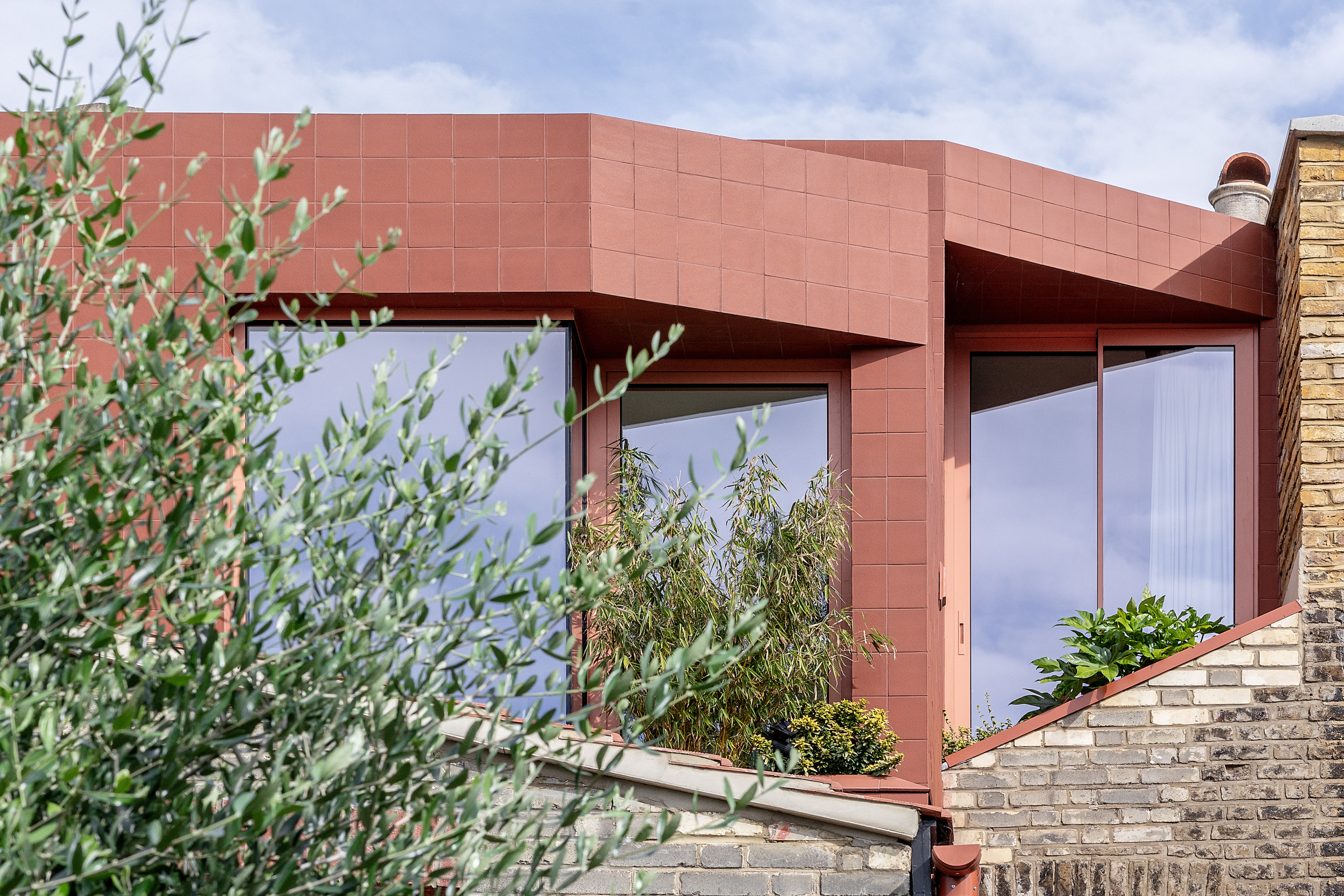 Roof extension in Newington Green clad in terracotta tiles, by Emil Eve Architects
Standing seam zinc and aluminium
Standing seam zinc and aluminium are cladding materials that are durable, long-lasting, versatile and resistant to corrosion.
Standing seam zinc, if properly detailed, can give a clean, contemporary appearance. It can be used to clad roofs and walls, and can be applied to curved and flat walls, both vertically and horizontally. Aluminium is also a popular cladding material due to its durability, lightweight nature and low maintenance.
| 8.4.23 | Where metal cladding, including standing seam zinc or aluminium, is proposed as an external facing material it: - should be chosen to suit the colours and character of the host building.
- should be carefully detailed in order to ensure weather resistance, durability and longevity.
- is unlikely to be accepted on the front of the property, and typically more acceptable on the roof and/or rear walls.
|
|
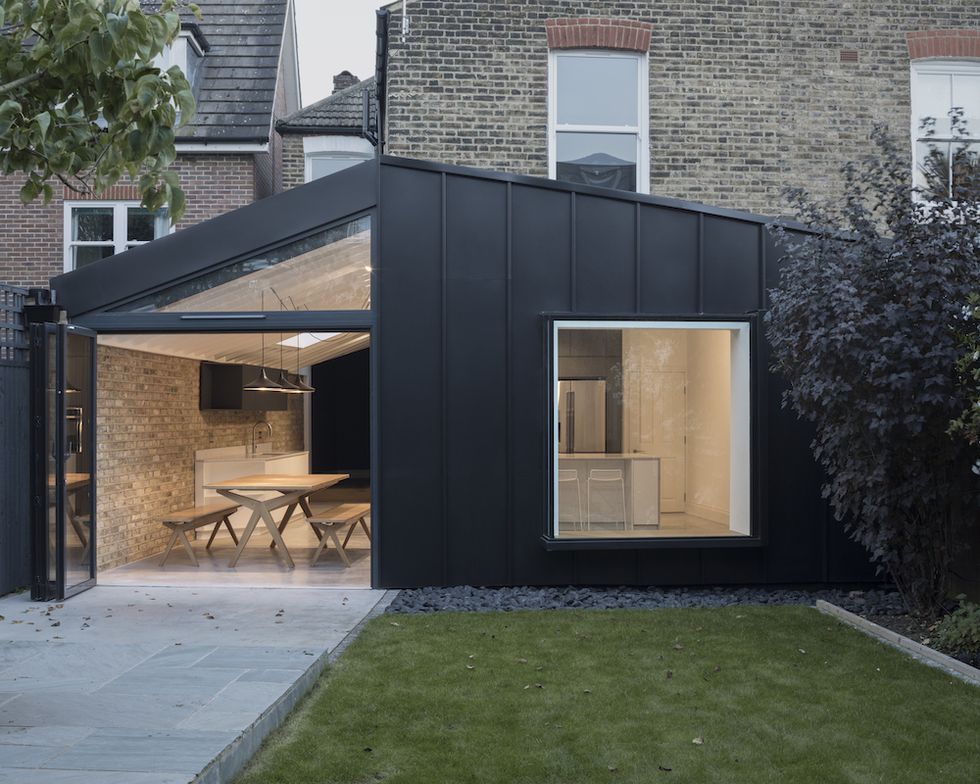 Aluminium-clad rear extension in Wandsworth, by Proctor & Shaw Architects
Panels made from hemp fibres can be used for cladding both interior and exterior walls. Hemp exterior cladding comes in various forms, including structural corrugated sheets and panels, that are strong and durable.
| 8.4.24 | Where other cladding options are proposed, cladding materials should be durable, weather resistant and complementary to existing materials in appearance.
|
|
|
|
|
| 8.4.25 | All proposed external materials including cladding must be non-combustible and compliant with Approved Document B, Volume 1: Dwellings.
|
|
|
|
|
| 8.4.26 | Where external wall insulation is fixed to the outside face of an existing wall it should be finished with render or clad with a suitable material. Read more about external wall insulation and acceptable cladding materials here.
|
|
| 8.4.27 | Use of PVC cladding is not supported in conservation areas and for listed buildings. In some circumstances it may be supported outside of conservation areas, but only where it closely matches cladding found in the existing building and/or surrounding area.
|
|
| 8.4.28 | Sustainable cladding materials should be explored where possible. For example hemp fibre panels offer a durable and sustainable option. As hemp sequesters carbon during its growth, hemp panels can be low-carbon or carbon-negative. |
|
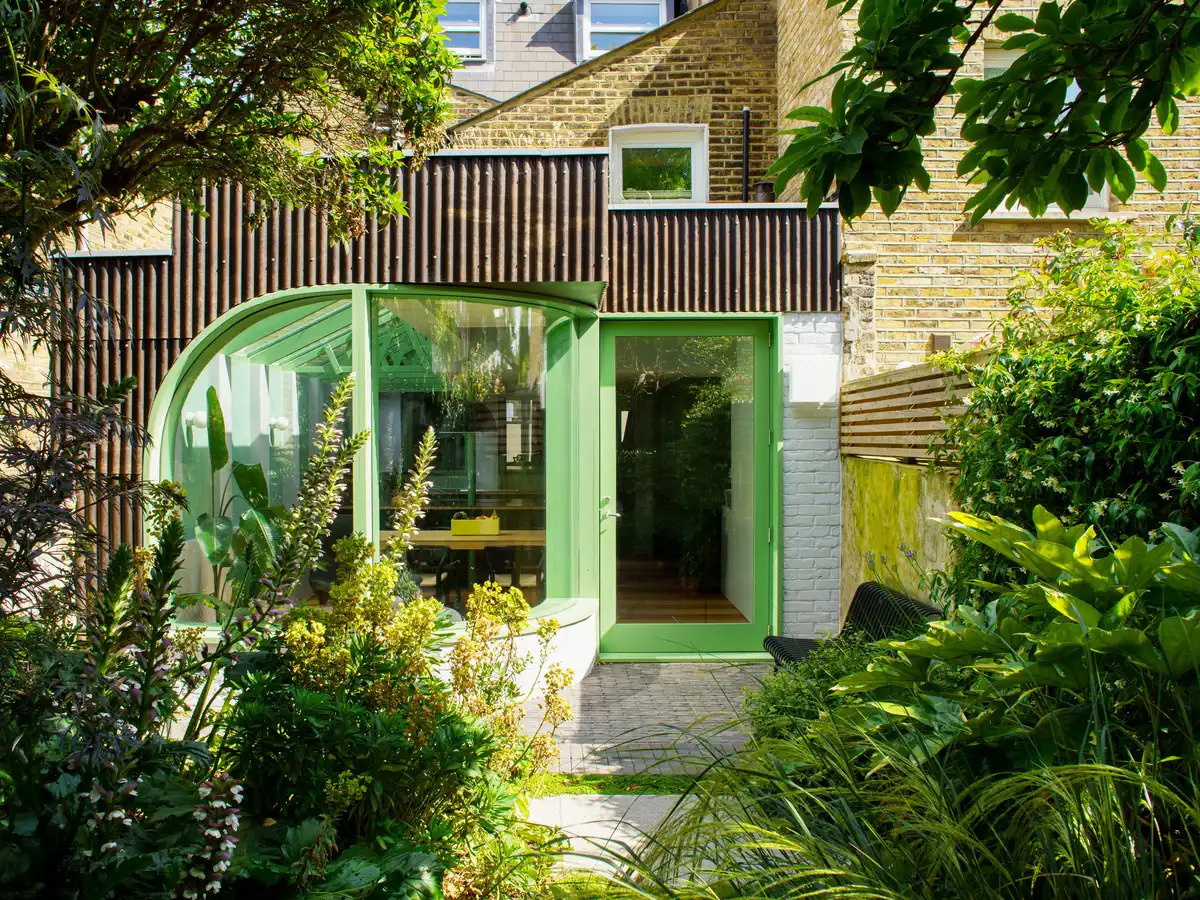 Rear extension clad in corrugated hemp fibre panels in Stoke Newington (CAN Architects. Photography: Rick Pushinsky)
Materials can significantly impact the streetscene and character of your neighbourhood, and should be chosen carefully.
Proposed materials should take into consideration the character and material palette of the host dwelling and surrounding area.
Choosing high quality, robust and sustainable materials can increase the lifespan of your build, while reducing its carbon impact. Sourcing materials locally can reduce both environmental impact and costs.
|
|
Local Plan Context: Policy 8 - Character-Led Intensification Policy 53 - Delivering High Quality Design Policy 59 - Amenity
|
|
8.1 Materials
| 8.1.1 | Applicants should consider their property in its context and all proposals should take into consideration established building lines and forms.
|
|
| 8.1.2 | The character and style, including height, age, materials and massing of surrounding buildings should be taken into consideration at planning stage to ensure that the proposal preserves or complements the character of the surrounding area.
|
|
| 8.1.3 | All materials used for residential alterations and extensions should be of the highest possible quality. Materials should be well-detailed, durable, robust, and appropriate for their location.
|
|
|
|
|
| 8.1.4 | All proposed external materials including cladding must be non-combustible and compliant with Approved Document B, Volume 1: Dwellings. |
|
|
|
|
| 8.1.5 | Materials can be finalised in more detail during the planning conditions stage of a planning application.
|
|
| 8.1.6 | Generally there is more opportunity for the exploration of unusual or innovative materials at the rear of a property than at the front. More consideration is given to the use of materials in conservation areas.
|
|
| 8.1.7 | Proposed materials should be indicated on planning drawings, and product names and colours included. It is advisable for applications to include a material schedule, detailing all proposed materials, including windows and doors.
|
|
| 8.1.8 | Where proposals deviate from the predominant existing materials in the surrounding area, applicants will need to demonstrate exemplar design quality. This will be addressed at the planning conditions stage, through the submission of precedent images or cladding samples.
|
|
| 8.1.9 | The interface between built elements should be carefully considered. Not only does neat and careful detailing look better but is also more likely to be robust and weather tight.
|
|
Careful detailing between timber cladding and metal window reveals on home extension (MW Architects)
This project in Walthamstow, including a rear roof dormer, outrigger dormer and single storey rear extension, was clad in dark timber cladding (Gresford Architects. Photography: French & Tye)
8.4 Facade materials
| 8.4.1 | Where materials are to match existing, they should complement and integrate well with the existing materials in order to ensure this, proposals should: - identify existing materials.
- specify an appropriate material and colour palette, to ensure the proposal integrates well with existing built elements
|
|
| 8.4.2 | Where materials deviate from the existing materials of a property, facade materials should be chosen to contribute to a coherent street character. |
|
| 8.4.3 | If a building has original features like cornices, string courses or mouldings, these should be retained wherever possible. |
|
| 8.4.4 | The removal of original features is unlikely to be supported. It may be acceptable in certain circumstances, for example where the addition of external wall insulation is proposed. Read more about external wall insulation and where it may be acceptable here. |
|
| 8.4.5 | It should be considered how the material will change over time, including aging and weathering. This may involve using recycled or pre-weathered materials where appropriate.
|
|
Brick rear extension in west London (Studio MCW. Photography: Tim Crocker)
Brick masonry
Brick is a popular facade material, due to bricks being relatively inexpensive, fire-resistant and robust. There is a huge variety of colours, textures and brick sizes to choose from, and bricks can be arranged in a number of different patterns, known as bonds.
Though the embodied carbon of brick is typically not as low as that of timber, due to its natural properties and local availability, brick serves as the primary building material of London’s housing.
| 8.4.6 | For brickwork, the following considerations are key to achieving exemplar design quality. The following should be specified in the submission of a planning application for a proposal clad in brick: - brick type and colour.
- mortar mix and colour.
- pointing technique.
- brick bond.
- brickwork texture.
|
|
| 8.4.7 | It should be noted that brick slips are generally not acceptable on street-facing façades, listed buildings or properties in conservation areas.
|
|
| 8.4.8 | Where brick slips are proposed they should be fixed using mechanical rail systems, and then pointed with mortar. Adhesive brick slips are not considered acceptable.
|
|
Details of a two storey rear extension, with brick chosen to suit the existing house in Crouch End (Formwork Architects. Photography: Neil Perry)
Timber
Timber is a traditional and sustainable building material, which has less embodied carbon than other materials. Timber can be used structurally, for example as crosslaminated timber, laminated veneer lumber or glulam, or for external use as cladding or rain screens.
There are a number of types of timber cladding, including hardwood timber, reclaimed timber, thermally-treated timber and bamboo panels. It should be noted that composite timber panels typically contain a mixture of wood, fibreglass and resin, making them more difficult to recycle and less sustainable than solid wood.
| 8.4.9 | Timber is generally more acceptable on the rear elevation.
|
|
| 8.4.10 | Use of timber cladding is generally more acceptable on the rear elevation than the front. |
|
| 8.4.11 | Where timber is used as an external facing material, the following should be considered: - the type of wood. Hardwoods should be used externally rather than softwoods, as they are more durable.
- the timber cladding profile, size, orientation, and the size of gaps, as each of these elements can greatly affect overall appearance.
- fixtures and fittings used. Whether the fixings are expressed or hidden can affect overall appearance. It should be ensured that fixings do not break, corrode or result in staining to the wood.
|
|
| 8.4.12 | Oils or treatments may be required to help timber cladding performing long-term. Woods such as larch weather to a silvery finish overtime, though this depends on exposure to daylight. |
|
| 8.4.13 | Timber cladding should be checked annually for rot, soft spots and loose boards. Maintenance requirements depend on the type of wood and position of the cladding:- reapplications of any oils and stains may be required every 2-5 years.
- charred timber requires minimal maintenance but should still be checked frequently.
- south-facing walls and areas with high sun or rain exposure often require more frequent retreatment.
|
|
Timber cladding brings warmth to this rear extension in Leytonstone (Benjamin Wilkes. Photography: Chris Wharton)
Render and plaster
Render is also referred to as external plaster. It may be rough-cast, also known as pebbledash, or smooth. Render or pebbledash may be applied over brick, blockwork or concrete to create a weather-resistant surface.
| 8.4.14 | The use of render is not usually encouraged as in urban areas as it tends to discolour and weather badly and can be costly to maintain.
|
|
| 8.4.15 | Where render is being used, it is more likely to be supported: - if there is render on the existing building facade, where it matches by colour, texture and design.
- where render would be an enhancement of the appearance.
- if the chosen render is a breathable material, for example lime render.
|
|
| 8.4.16 | Where render is proposed, it is important to consider maintenance requirements. Cement render should generally be replaced every 20 to 30 years, and repainted every 5 to 10 years to maintain protection and appearance.
|
|
| 8.4.17 | Lime-based renders can last up to 70 years, and re-limewashing (coating with a traditional paint made from limestone) every 5–10 years helps extend lifespan.
|
|
| 8.4.18 | Modern silicone renders often do not require repainting as they are durable, self-coloured, and water-repellent, potentially lasting over 20 years without paint.
|
|
Both rough-cast and smooth render were used to finish this rear extension in Hackney (Sonn Studio. Photography: Philippa Langley)
Stone
Though typically a more expensive option than brick, stone offers durability and aesthetic appeal. Stone can be used as an external cladding material, as well as in flooring, window sills and decorative elements.
Stone agglomerate, or engineered stone, is a composite material made from a mixture of natural or recycled stone aggregates, bonded together with resin or cement binder. It is an engineered product that is formed into large slabs, which are then cut into tiles and blocks.
| 8.4.19 | Using stone as a structural element requires careful detailing in order to avoid cold bridging. Read more about insulation and cold bridging here.
|
|
| 8.4.20 | Stone can have lower embodied carbon than brick, as stone is simply mined and cut to shape, removing the need for firing at high temperatures. Stone should be sourced in the UK rather than from abroad, in order to reduce the embodied energy associated with its transportation.
|
|
| 8.4.21 | Flint and limestone are commonly found in the south of England, while Portland stone, quarried in Dorset, is also commonly used in London. |
|
Rear extension in Islington, with agglomerate stone plinth and limestone piers (Architecture for London)
Detail of rear extension incorporating timber, stone and stone composite in Leytonstone (Mike Tuck Studio)
Ceramic and terracotta tile
Ceramic and terracotta tiles can serve as an attractive and unique cladding material. Terracotta is made from natural clay, is fired at a lower temperatures, and is more porous, giving it a characteristic reddish-brown colour and rustic appearance.
Ceramic tiles are made from a wide range of clays and minerals, fired at high temperatures, making them generally more durable and water-resistant. Ceramic tiles are available in many colours, glazes, and finishes.
| 8.4.22 | Where ceramic or terracotta tiles are used as an external facing material, the following should be considered: - tiles should be fixed by a professional and to a high standard.
- an appropriate tile adhesive should be used to ensure the cladding is weather-resistant.
- the tile grout colour should be chosen to complement the colour and texture of the tile.
|
|
Roof extension in Newington Green clad in terracotta tiles (Emil Eve Architects. Photography: Taran Wilkhu)
Roof extension in Newington Green clad in terracotta tiles, by Emil Eve Architects
Standing seam zinc and aluminium
Standing seam zinc and aluminium are cladding materials that are durable, long-lasting, versatile and resistant to corrosion.
Standing seam zinc, if properly detailed, can give a clean, contemporary appearance. It can be used to clad roofs and walls, and can be applied to curved and flat walls, both vertically and horizontally. Aluminium is also a popular cladding material due to its durability, lightweight nature and low maintenance.
| 8.4.23 | Where metal cladding, including standing seam zinc or aluminium, is proposed as an external facing material it: - should be chosen to suit the colours and character of the host building.
- should be carefully detailed in order to ensure weather resistance, durability and longevity.
- is unlikely to be accepted on the front of the property, and typically more acceptable on the roof and/or rear walls.
|
|
Aluminium-clad rear extension in Wandsworth, by Proctor & Shaw Architects
Panels made from hemp fibres can be used for cladding both interior and exterior walls. Hemp exterior cladding comes in various forms, including structural corrugated sheets and panels, that are strong and durable.
| 8.4.24 | Where other cladding options are proposed, cladding materials should be durable, weather resistant and complementary to existing materials in appearance.
|
|
|
|
|
| 8.4.25 | All proposed external materials including cladding must be non-combustible and compliant with Approved Document B, Volume 1: Dwellings.
|
|
|
|
|
| 8.4.26 | Where external wall insulation is fixed to the outside face of an existing wall it should be finished with render or clad with a suitable material. Read more about external wall insulation and acceptable cladding materials here.
|
|
| 8.4.27 | Use of PVC cladding is not supported in conservation areas and for listed buildings. In some circumstances it may be supported outside of conservation areas, but only where it closely matches cladding found in the existing building and/or surrounding area.
|
|
| 8.4.28 | Sustainable cladding materials should be explored where possible. For example hemp fibre panels offer a durable and sustainable option. As hemp sequesters carbon during its growth, hemp panels can be low-carbon or carbon-negative. |
|
Rear extension clad in corrugated hemp fibre panels in Stoke Newington (CAN Architects. Photography: Rick Pushinsky)