What is retrofit?
‘Retrofitting’ means making changes to a building to improve its energy or water efficiency. Retrofitting your home can help to reduce utility bills.
Reducing your energy consumption is also crucial in addressing the climate crisis. If you are planning to alter your home or build an extension, this is an ideal time to also consider integrating retrofit measures.
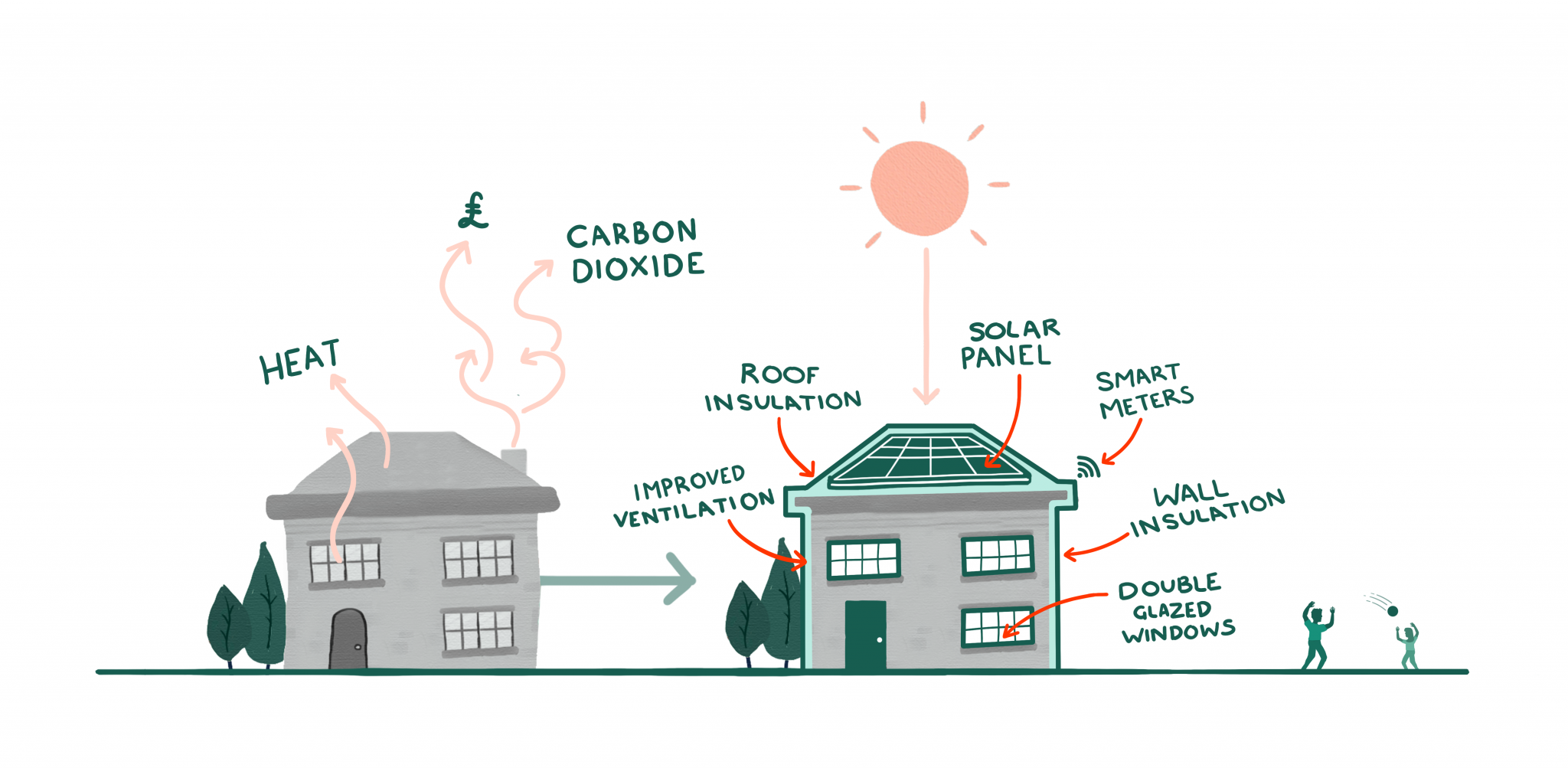 Retrofit measures such as roof insulation, solar panels and smart meters can all result in energy savings
3.1 Why retrofit?
Homes are the single biggest contributor to carbon emissions in the UK. Around 70% of homes in Waltham Forest were built before the 1950s. Much of this housing is energy inefficient, meaning houses tend to be harder to keep warm and more reliant on fossil fuels, such as gas and coal. Use of these fossil fuels releases significant amounts of carbon into the atmosphere.
Retrofitting our existing housing stock to a high standard is key to limiting our contribution to global heating and playing our part in tackling the Climate Emergency. This includes making homes more airtight and better insulated, reducing reliance on fossil fuels, and increasing renewable energy generation and use in the home.
3.2 Benefits of retrofit
Carrying out retrofit measures can have the following benefits:
• Lower energy bills by increasing energy efficiency, reducing the need for heating.
• Comfortable homes that remain at a pleasant temperature, and do not get draughty or damp.
• Improved health as damp and cold interiors can lead to a range of health problems, including asthma and allergies, and contribute to poor mental health.
• Reduced carbon footprint through reduced dependency on fossil fuels and lower energy use.
• Higher property value by increasing a home’s EPC rating.
• Reduced noise for occupants through enhanced insulation and improved glazing.
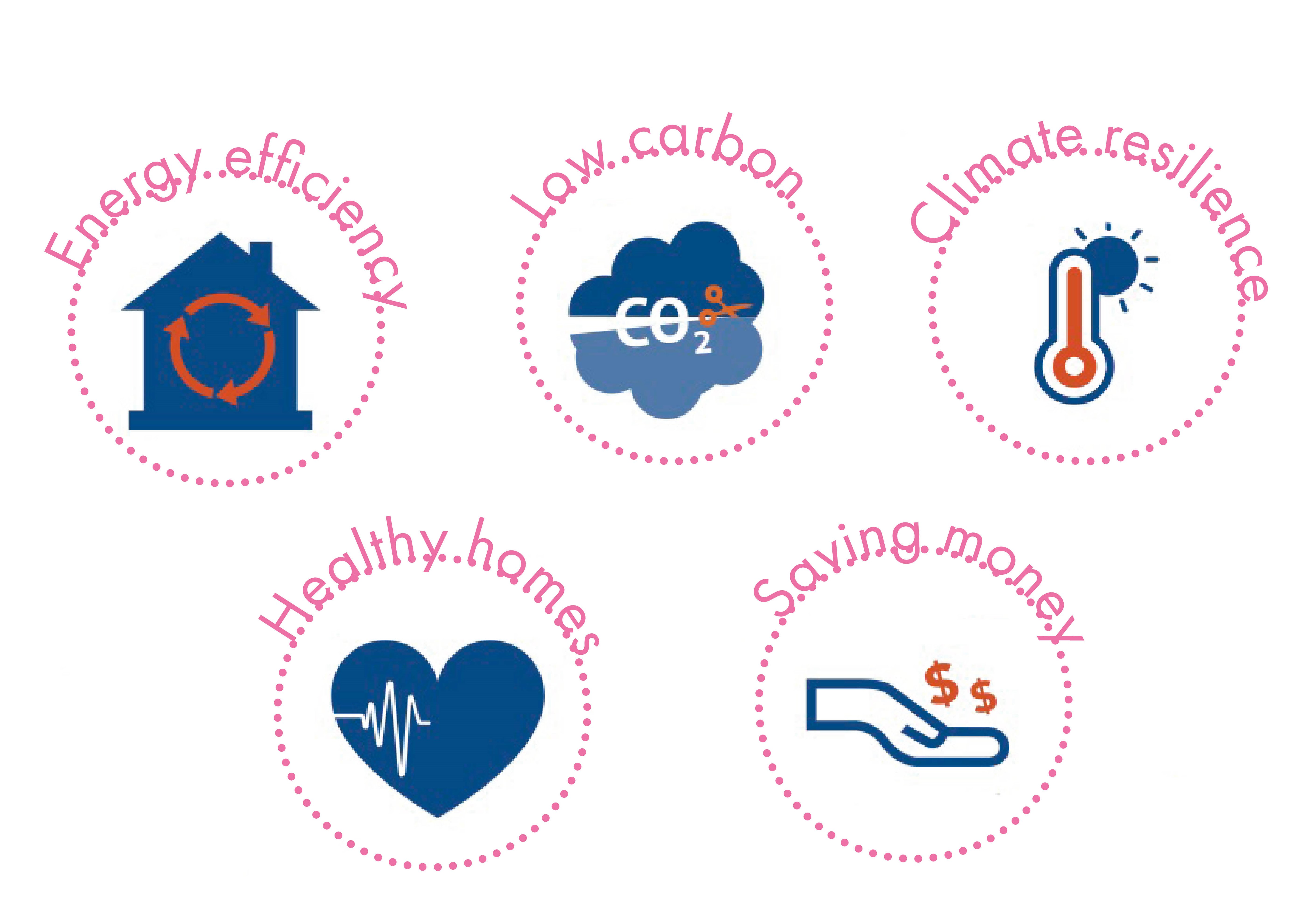 Benefits of retrofitting include making your home more comfortable and saving you money over time, once initial costs are recouped
3.3 Retrofit measures
This document details a number of retrofit measures that could improve the energy efficiency of your home:
- Internal insulation can be fitted within lofts, walls and underfloor cavities to improve thermal performance.
- External wall insulation can be fitted to the outside of solid external walls.
- Glazing upgrades to windows and doors can prevent draughts and reduce heat loss, while solar shading can reduce overheating.
- Air source heat pumps can serve as a more efficient alternative to gas boilers.
- Mechanical ventilation with heat recovery provides a way to ventilate the home while retaining heat.
- Underfloor heating serves as a more efficient alternative to radiators for heating the home.
- Solar panels and batteries enable renewable energy to be generated and stored in your home.
- The materials you use for a home extension or alteration project can significantly affect the carbon impact of your build. Find further information on low carbon building materials here.
- Rainwater harvesting can help to improve the water efficiency of your home, while helping to reduce potential flooding and environmental pollution.
- There are a number of other alterations you can make to your garden to help support local biodiversity and mitigate surface water flooding.
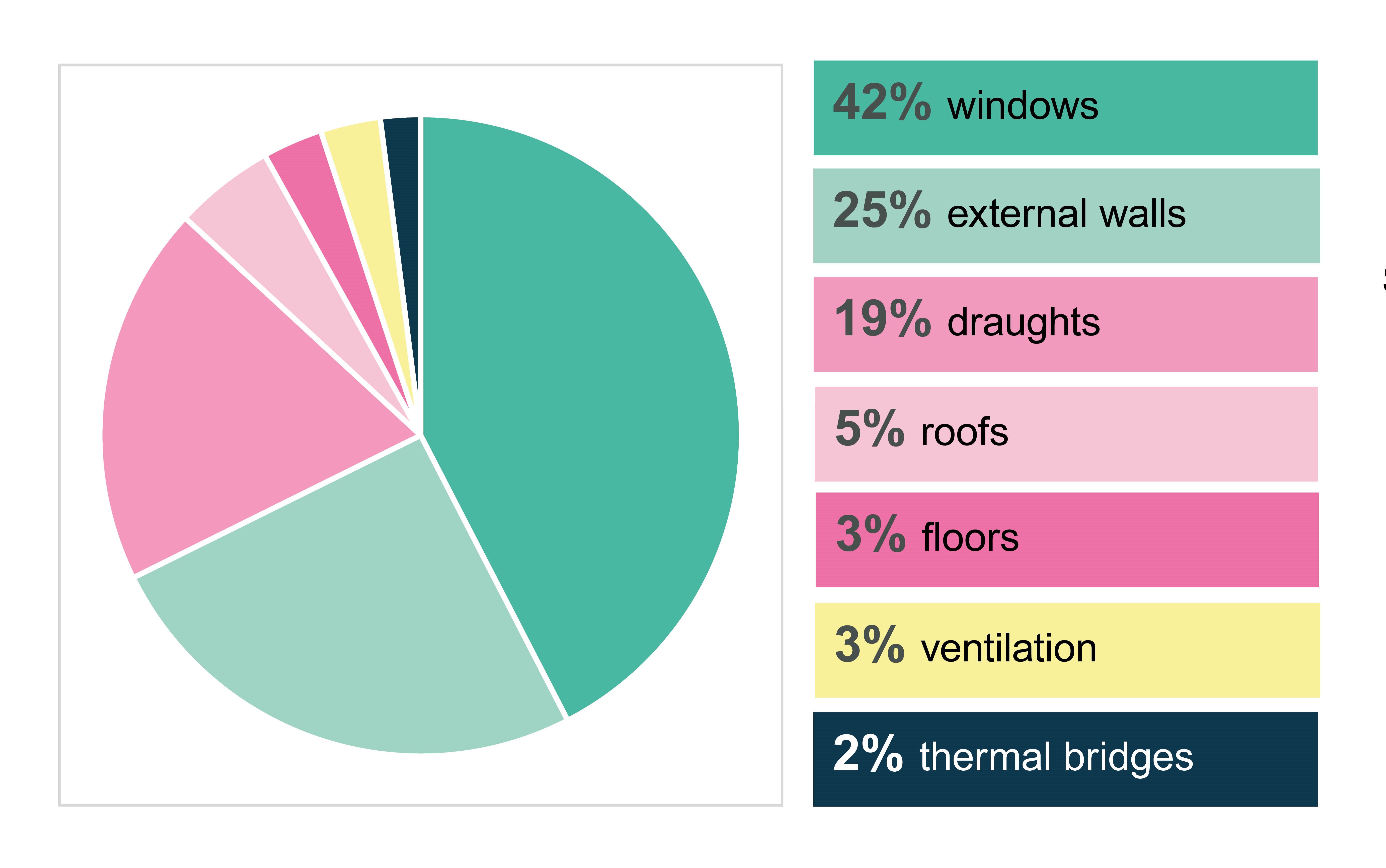 Potential to reduce heat loss in the home through built elements
3.4 Running costs
Fuel poverty occurs when a household cannot afford to keep their home at a reasonable temperature. Fuel poverty is caused by a combination of low income, high energy prices and poor energy efficiency in the home.
In England, a household is in fuel poverty if required fuel costs are above the national median and if residents are left with a residual income below the poverty line after paying those costs.
Fuel poverty is a critical issue in London, and an estimated 13.25% of all households in Waltham Forest are living in fuel poverty.
Living in fuel poverty can severely impact the physical and mental health of occupants. Retrofit measures help to address fuel poverty, and there are a number of grants available to support landlords or residents who want to undertake retrofit measures, detailed further here.
3.5 Measuring retrofit
An EPC (Energy Performance Certificate) rating is a measure of a building’s energy efficiency, ranging from A (most efficient) to G (least efficient). You will need an EPC if you are planning to sell or rent out your home. In England only accredited domestic energy assessors can produce valid EPCs.
Landlords must provide tenants with a valid EPC showing energy use and cost, and they can be fined for noncompliance. Since April 2020, it has been a requirement for all rented properties to have a minimum E EPC rating. Making retrofit upgrades to a home to raise its EPC rating can help to add value when the property is sold.
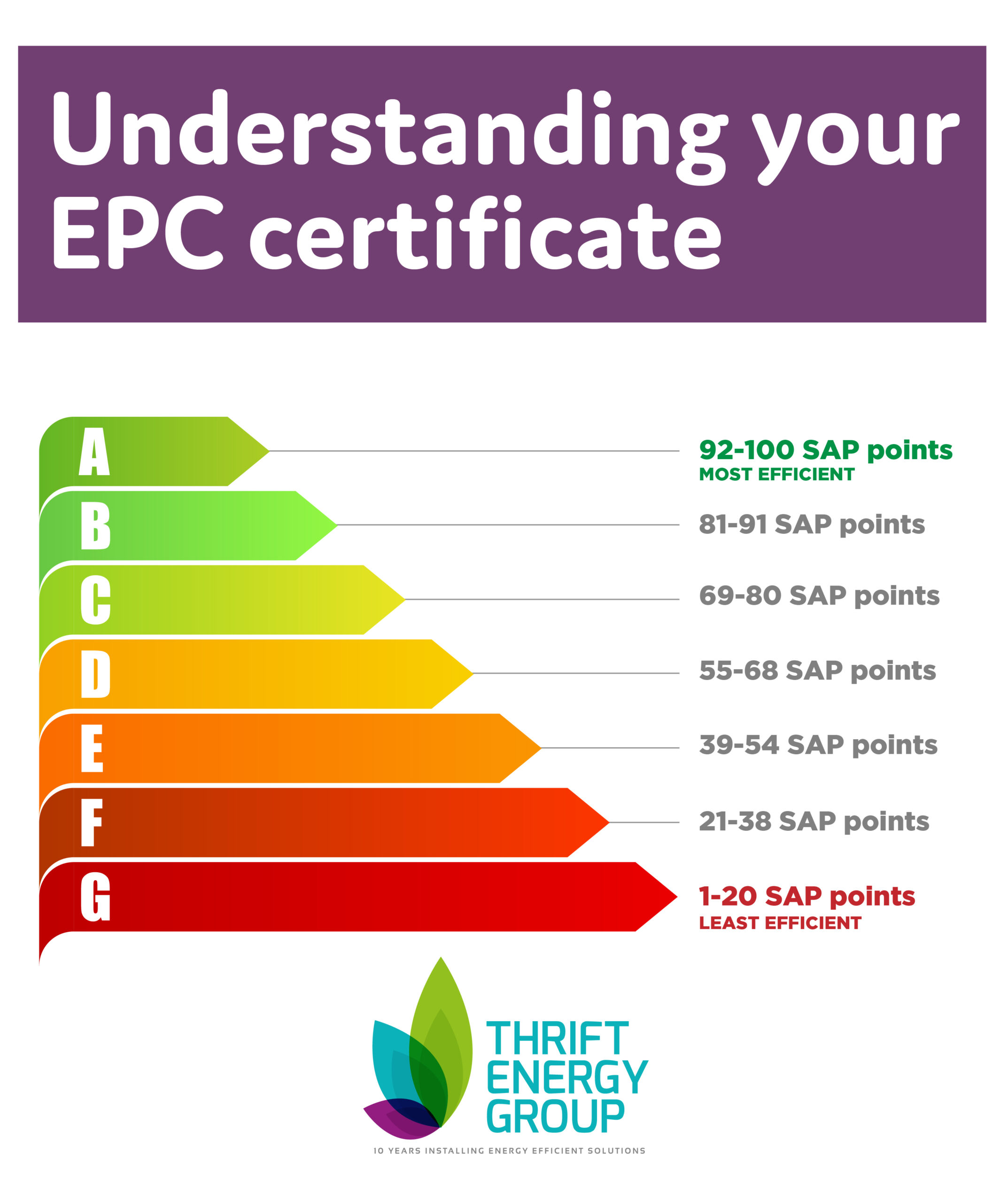 Energy Performance Certificate (EPC) guide
3.6 Retrofit guidance in this document
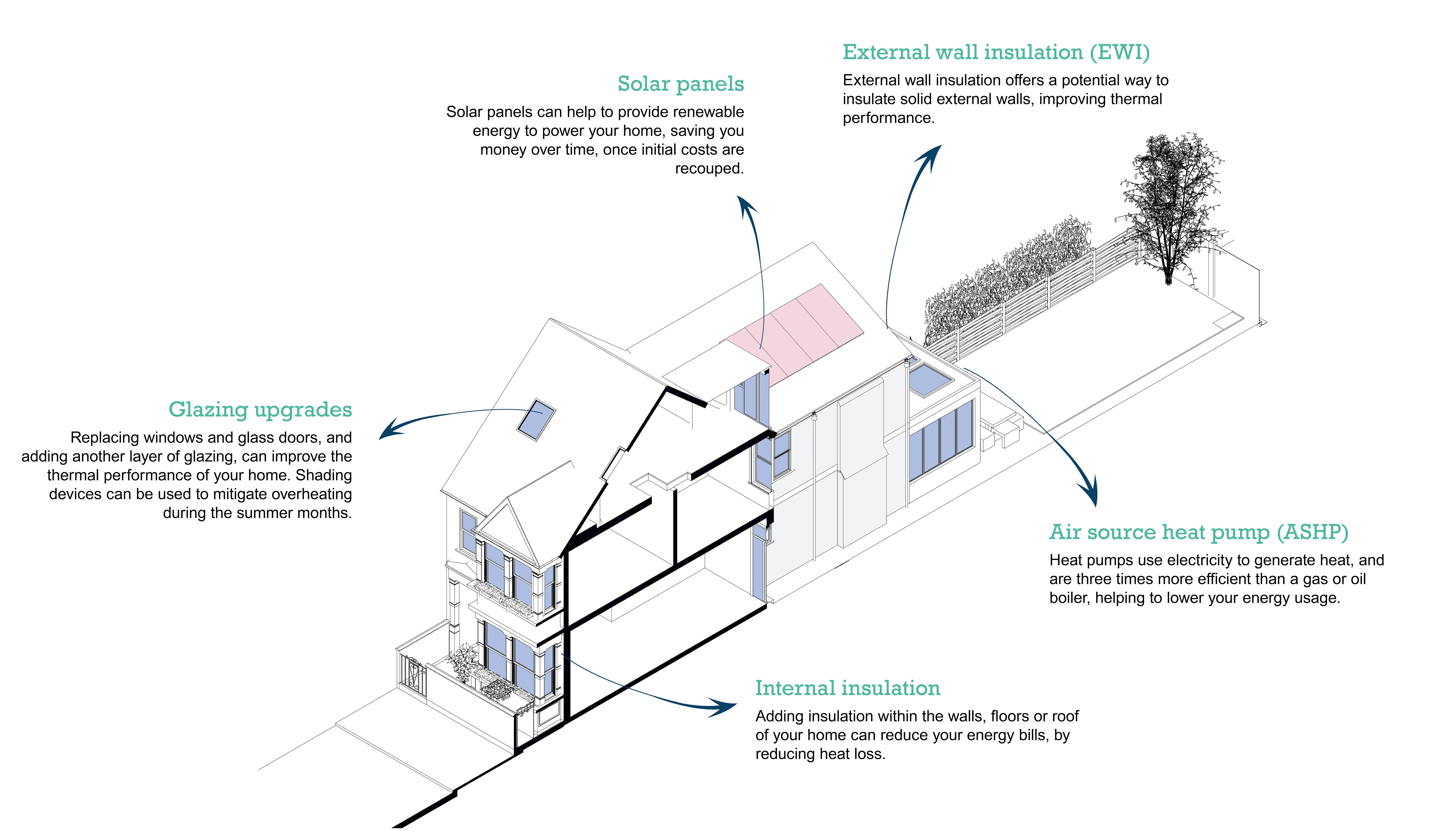
The image in the right-hand bar shows some of the retrofit measures explored later in this document. There is no one-size fits all solution, but by planning and monitoring your existing energy consumption, where heat is lost and where condensation occurs, you can plan for suitable interventions for your home.
| Residents are advised to refer to the LETI Low Embodied Carbon Specification and Procurement guide which provides information on low embodied carbon project delivery, and the Retrofit Pattern Book by the National Retrofit Hub for advice on home retrofit interventions. | ||
For all of the retrofit measures discussed in this document, competent, registered installers should be used. |